

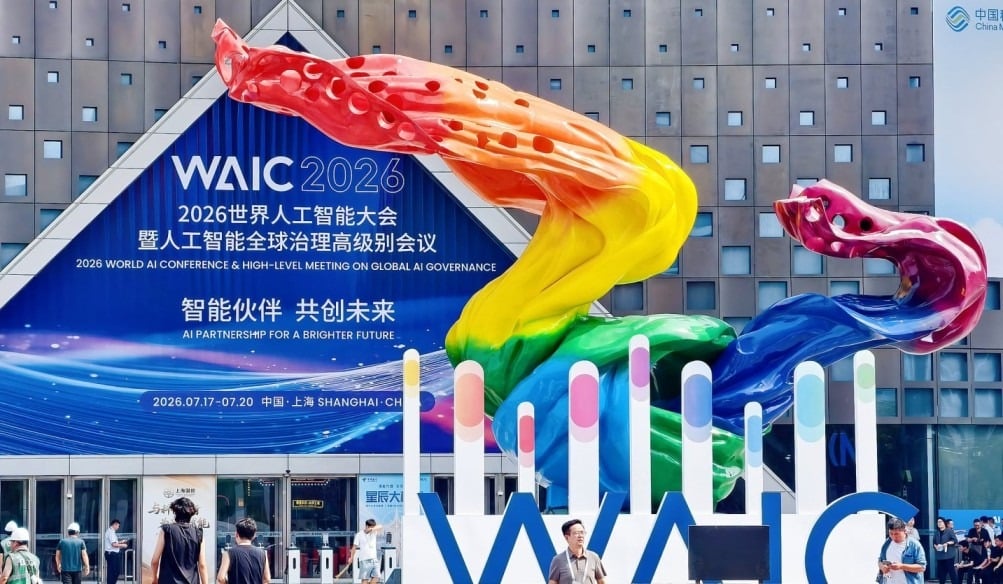
Representatives from 29 countries signed an agreement in Shanghai to establish the World Artificial Intelligence Cooperation Organization (WAICO), an independent intergovernmental body headquartered in Shanghai.
Chinese Foreign Minister Wang Yi signed on behalf of China, with founding members including Russia, Kazakhstan, Pakistan, Indonesia, Brazil, and 10 African and 12 Asian nations.
The organization wants to help countries work together and manage AI tech globally. United Nations (UN) Secretary-General Antonio Guterres was at the signing ceremony.
The WAICO mandate and governance
The organization will “uphold the purposes of the UN Charter, be committed to extensive consultation and joint contribution for shared benefit, and adhere to a people-centered approach,” according to the agreement. It aims to ensure AI is “beneficial, safe, and fair” while promoting its “healthy and orderly development.”
WAICO was first proposed by China at last year’s World Artificial Intelligence Conference (WAIC), with no formal membership announced until now. The organization will operate as an independent intergovernmental body, not as a UN subsidiary.
The geopolitical context
Since the organization is headquartered in Shanghai, it clearly shows China’s serious intentions to become the main player in the global AI sector.
In this context, the signing comes as the U.S. and China are strongly competing to gain influence over global AI standards. Lately, we have seen that the U.S. has been actively working to restrict China’s access to all the high-end AI chips and advanced tech, while the giant Asian nation is busy branding itself as the main advocate for “inclusive” AI governance.
The current WAICO roster features countries that share close, long-standing ties to China, nations like Russia, Belarus, Serbia, and Cuba. The United States and its partners across Europe haven’t signed on.
The AI governance split: Two competing visions emerge
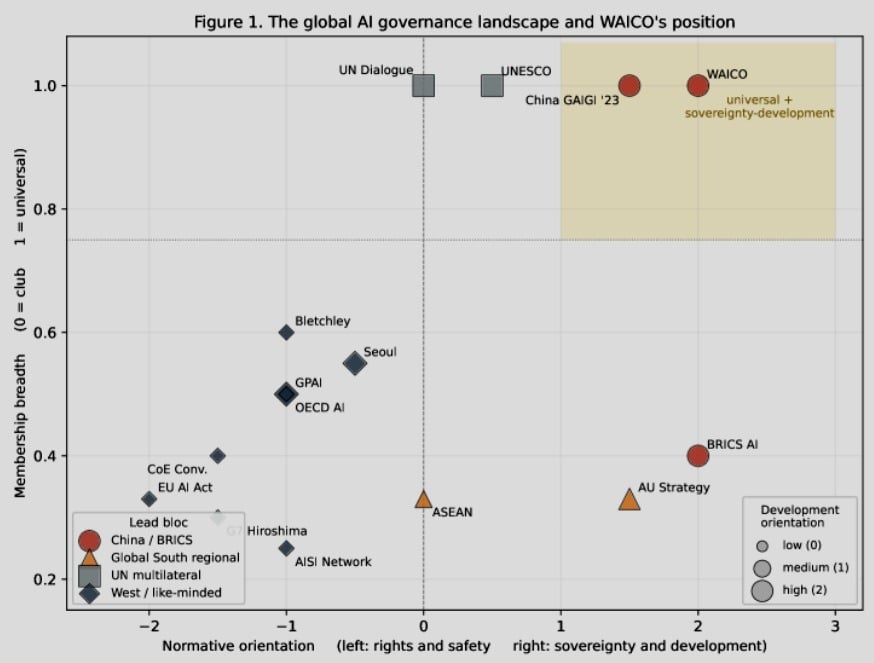
WAICO’s formation signals a deepening divide in global AI governance. The U.S. and its allies have pursued their own frameworks, for example:
All of these models have a strong orientation towards risk-based regulation, transparency, and democratic oversight.
China’s new group, WAICO, is doing things differently: they want government-led teamwork, shared wins, and a “people-centered” style that fits right in with how Beijing runs things at home. Since no Western countries have joined yet, the gap between the two sides is pretty obvious.
The WAICO will likely become the platform where China and its partners develop standards, share best practices, and coordinate policy, potentially creating a parallel system of AI governance that competes with Western-led efforts.
For everyone in AI, this basically means having two different sets of rules for building and using this tech, in the end, affecting how countries work together, follow standards, and market access.