




The news of a preliminary U.S.-Iran peace deal has completely changed the vibe in the market, shifting things from total fear to a huge window of opportunity. We’ve seen oil prices drop by over 4 percent, global equities rally, while crypto is finally bouncing back after a rough start to June. The deal, electronically signed by President Trump and Vice President Vance with Iranian Parliament Speaker Ghalibaf, includes reopening the Strait of Hormuz and a 60-day ceasefire. A formal signing is set for June 19 in Switzerland.
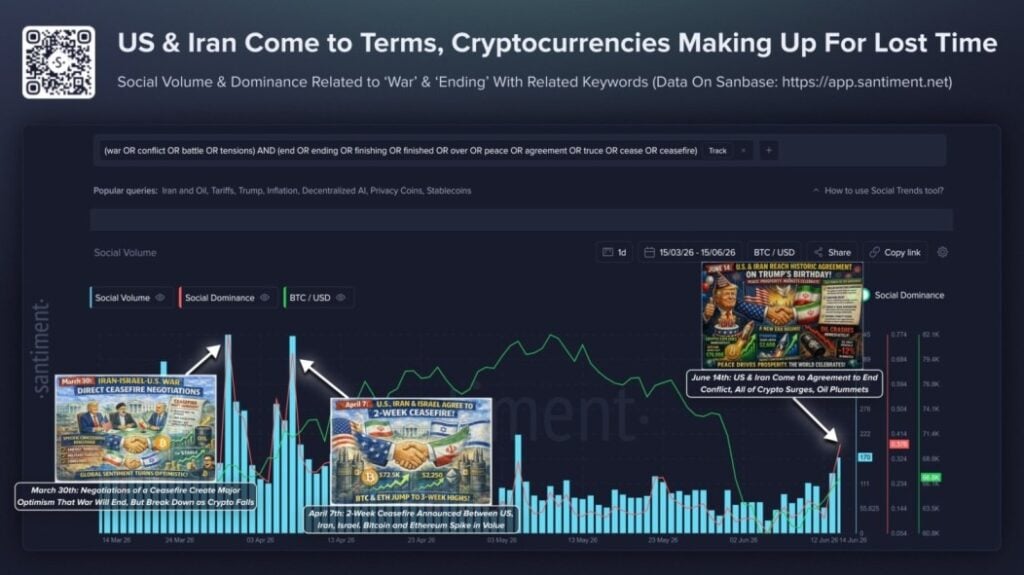
What the U.S.-Iran peace deal contains
The memorandum of understanding (MoU), confirmed by both U.S. and Pakistani officials (and recently by Iran), establishes a framework to end months of conflict. Key provisions include an “immediate opening” of the Strait of Hormuz, though officials acknowledge a full return to normal traffic could take up to two weeks as mines are removed.
The agreement commits to a 60-day cessation of military operations across all fronts, including Lebanon, while negotiations continue on longer term issues. The core template, according to senior U.S. officials briefing reporters, is straightforward: “If they’re willing to behave like a normal country, then we’re willing to treat them like a normal country.”
Iran has agreed to work with the U.S. to verify it is not developing nuclear weapons or funding regional militancy. In exchange, the U.S. will offer “a combination of sanctions relief and other economic measures.”
Reported Iranian media claims of a $300 billion reconstruction package and $300 million direct payment remain unconfirmed and were forcefully denied by President Trump, who called the $300 million figure “fake news” spread by “the Democrats”
Why the market narrative flipped so fast
For months, traders were bracing for supply shocks, inflation, and general instability in the region. The closure of the Strait of Hormuz (through which roughly one-fifth of the world’s oil passes) sent energy prices sky-high and pushed money into safe haven assets like gold and the dollar. Then the deal hit, and the market mood flipped overnight. Oil prices dropped, copper surged, and the Morgan Stanley Capital International (MSCI) Asia-Pacific index jumped 3 percent, with Japan’s Nikkei 225 hitting a record high.
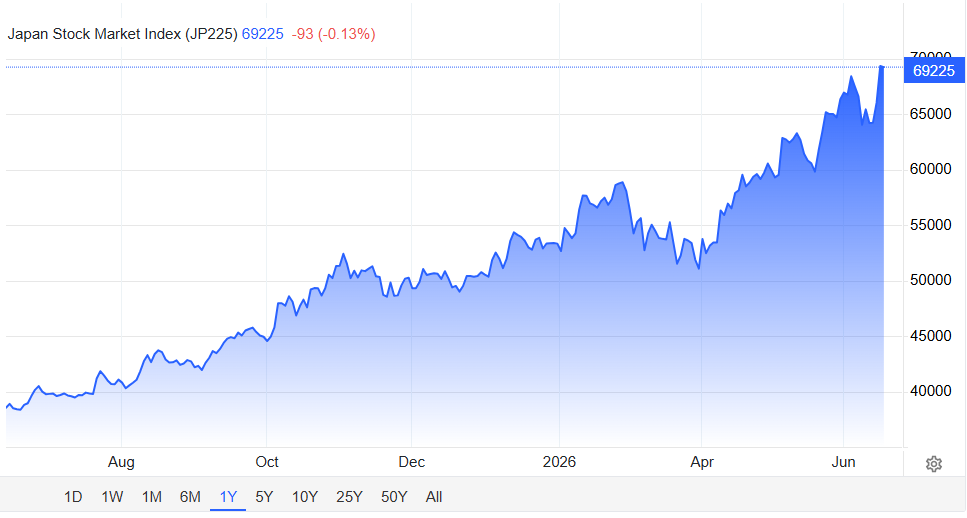
With the strait reopening, that major geopolitical fear, which has been baked into asset prices since the conflict started back in late February, is finally lifting. Investors are now betting on a return to normal, with trade routes clearing up, inflation cooling, and economic activity getting back on track.
Crypto’s cautious rally
Crypto markets are finally seeing some green. Bitcoin (BTC) is trading over $66,000 at the time of writing, after reclaiming $67,200. Still, the rally’s pretty quiet compared to the stock market. Bitcoin’s barely budged since midnight, and traders are hesitant to jump in just yet. Why? Well, crypto’s been burned by these headlines before. Remember when that April ceasefire fell apart, or when the June 9 truce didn’t hold? Both times, any gains just vanished. A lot of folks are waiting to see the ink dry on the June 19 deal before putting real money back on the table.
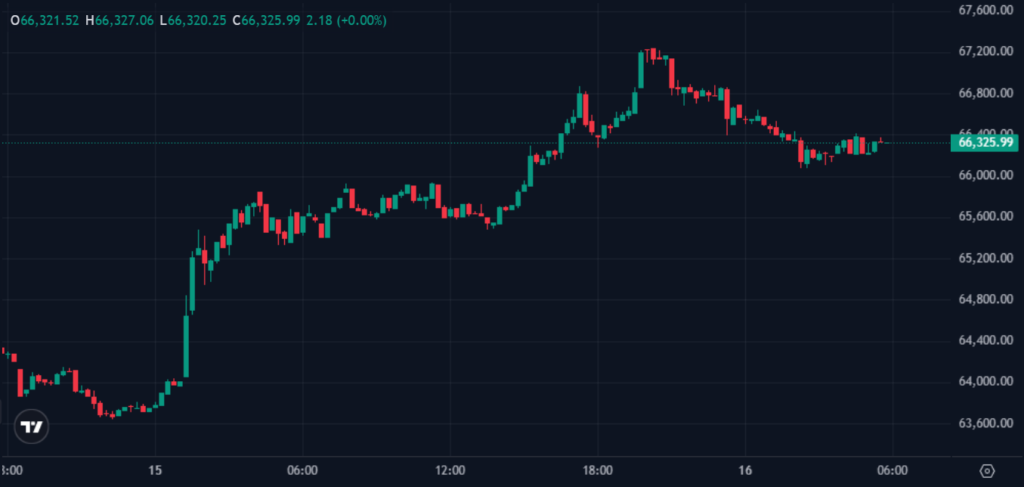
That said, the setup is looking a bit healthier. Open interest is picking up, funding rates are still pretty chill, and the overall positive vibe in the global markets is helping. Surprisingly, altcoins seem to be doing better, actually outperforming Bitcoin, with Ethereum (ETH), Solana (SOL), and Ripple (XRP) surging over 4 percent in the last 24 hours.
What comes next: Israel, Lebanon, and Fed risk
Sure, the deal with Iran is massive, but it’s just one piece of the puzzle. Over in Israel, the stance hasn’t changed much regarding Lebanon. They are still holding firm on their demand that Hezbollah clear out completely from everything south of the Litani River before they’ll even consider a broader ceasefire.
Even though Israel and Lebanon managed to restart their shaky ceasefire earlier this month (June 2026) and set up those “pilot zones” for the Lebanese army to handle, things are still pretty tense.
Then there’s the economic side. The real test for this rally hits Wednesday. That’s when the Federal Reserve (Fed) holds its first meeting with Kevin Warsh in the chair. With inflation sitting at 4.2 percent (the highest we’ve seen since April 2023), a hawkish signal could test a rally running on the peace dividend.


