
Bitcoin is currently changing hands at $63,369 which is a quick, followed-up reversal from a session low of near $60,000. This upside move came solely immediately when President Trump stated that he had canceled planned strikes on Iran and additionally mentioned the price deal that can be signed as early as this weekend. It is noteworthy that one single session made this largest cryptocurrency rise by nearly $2300 and had such influence that stocks were gaining momentum and at one point in time, it looked like the bottom was already placed.
However, this trend slowed down almost as soon as the bitcoin touched $63,400, and with the FOMC now being just four days away, there is market uncertainty and the traders are waiting for further confirmation.
What does Bitcoin’s structure suggest?
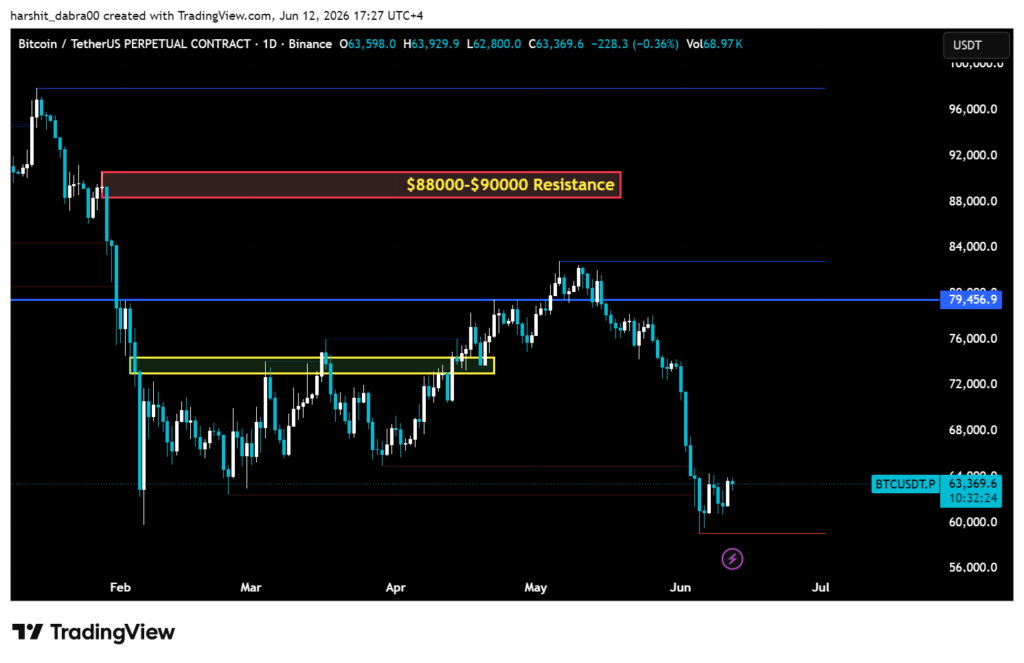
The May structural breakdown forms the container for all other activity. Throughout February to April, BTC was trying to break and hold above the $72,500 and offering a constant reference to institutional participants. The asset then followed up with the correction and broke down without much support at the corresponding level wherein it should have followed up with a bounce, only finding a floor at $60,000 (every long entry during consolidation is now underwater, and it looks like that the overhead supply has not yet been absorbed). From the early dates to may till now, the asset has dropped around 23 percent to the current trading price.
The trend from the moving averages
All long-term moving averages additionally indicate that the trend is downward. SMA 200 is at $78,008 and EMA 200 at $79,799. It can be put into consideration that even SMA 7 is trading at just $62,110, which reflects the depth of and recency of the bounce; the price has only just held above it. When the price of Bitcoin trades $16,000 below its 200-day SMA and there is no compression forming a difference between long- and short-term averages, the only technical argument for the trend to flip is a relief rally during a downward trend. This is quite contrary to a reversal in the overall trend.
The volume is exposing the rally
That trading session pushed Bitcoin’s price by $2,300 and closed with just 68.97K contracts and on the liquidations side there were $68.38 million in total liquidations in the past 24 hours, according to the derivatives data providers like Coinglass.
These are modest figures for a short-term move that is driven by one of the year’s bigger geopolitical developments. Funds pulled $4.4 billion that spanned across 13 consecutive ETF outflow sessions and that is inclusive of $1.34 billion from BlackRock’s IBIT solely in the week that ended June 8.
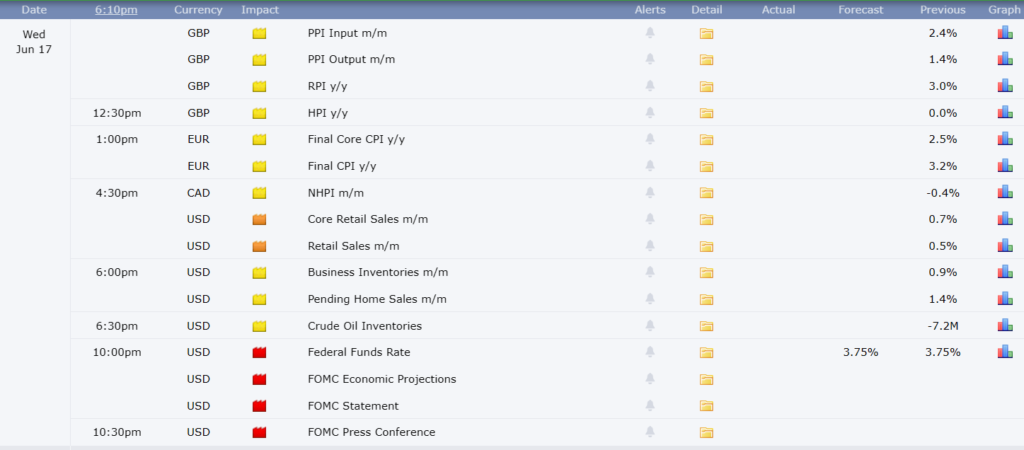
The geopolitical pressure is now on the colder side. The next important thing that market participants should focus on is the Fed. June 17 is the date and the rate holds itself. It changes not much because markets have already priced it at 98 percent in expectations.
The Fed’s Dot Plot represents the direction that officials expect interest rates to go. If it shifts on the lower side, markets expect rate cuts, and this stance primarily helps risk assets like crypto due to the fact investors may move away from cash and bonds. In case if it stays flat or moves higher, it will point out that the rates will remain high, which can trigger the sell side for this largest cryptocurrency.
The fibonacci levels to watch
The price of BTC, currently being traded at $63,369, and it is just resting below the $64,009 Fibonacci level, with the next level floor at $62,953. If the asset gains some momentum and pushes higher, it may face resistance at these levels: $67,855, $70,557, and then $73,259 and at each of these levels there are the late longers or the trapped traders that bought in the range from Feb to April, and they may look to sell at these levels.
For the market participants who went short at around the levels of $61,000 are already getting trapped and long positions there were chopped. Those who bought at $63,000-63,400 during the recovery are now flat and have no incentive to do anything until the fed meeting.