

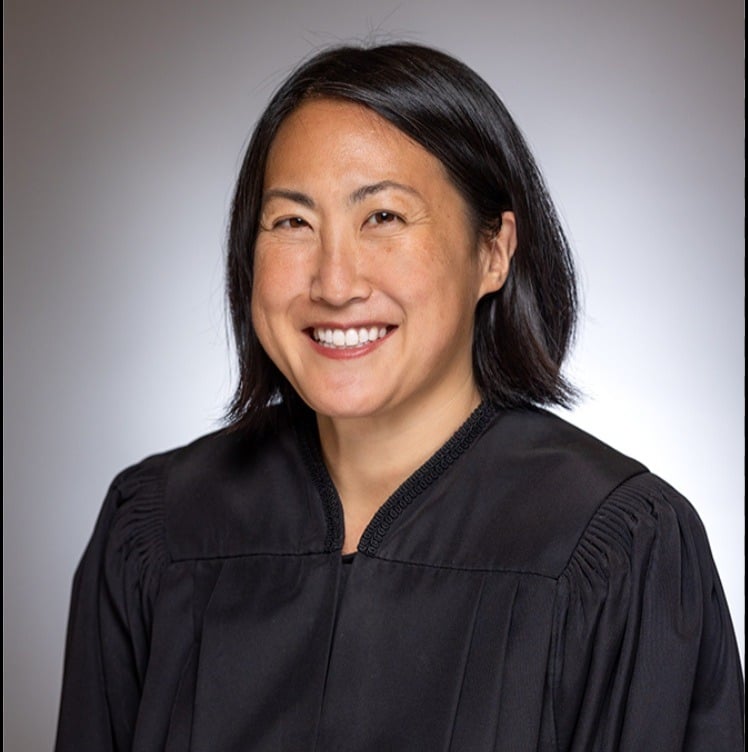
Elon Musk’s trade secret lawsuit against OpenAI is officially over after a federal judge ruled that further amendment would be “futile,” and there was no point in trying to fix it. Judge Rita Lin ruled that xAI couldn’t prove OpenAI actually tricked engineer Xuechen Li into sharing Grok’s secrets during hiring talks, so the case was dismissed with prejudice.
The case: A routine interview, not espionage
The main issue was a presentation Li gave during his interview with OpenAI. xAI claimed OpenAI was fishing for secrets about the upcoming Grok 4 release, saying its own ChatGPT updates “could not compete” on complex reasoning and that it was “lagging” in reinforcement learning stuff Li knew about. Judge Lin wasn’t buying it. She pointed out that it’s completely normal to ask candidates about their past work, noting: “To hold otherwise would potentially expose employers to liability any time they inquire about a candidate’s past work.”
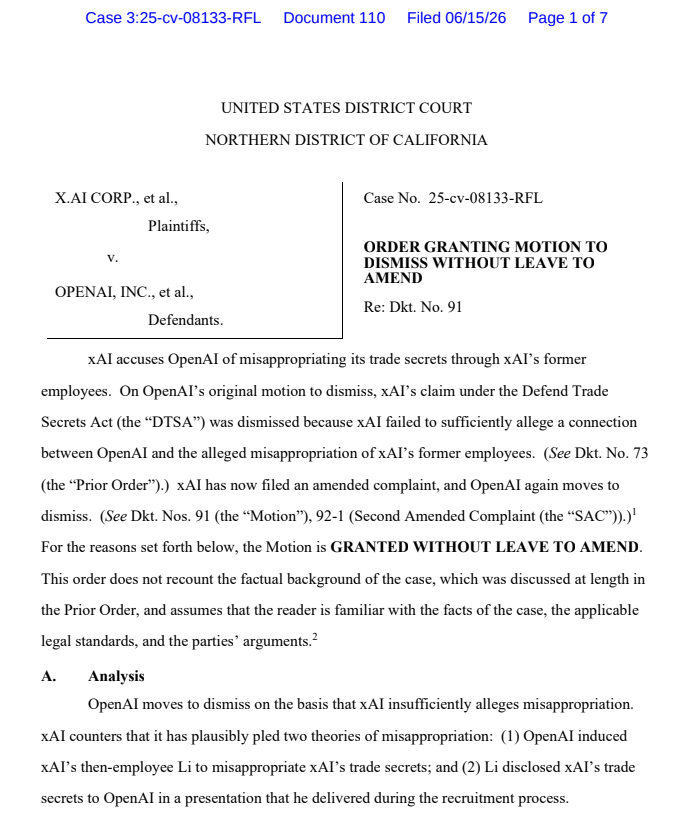
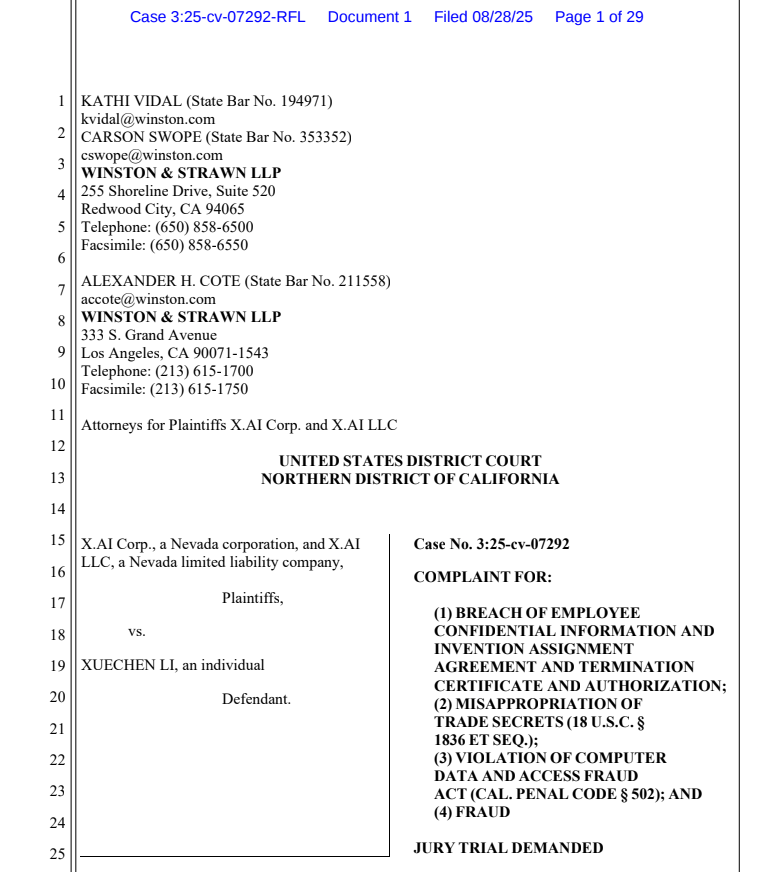
The judge also said the complaint didn’t actually prove that OpenAI pushed for any rule-breaking or that its engineers knew Li was spilling any secrets. The original lawsuit, which started back in August 2025, had already been dismissed once in February.
Two Legal Losses in Four Weeks
Monday’s ruling is Musk’s second court defeat against OpenAI since mid-May. On May 18, a federal jury unanimously rejected his $150 billion lawsuit accusing Sam Altman and OpenAI of betraying the company’s original nonprofit mission. That case ended abruptly when the jury found Musk had simply filed his claims too late; a statute of limitations ruling. His legal team has said it will appeal.
In the trade secret case, OpenAI’s lawyers delivered a devastating line in their dismissal filing: “OpenAI does not need or want anyone’s trade secrets, especially not from xAI, which is failing in the marketplace and hemorrhaging talent.” That barb carries weight. All 11 of xAI’s original co-founders have now left the company, which was absorbed into SpaceX in a $1.25 trillion combined deal in February. Musk himself has said xAI “was not built right the first time around” and needs to be rebuilt from the ground up.
What the ruling means for AI hiring
Judge Lin’s logic actually matters a lot for the rest of the AI world. Companies in this space are always hiring from each other, and it’s normal for people to talk about what they did at their last job during an interview. This ruling basically confirms that just talking shop is not the same thing as stealing trade secrets.
If you want to win a case like this, you need real proof (like data logs or evidence of actual misuse), not just guesses based on who’s hiring whom. OpenAI says Li never even worked there and they never saw any xAI secrets. Li is still dealing with his own lawsuit from xAI, but since OpenAI is out of the picture, that case doesn’t seem like as big of a deal anymore.