

Layer 1 blockchains such as SUI often advertise extremely high transactions-per-second (TPS) figures based on controlled testnet environments. However, real-world mainnet performance is typically only a fraction of those numbers due to network congestion, validator distribution, transaction complexity, and decentralized operating conditions.
According to analysts, projects showcase these theoretical limits to demonstrate scalability headroom and future capacity, but the gap between marketed TPS and actual throughput has become a growing point of scrutiny among investors and blockchain analysts. Despite SUI’s marketing efforts, the price has crashed below the multi-year trendline.
SUI successfully conducted a test run of 6 million transactions per second; however, in reality, the network is far from that figure. During the past 7 days, the network was only able to process 47 transactions per second, which is poles apart from what has been marketed.
Unsued capacity means lesser transaction fee
So why do they do this?
Headroom referred to by the analyst in the above X post is the unused transaction capacity that a blockchain deliberately maintains so it can absorb sudden surges in activity without slowing down. A network operating close to its maximum throughput is more likely to experience congestion, causing transaction fees to rise, confirmation times to lengthen, and, in some cases, transactions to fail. This has been seen repeatedly on Ethereum during periods of intense demand, such as NFT launches and memecoin trading frenzies.
Modern Layer 1 blockchains are designed with significantly higher capacity than current demand requires, allowing them to accommodate spikes in network usage while maintaining low fees and fast transaction processing. In this sense, unused capacity is not a sign of inefficiency but a design choice that helps preserve performance as adoption grows.
Burst survival refers to a blockchain’s ability to withstand sudden, short-lived spikes in transaction demand without suffering network degradation. These bursts can be triggered by events such as NFT mints, token airdrops, viral memecoin launches, or major market rallies that cause thousands of users to interact with the network simultaneously.
If a blockchain has substantial spare capacity—for example, processing only 50 transactions per second while being capable of handling up to 100,000 TPS—it has a significant buffer to absorb these demand shocks without causing congestion, high fees, or failed transactions.
In contrast, a network with a maximum capacity of just 5,000 TPS is far more likely to reach its limits during such events, increasing the risk of delays, rising costs, and a poor user experience. This is why many modern Layer 1 blockchains prioritize high theoretical throughput: not because they expect to sustain those levels every day, but to ensure the network remains reliable during periods of exceptional demand.
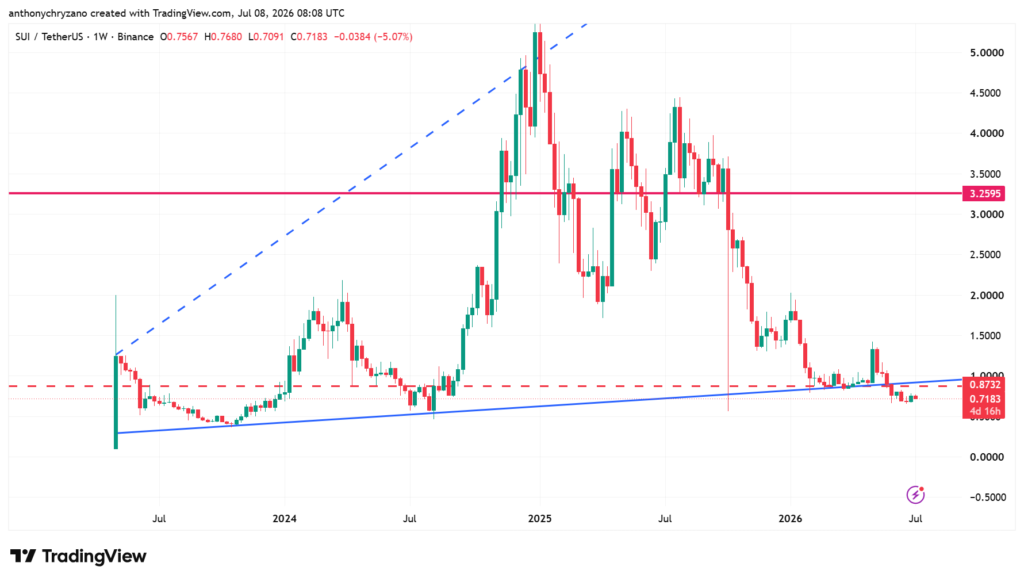
Despite SUI’s continued marketing around its high throughput, scalability, and growing ecosystem, the token’s price action tells a different story. SUI has broken below a multi-year ascending trendline, a key technical support level that had guided its longer-term uptrend.
The breakdown suggests that bearish sentiment is currently outweighing the project’s fundamental narrative, with sellers maintaining control despite ongoing network developments. Unless buyers reclaim this trendline, the breach could signal further downside and a shift in the market’s long-term outlook.
However, analyst Crypto Patel observed the price action and stated that although the price looks bearish, the downside is small while the upside is huge.