

Ripple has secured a Crypto-Asset Service Provider (CASP) license under the European Union’s Markets in Crypto-Assets (MiCA) framework, marking a major regulatory milestone for its expansion across Europe. However, the regulatory win has done little to lift XRP, which remains in a downtrend even as Japanese firms increasingly diversify into cryptocurrencies amid persistent weakness in the yen.
Ripple obtains MiCA license as it tries to cater to EU demand
Yesterday, Ripple, the company behind the XRP coin, obtained the CASP license, making it compliant with the MiCA framework in the EU. Ripple’s acquisition of a Crypto-Asset Service Provider (CASP) license under the European Union’s Markets in Crypto-Assets (MiCA) framework marks a significant regulatory milestone, allowing the company to legally offer approved crypto services across the European Economic Area through a single authorization.
The license provides greater regulatory clarity, enables easier expansion across EU member states through passporting rights, and enhances Ripple’s credibility among banks, financial institutions, and enterprise clients seeking compliant blockchain payment solutions.
While the approval strengthens Ripple’s position in the European market and could support broader adoption of its services over time, however, it has not directly affected the prices. As there was no change in the prices, the comment section was livid with Ripple.

XRP prices do not flinch despite increased institutional interest in Japan
It’s not just the MiCA license that could not get XRP prices going, but even Japan’s institutional interest in acquiring XRP has not translated into a spike. The crypto division of Tokyo-based financial conglomerate SBI Holdings reported increased adoption of its corporate service, SBIVC for Prime, as Japanese companies look to diversify their reserves beyond traditional cash holdings amid a weakening yen.
The growing demand is also being fueled by firms offering cryptocurrencies such as Bitcoin and XRP as shareholder benefits. As shown in the chart below, the XRP price hit the trendline and continues to make lower highs.
XRP continues its downtrend since last year
This downward trend has existed since last year, and XRP has always been below this trend line. The trendline has become a major resistance level for XRP, as renewed selling pressure has met every attempt to break above it.
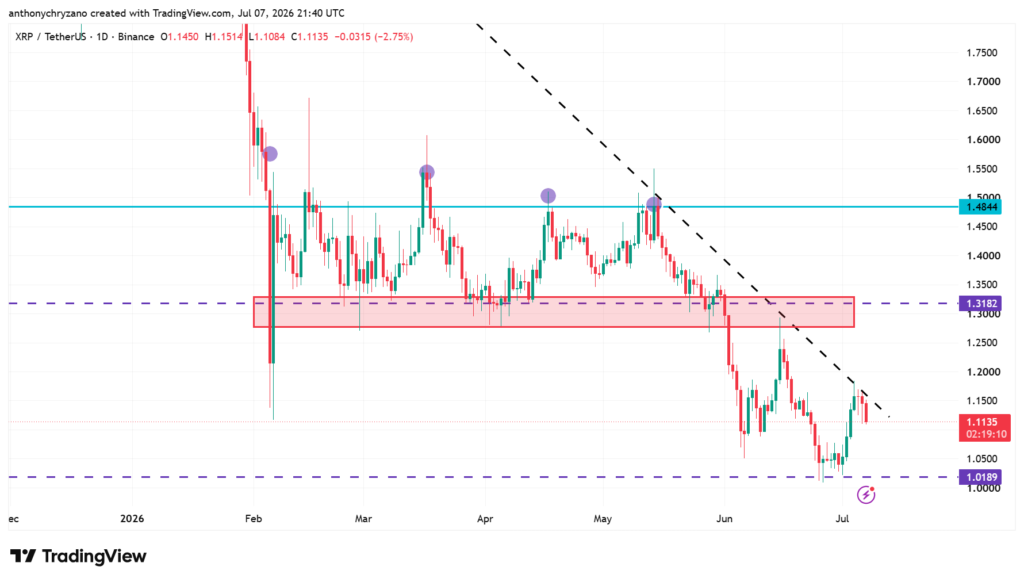
Since last year, XRP has consistently formed lower highs while remaining below this descending trendline, indicating that bears have maintained control over the market structure. The repeated rejections suggest that traders are closely watching this level, with sellers using each approach toward the trendline as an opportunity to exit or open short positions. Until XRP decisively breaks above this resistance and establishes a higher high, the broader downtrend remains intact.