
During the current boom in the tokenized equity market, the Depository Trust Company successfully converted assets held in its custody into tokens and used them in real production trades, marking what the Depository Trust & Clearing Corporation called “the largest tokenization production initiative to date in terms of breadth of use cases and participants.”
More than 30 firms spanning traditional finance and digital assets participated, including BlackRock, J.P. Morgan, Goldman Sachs, Citadel Securities, Nasdaq, and the New York Stock Exchange.
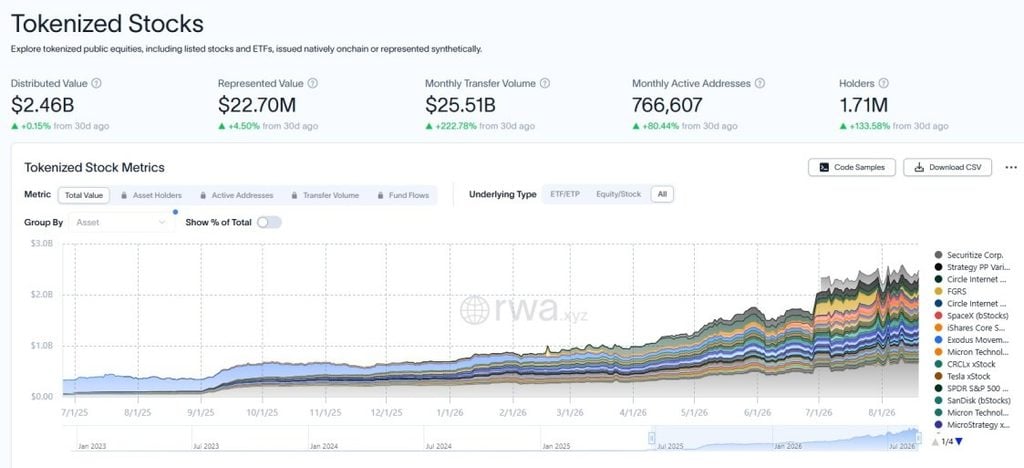
With the tokenized equity market hitting an all-time high of $2.4 billion at the time of writing, the signals of the sector’s maturation are clearly on rails.
From pilot to production: The October countdown
With the trial proving to be a total success, everyone is now looking toward October 2026 for the official rollout of DTC’s full tokenization service. This new structure is going to shake up the market, as it will allow securities held by the DTC, currently valued at over $114 trillion, to be swapped between traditional and tokenized versions, giving DTC participants the freedom to shift their assets into approved digital wallets whenever they need to, 24/7.
Moreover, these tokenized assets have the same Committee on Uniform Securities Identification Procedures, or CUSIP, and legal rights just as traditional securities, but, they come with built-in compliance like minting, burning, freezing, and forced transfers.
The $2.4 billion market’s real driver: Global access, not US demand
For a bit more context, the tokenized equity market isn’t surging just because Americans can’t buy Apple stock. The real volume driver is international access: investors in over 120 countries can now trade U.S. equity tokens 24/7 with stablecoin settlement, bypassing the need for U.S. accounts.
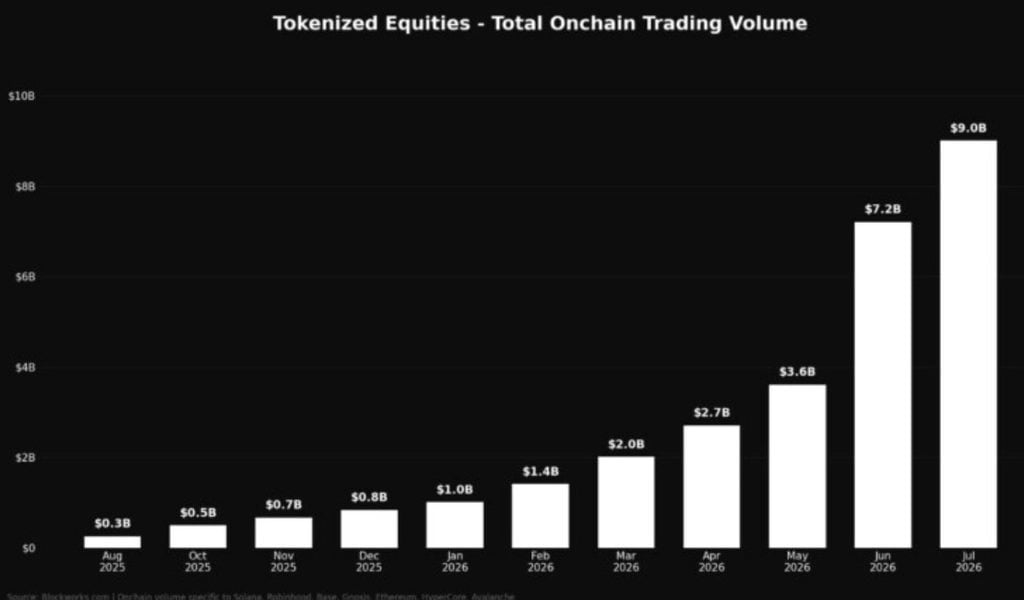
Robinhood Chain’s launch on July 1 and Binance’s bStocks have brought stock tokens to millions of existing users globally. This explains why 55 percent of tokenized equity trading happens when Wall Street is closed, why the sector hit $9 billion in trading volume, up to 800 percent from January, and why Solana alone processed $4.9 billion in tokenized equity volume just in the first half of 2026.
The regulatory foundation
The October launch follows a series of regulatory milestones. In December 2025, DTC received a No-Action Letter from the Securities and Exchange Commission authorizing its tokenization pilot for three years.
Back in March 2026, the SEC gave the thumbs up to Nasdaq’s rule change, and then NYSE’s Rule 7.50 kicked in during April, letting tokenized assets trade on their main order books. Under these guidelines, tokenized securities now run right alongside traditional shares, sharing the same order book and CUSIP while keeping that reliable T+1 settlement.
Two rails: Regulated versus Crypto-native
Turlov Family Office Securities’ new Analytical Review identifies two distinct models:
- On the regulated rail, the token is the security itself; holders receive voting rights and dividends, with settlement through DTC.
- On the crypto-native rail, tokens are typically debt instruments or synthetics offering price exposure without ownership.
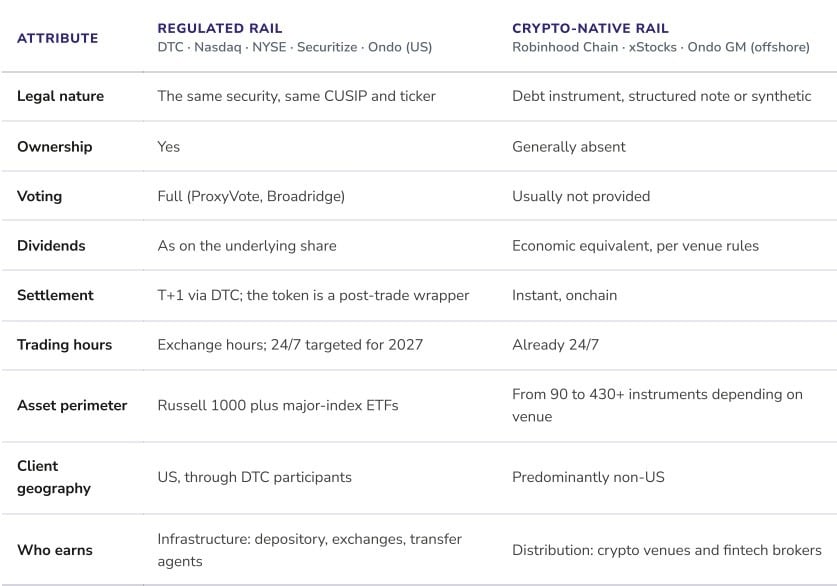
The TFOS review suggests that brokers in other jurisdictions start getting ready for the change, even though over a dozen countries already have rules for tokenized securities, but nearly all of them focus on funds and bonds instead of equities.