

A group of ten European banks just rolled out Regulated Layer One (RL1), a joint blockchain project set up as a European Cooperative Society (SCE) based in Luxembourg.
Using Secure Worldwide Interbank Asset Transfer (SWIAT)’s pro-level distributed ledger technology (DLT) infrastructure, the network has already handled more than €700 million lately.
RL1 is all about offering a fair, open space for tokenized assets and digital money, as well as next-generation settlement, making sure every member gets equal voting rights in how things are run in the group.
A cooperative model for institutional blockchain
This changes things a bit. Unlike many blockchain initiatives controlled by a single company, RL1 is structured as a cooperative in which each of the ten founding banks has equal voting rights in network governance and development. The whole point is to keep the infrastructure neutral so no single bank can take over the show.
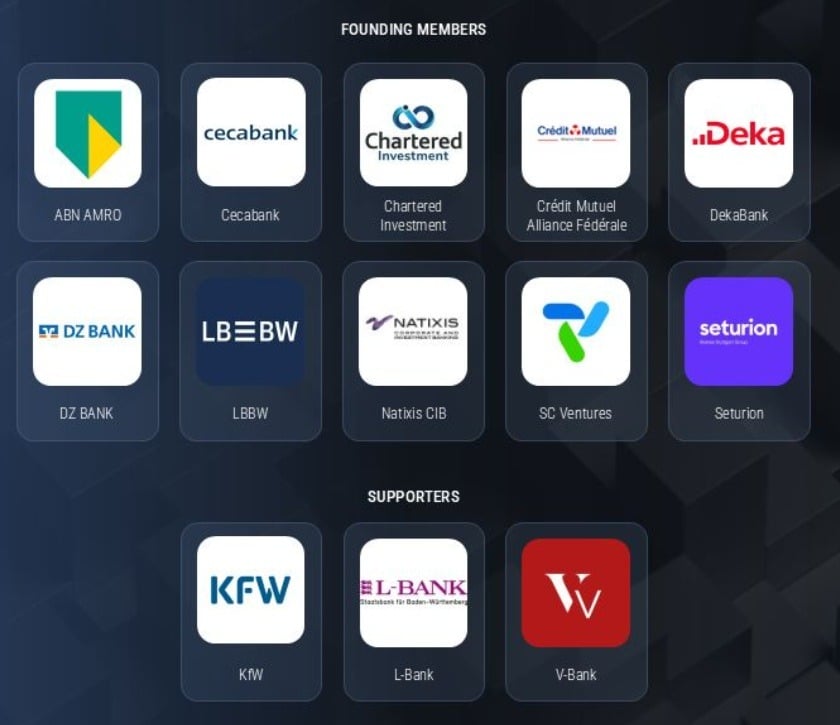
The network is private and permissioned, meeting the requirements of regulated financial institutions. The cooperative includes ABN AMRO, Cecabank, Crédit Mutuel, DekaBank, DZ BANK, LBBW, Natixis CIB, SC Ventures, and Seturion.
Henning Vollbehr, former Managing Director of SWIAT, has been appointed Managing Director of the new SCE. The network is still looking to bring more financial partners on board as they grow.
Use cases and strategic context
RL1 targets the workflows regulated institutions run:
- Digital bond issuance
- Tokenized real-world assets (RWAs)
- Onchain collateral mobilization
- Bank-issued stablecoins
- Repo and derivatives margining
SWIAT’s Federal Financial Supervisory Authority (BaFin)-supervised electronic securities registries will transition to run on RL1. The launch comes as the European Central Bank’s initiatives (Appia and Pontes for settling tokenized transactions in central bank money) gain traction.
A shared ledger for commercial banks provides those initiatives with a common settlement venue rather than a scatter of incompatible pilots. As Vollbehr stated, “RL1 will serve as the connecting infrastructure for Europe’s digital financial market, enabling participating institutions to move from isolated tokenization initiatives to an integrated, liquid, and scalable capital market ecosystem.”
The European context: RL1 as an ECB-compatible infrastructure layer
The launch of RL1 hits just as things are heating up in European capital markets. The European Central Bank (ECB) is actively building the core plumbing for settling tokenized assets through its Appia and Pontes initiatives, which aim to make it possible to settle those kinds of transactions using actual central bank money.
Looking at it this way, RL1 fills a major gap by offering a shared ledger for commercial banks that hooks right into those ECB initiatives. This creates a solid, complete settlement ecosystem instead of leaving everyone stuck dealing with a bunch of disconnected pilot projects.
The network is also built to handle digital euro and stablecoin settlements, making it a reliable, compliant backbone for the way the European regulatory scene is shifting these days.
For the blockchain world, RL1 proves that regulated decentralized finance (DeFi), with compliance baked in from the very start, can actually play nicely alongside public blockchain innovation.
With its cooperative governance model, all the participating institutions get to collectively decide how the network moves forward. It’s a great way to bridge the divide between the control traditional finance requires and the decentralized promise of blockchain.