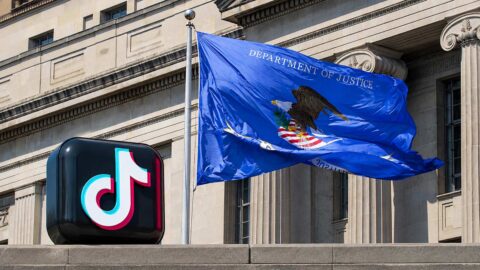

The U.S.-China talks in Beijing have achieved a key tech related milestone, with the two nations striking a deal to help chip business flourish.
According to a Reuters report on Thursday, the U.S. has given a green signal to around ten Chinese firms to buy Nvidia’s second most powerful AI chips H200.
However, despite the optimism, media reports highlight that not even a single delivery has been made so far. Nvidia CEO, Jensen Huang is set to attend a major technology deal in China this week, however the limbo of the current talks is likely to play as a set back for the deal.
According to a source, Huang accepted President Donald Trump’s offer to travel to Beijing even though he wasn’t originally included in the White House entourage. He was picked up by Trump in Alaska while travelling to a summit with Chinese President Xi Jinping, which raised expectations that the trip would finally resolve blocked attempts to sell the H200 chips in China.
The U.S. President and Nvidia CEO were also accompanied by a powerful group of tech and financial executives, including Tesla’s Elon Musk, Apple’s Tim Cook, and Larry Fink of BlackRock, who are laying the groundwork for significant agreements in artificial intelligence and technological infrastructure.
In a post on Truth Social on Wednesday, President Trump stated that he intends to persuade President Jinping to “open up” China to these American IT experts in order to “help bring the People’s Republic to an even higher level.”
U.S. grants Nvidia chip buying rights to 10 Chinese firms
The U.S. Commerce Department is said to have cleared ten Chinese technology giants to acquire the AI chip H200 from Nvidia.
These approved firms are reported to be some of the biggest Chinese technology giants like Alibaba, Tencent, ByteDance and JD.com. It is still a sensitive topic due to the fact that the U.S. still maintains control over exporting its advanced AI technology to China due to tensions within the industry.
Also, it’s worth noting that a few selected distributors including Lenovo and Foxconn have been given the green light to import the AI chips into China under the same licensing system.
The arrangement allows Chinese buyers to either purchase the chips directly from Nvidia or access them through these authorized intermediaries.
Under the current U.S. licensing conditions, each approved customer can reportedly acquire up to 75,000 H200 chips, potentially making it one of the biggest AI hardware supply deals involving China since Washington tightened export restrictions on advanced semiconductor technology.
Why does the green light matter?
The stakes for the deal are tremendous, demonstrating how the tech competition between the United States and China is currently impeding even authorised commerce.
The road block is trapping the world’s most valuable corporation and leading chipmaker between conflicting national agendas.
Nvidia had around 95 percent of China’s advanced semiconductor market prior to the tightening of U.S. export restrictions. Huang earlier predicted that China’s AI sector alone will be worth $50 billion this year, and the nation formerly accounted for 13 percent of its income.
Why the delay?
Despite being given approval by the United States, the agreements have allegedly stalled due to the decision made by some Chinese firms to hold off following instructions from Beijing.
Insiders familiar with the situation have pointed out that the delay was partially caused by events taking place in the United States as well, but what exactly happened has yet to be clarified.
Meanwhile, increasing pressures are allegedly mounting within China either stopping the purchases entirely or ensuring that they undergo strict evaluation and approval.
U.S. Commerce Secretary Howard Lutnick concurred with this stance in a recent Senate hearing by stating that, for the moment, the Chinese government will not allow the deals to go through, as Beijing is determined to keep investments and demand geared towards developing its domestic AI and semiconductor sector.