

Many traders only assume that liquidation is caused by insufficient margin. In truth, a number of systems working in the background make the decision of when and how your position closes. These rules are more or less the same from one crypto derivatives exchange to another, and many traders only learn of them once they lose money.
It becomes important to understand the working of liquidation, as, by doing so, it will essentially help the traders to work and manage the leverage better and also can avoid the surprises during the time of high volatility.
1. The position can be closed down without the balance touching zero
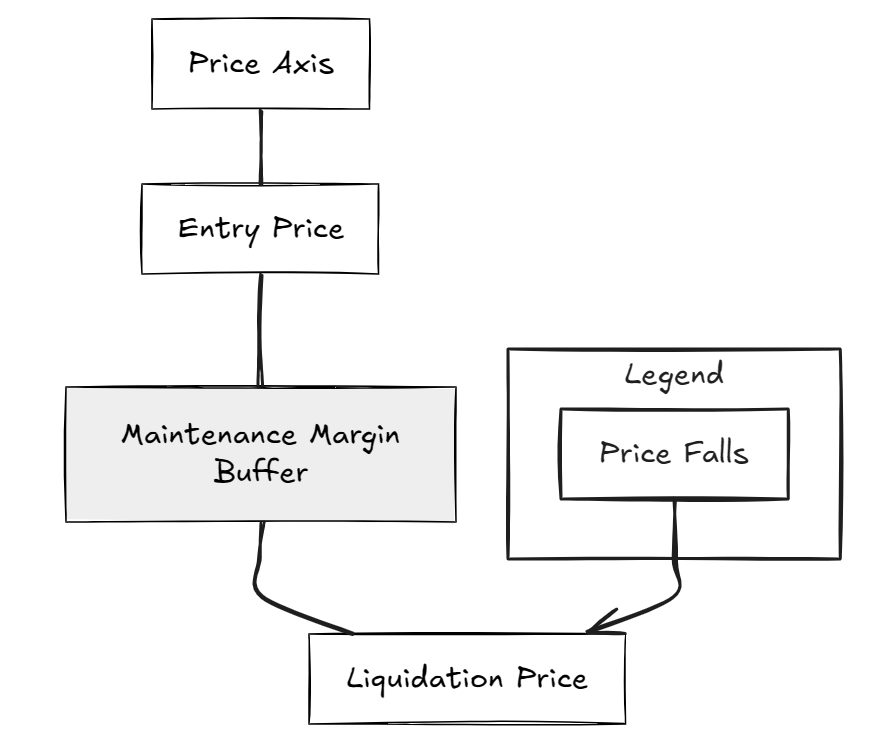
Many people in the trading world assume that when they are liquidated, all their margin has run out. But exchanges will liquidate their clients long before this using a maintenance margin; this is a safeguard for the exchanges so they can close the position before losses become greater than the collateral the user was carrying during the trade.
The buffer is a reason that an account can be closed with even some margin still open in the account. A lot of people want a little bit more room for the position than they truly have.
2. The liquidation fees can be imposed from the exchanges
Liquidation isn’t just a risk management tool. Most exchanges also charge a liquidation fee when they forcibly close a position. This fee is levied in addition to the trading fees incurred when opening or closing a trade normally.
Part of the exchange fee can be diverted to supplement the exchange’s insurance fund and a fund that will absorb market fluctuations in very extreme price changes. Regardless, the trader must still pay the liquidation fee when automatically liquidated; as a result, liquidations can also be a way for exchanges to generate revenue.
3. The position’s mark price could be used by the liquidations
Many people believe liquidations are calculated using the price displayed on the exchange charting platform. However, most exchanges use a mark price, a price that is calculated across several exchanges.
In this way, the mark price protects against market manipulation by unexpected surges in price on a single exchange but may prove misleading to traders in this regard. In the high-volatility market conditions, the mark price could spike and even exceed the liquidation price before any of the trades on the exchange had.
4. The traders’ expectations can be crushed from faster liquidation cascades
Large sell-offs often trigger a chain reaction. As one leveraged position gets liquidated, it pushes prices lower, forcing more positions to close. This process is known as a liquidation cascade.
Exchanges can see where leveraged positions are concentrated through their own risk systems, while retail traders usually rely on public liquidation heatmaps. During periods of low liquidity, even a relatively small move can trigger a much larger wave of forced selling.
5. The money-making traders can also be impacted
ADL or auto deleveraging, can get activated in the case that an exchange insurance fund is not able to fully cover the losses from the liquidated positions. Following this system, even some of the profitable positions on the opposite side of the market can be reduced or closed early to cover the shortfall.
Although ADL is clarified in exchange documentation, plenty of traders do not have any idea of it until they face the same. It is uncommon during normal market conditions but can occur during periods of extreme volatility.
What the traders should be focusing on
These mechanisms do not mean an exchange is acting unfairly. Most major crypto derivatives platforms make use of maintenance margins, mark prices, liquidation fees, and auto-deleveraging (ADL). The primary purpose of this is to manage leveraged trading and reduce the risk of unpaid losses
The key takeaway is that leverage includes much more than just making the choice of the right entry price. Being aware of how these systems work is likely to assist the market participants to manage risk more effectively, use leverage more carefully, and minimize the chances of unexpected liquidations during periods of high market volatility.