

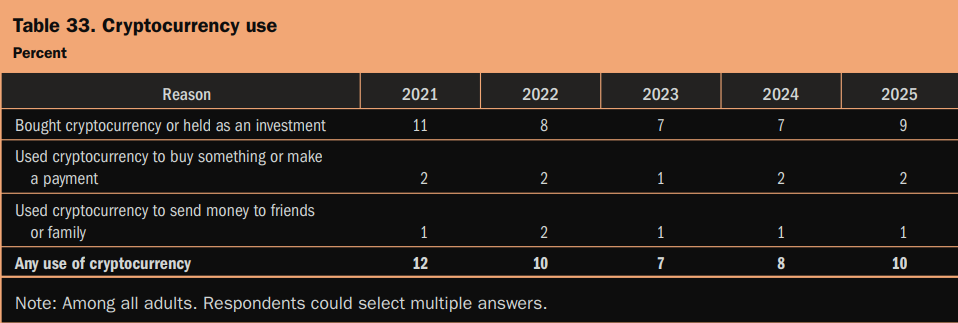
The adoption of cryptocurrencies rose in the U.S. last year as the nation took pro-active steps to regulate the digital assets industry. The U.S. Federal Reserve, in its latest report, claimed that over 10 percent of adults in the U.S. held crypto assets last year which is two percent higher compared to the numbers recorded in 2024.
The finding was published by the Federal Reserve in an 88-page report titled the “Economic Well-Being of U.S. Households in 2025”. It said that U.S. nationals are viewing crypto assets more as an investment option and not so much as a mode of payment.
“Nearly one in 10 adults bought or held cryptocurrency as an investment. Two percent of adults said they used cryptocurrency to make a financial transaction, which includes using cryptocurrency to buy something, make a payment, or send money to friends or family,” stated the report seen by The Coin Headlines.
Those using crypto for financial transactions said they were primarily doing so because others preferred to receive or pay in crypto and not traditional assets. Faster transaction processing, privacy, cheaper transfers, and distrust on banks emerged among other top reasons why crypto was being considered as a payment option in the first place.
The report said that 94 percent of adult U.S. nationals had bank accounts as of 2025 — leaving the remaining six percent under the “unbanked” category. This percentage has remained steady for the last four years since 2021. Black and Hispanic adults along with those with disability make for the majority of unbanked individuals in the U.S.
As per the Federal Reserve report, “Six percent of unbanked adults used cryptocurrency for financial transactions, compared with two percent among banked adults.”
Source: Federal Reserve
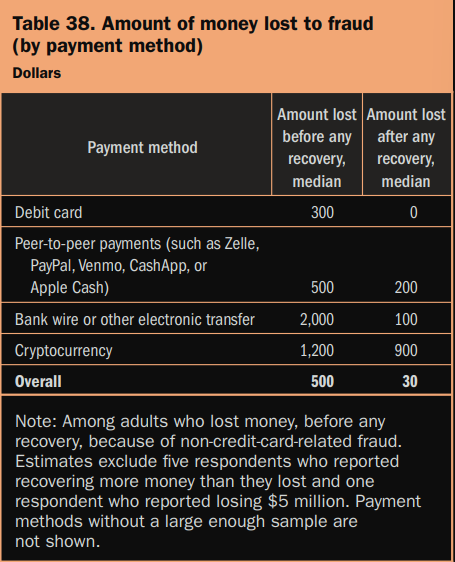
Meanwhile,the Fed report interestingly said that crypto frauds were less common compared to debit cards in the States last year. However, the recovery rate for card-related fraud incidents were recorded to be higher than similar cases related to crypto thefts.
“At 65 percent, adults experiencing fraud involving cryptocurrency were the most
likely to have lost money that was not recovered, roughly double the 31 percent for those
experiencing fraud involving debit cards,” the report noted.
Source: Federal Reserve
The U.S. made significant regulatory strides in the crypto sector last year, highlighted by the regulation of stablecoins under the GENIUS Act and initial explorations into a strategic crypto reserve. These initiatives are part of President Donald Trump’s vision to position the U.S. as the world’s cryptocurrency capital.
This year, CLARITY Act has taken centrestage which will define the structure of the crypto sector with better investor protection guardrails and clear guidelines to advance the integration of banks with digital assets — while ensuring national financial stability.
This ongoing evolution of the U.S. regulatory landscape around crypto has been a key adoption driver for digital assets and a reason for Web3 platforms to maintain high security standards to curb instances of scams and frauds.