

The Africa CEO Forum is certainly no stranger to high ambition. More than 2,500 business executives, investors, policymakers, and leaders gathered from more than 90 countries in Kigali on May 14 and 15 for the 2026 iteration of the forum. The theme, for once a little more prescient than most, is “The Scale Imperative: Why Africa Must Embrace Shared Ownership.” Rwandan President Paul Kagame spoke on the stage, as did the prime ministers of Ivory Coast and Mozambique; the president of the African Development Bank (AfDB), Sidi Ould Tah; and the managing director of the International Finance Corporation (IFC), Makhtar Diop, along with Bank of America’s Yvonne Ike.
There’s a message in the lineup. When two days on an entire continent across a forum of this size are dedicated to cross-border equity, infrastructure, and how to build African champions, that tells you what the smartest thinking on Africa is doing. Ownership is the issue. Access to the wealth the continent creates is the challenge.
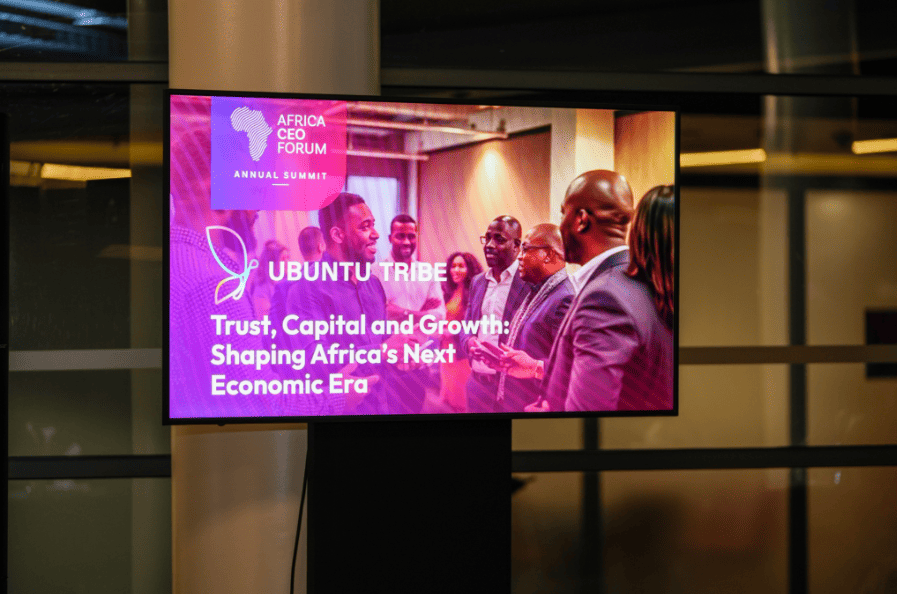
Ubuntu Tribe, an RWA tokenization firm, hosted a private cocktail in parallel to the Forum, which shared the same theme. Hosted in conjunction with the Africa CEO Forum, the private and invite-only meeting of over 100 investors, decision-makers, and institutional leaders was framed around “Trust, Capital, and Growth: Shaping Africa’s Next Economic Era.” They didn’t offer a presentation. It was about the architecture: the movement of capital in African markets, the breakdown of trust between the institution and saver and the kind of financial infrastructure of the coming decade.
The smuggling problem no panel has solved
The framing by the Forum at the macro level is key context. However, the Ubuntu Tribe proposition rests on a specific, quantifiable failure in African finance.
At least 435 tonnes of gold were illegally taken out of Africa in 2022. This is over 10 percent of global gold production in 2022. This is not a commodity problem. This is an infrastructure problem. Gold is leaving the continent in large quantities without a trace because there are simply no means, tools, or mechanisms available to the average or even most sophisticated participant in the market to possess, exchange, or use gold as collateral within Africa.
It is precisely that gap that Tokenization directly tackles. By allowing gold to be fractional, auditable, and traded, the physical commodity that is currently being shipped off of the continent can be contained and circulated. That is the argument that Ubuntu Tribe is using as a basis.
Their main product is GIFT Gold, which makes physical gold available by the milligram at the price of a few cents for each piece. The physical gold used is stored in audited reserves and it functions in accordance with European regulatory laws. At one end, the user is able to save and dispatch gold-backed value from a mobile wallet, while on the other end, institutions use it for treasury management and as collateral. An identical regulated instrument functioning in what would otherwise be two different completely segregated financial levels.
Toure’s track record and what Kigali actually signals
Mamadou Kwidjim Toure has worked on the infrastructure side of African finance for over 20 years. He has been involved in the financing of over $25B in deals with KPMG, BNP Paribas, IBM, and GE. He is also the founder of the Africa 2.0 Foundation, a platform that works in over 30 countries. Ubuntu Tribe is not an entry into the African institutional landscape for the first time. The product architecture, from milligram of gold fractions to institutional collateral, is built by someone that spent a lot of time inside of the deal architecture and the legal structure that moves the great capital through the continent.
His framing at the cocktail was direct: “Africa is one of the richest places on earth in resources and one of the poorest in access to them. We are building the infrastructure that lets Africans own and grow that wealth, from a saver with a few dollars to a national bank.”
The last sentence is key. Most tokenization offerings end up choosing a direction (either institutional or retail). A single regulated instrument that works for all two levels is an architectural claim and not just marketing and will be tested as Ubuntu Tribe scales.
Side events at conferences such as this barely advance anything. The African CEO Forum theme of shared ownership fell squarely on the intersection of when African governments and private capital both hit on the same structural problem: who truly owns the assets that produce wealth across the continent?
The room Ubuntu Tribe met is also important. Making a national bank accept tokenized gold as a proper treasury instrument is more complex than having a retail user download a wallet. Toure provided the right side of that transaction in Kigali.