

The jobs report that impacted gold on Friday also hit the largest cryptocurrency, Bitcoin, in the same way. The asset experienced a drop from $74580 and $65592 to finish the week at $63816, with a wick to $60000. The current structure seems to be shattered. The 30-day SMA stands at the price level of $74,345, and the current trading price is 15 percent below it. This is not just a simple pullback; it can be called more of a change in regime.
The momentum indicator, like MACD stands at -4,004 and the and the histogram is broadening at -1,303. Analyzing the current price behavior, it appears that it has no floor yet. RSI7 and RSI14 are both at 26. Oversold readings don’t do that much heavy lifting when macro is engaged in flushing speculative longs.
What’s the actual market trend
Stronger economic data, sustained inflation, growing bond yields, and a strong dollar have created difficulties for risk assets, including crypto assets like Bitcoin, according to Ole Hansen at Saxo Bank. Bitcoin has been trading more as a macro asset and maintaining correlation with macro conditions, which means wider market moves have more influence on the BTC price and are more prevalent.
This type of pattern can be observed in Gold as it has broken through the 200-day moving average and selling started to accelerate after a failed support breakdown at the moving average. The identical situation appears to be playing out with Bitcoin, involving high positioning and weak sentiment that led to the decline of this asset under $60,000.
What the chart highlights about the current structure
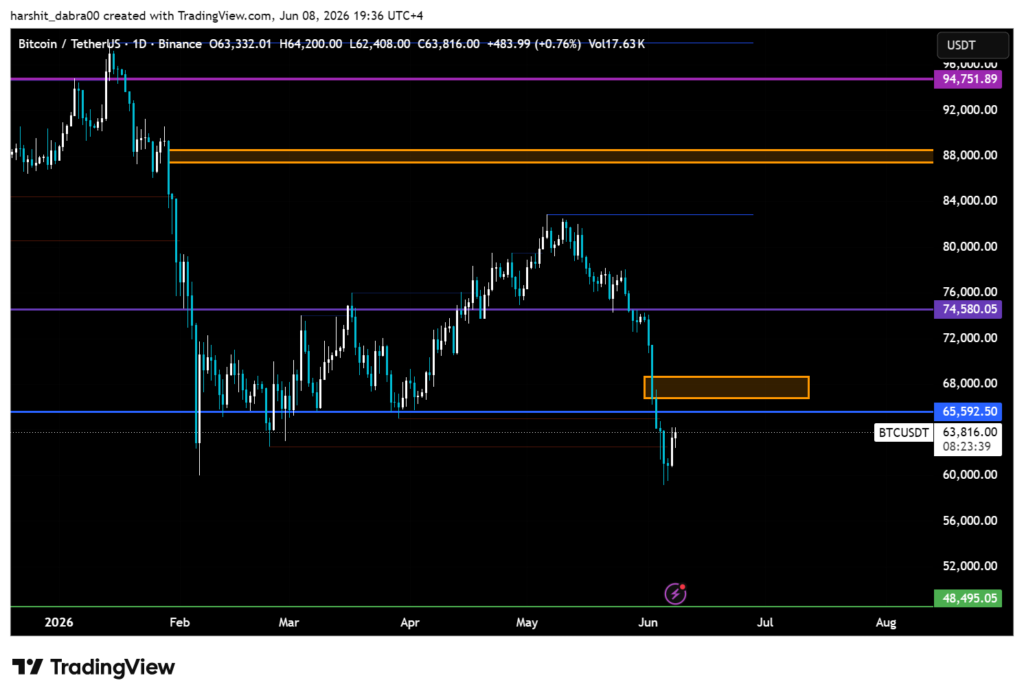
The daily chart shows an obvious support zone previously charted at $65,592 andthis is overhead resistance now. The demand zone in orange below $65,592, which was holding price in late May around $67,500-$68,500, was completely taken out last week, gap-and-extend toward $60,000. The current retest to $63,816 captures nothing structurally; the important part is that if the price reclaims the level around $66,000 on multiple daily closings, then the asset may have some chance to pump back close to $71,000.
For the important fibonacci levels, the 78.6 percent retracement of the swing low at $59,108 and swing high at $82,430 would land at $64,099; the current price is trading close to it. The 61.8 percent level, 68,017 is the first level that that asset needs to claim on any bullish re-read, and it is trading 6.5 percent above Friday’s close with a lot of prior distribution above.
On the upside, the road back looks very challenging. Firstly, the level of $74.580 (former support turned resistance), then the $88,000 level, and then finally $94.751 are all not relevant until the price structure at 65.592 returns within. Pivot support is standing at nearly $62,697; a high-volume daily close below this would bring the focus of the market participants to the wick low under $60,000.
Strategy: The One Buyer Standing
Strategy disclosed on monday they have added 1,550 BTC and it roughly amounts to $101 million and the total holdings for the company stand at 845,256 BTC. Their announcement went on to also state they have added $100 million to their USD reserves, and that amount has climbed to $1 billion, which essentially serves as dry powder along with their purchase. Considering today’s pricing, the purchase price averages out to be roughly $65,161 per Bitcoin, which sits under the broken support zone of $65,592. So this looks more like some disciplined accumulation from the company at a structural level.
The Macro Overlay
Hansen’s COT note also mentioned that the market participants have accumulated significant $10 billion net short positions in the Japanese yen in the face of constant intervention threats that leave the door open for the Bank of Japan to trigger volatility across risk assets if there is any involvement of an unannounced policy shift.
Meanwhile, net speculative positioning in agricultural commodities has seen a decent drop from its peak and this points towards a broader trend of reducing exposure across asset classes. This trend will not directly impact the high-risk assets like crypto, but it suggests a diminished risk appetite across markets.