

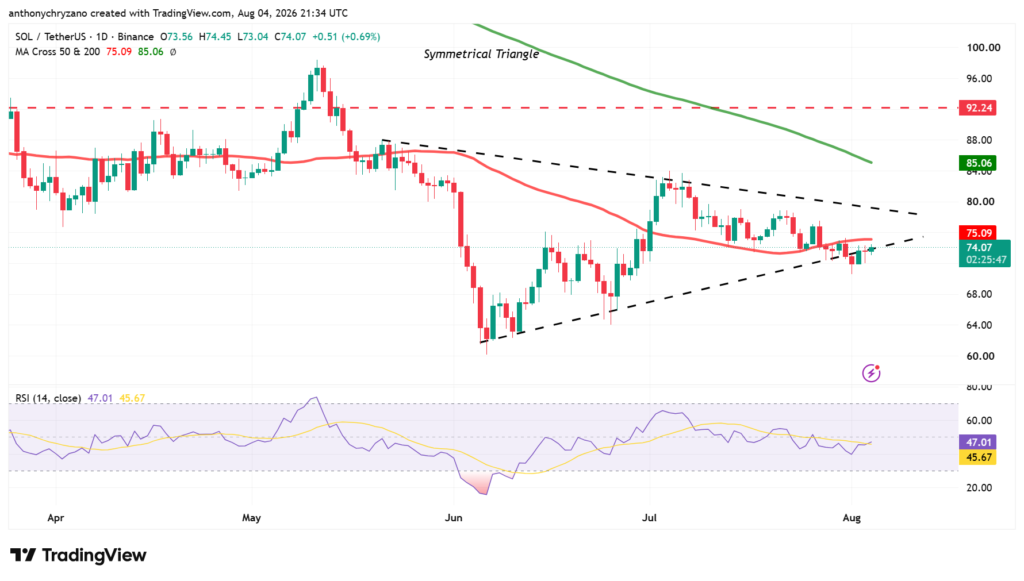
Solana (SOL) is compressing inside a wedge and gearing up for a massive move. This compression near the apex of the wedge comes at a time when the Solana network is fundamentally about to make some critical changes with two important governance proposals.
Solana’s range of motion is being compressed as the coin forms the apex of the descending triangle. With SOL falling straight for more than 10 months from the apex of the wedge in August, a month that has historically produced an average of 50% gains, the coin could be set for a massive move.
It’s not just technically and historically that Solana is edging closer to a rally, but even fundamentally, it is. For instance, there will be two major voting events that will happen this week. And the voting would be for two proposals: the Burn SIMD (Resource Fee SIMD) and the Disinflation SIMD.
Solana network will conduct voting on two proposals
The Burn SIMD, also known as the Resource Fee SIMD, is a proposed upgrade to Solana’s fee mechanism that would increase the amount of transaction priority fees permanently removed from circulation.
Currently, users can pay priority fees to have their transactions processed more quickly during periods of network congestion, with a portion of those fees going to validators. Under the proposal, a larger share of these resource fees would be burned instead of being distributed as validator rewards.
By permanently removing more SOL from circulation, the proposal aims to reduce the token’s supply over time and strengthen its long-term scarcity. If network activity remains high, increased fee burning could offset inflation and improve SOL’s tokenomics, although the proposal may face debate because it could reduce fee income for validators.
The Disinflation SIMD is a proposed governance upgrade that seeks to reduce Solana’s inflation rate more quickly than the current issuance schedule. At present, new SOL tokens are minted as staking rewards for validators and delegators, with the inflation rate gradually declining over time until it reaches its long-term target. The proposal would accelerate this reduction in token issuance, meaning fewer new SOL would enter circulation each year.
By lowering the rate at which new tokens are created, the Disinflation SIMD aims to reduce supply growth and limit the dilution of existing holders. Supporters argue that a lower inflation rate could make SOL’s tokenomics more attractive and reduce selling pressure from staking rewards, while critics caution that smaller staking rewards could discourage validator participation and potentially affect network security if participation declines.