

Ethereum has failed to overcome the stiff $2,000 resistance level. After trading between $1,800 to $1,900 for the better part of the past month, the second-largest cryptocurrency by market cap is starting to lose steam. As a result, ETH is now showing signs of further breakdown.
Ethereum stuck below $2,000 level
According to exchange data received on Friday, the Exchange Supply Ratio for ETH is currently hovering around the 3 percent mark. This means that the ratio of ETH held on Binance to the total supply is roughly 0.03.
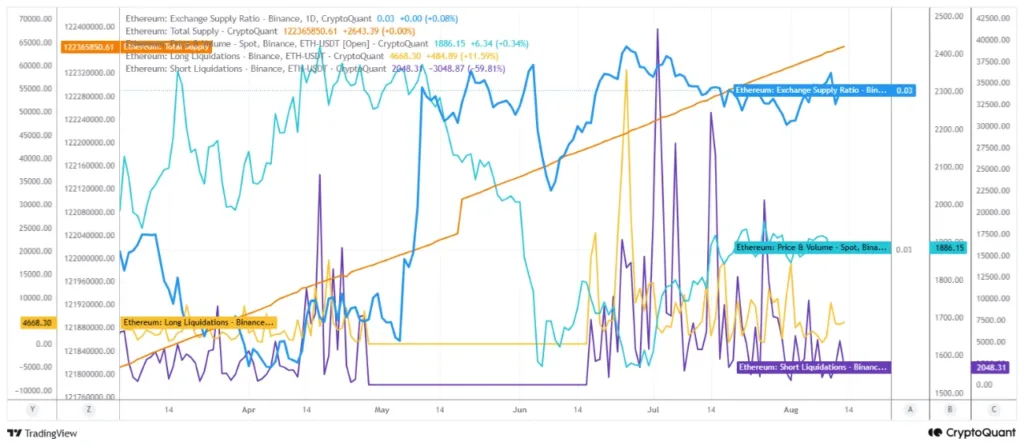
Since the ratio indicates that only a minuscule amount of ETH is currently held on Binance exchange, it confirms that the amount of ETH readily available for selling on exchanges is not particularly high.
To recall, back in June 2026, ETH had fallen to $1,550 before recovering some of its losses and rebounding to $1,886. However, since late July, the price has been moving sideways in approximately the $1,850-$1,950 range.
Under such range-bound conditions, ETH’s price is unlikely to rise significantly without new demand entering the market.
The latest on-chain data from Coinglass shows that long positions have experienced more liquidations – indicating that recent downward moves have cleared leveraged long positions. Since there is no significant accumulation of short positions, a strong relief rally also appears unlikely.
Since a large portion of leveraged positions has already been cleared, if ETH begins a new upward move, liquidation-driven volatility could be more limited compared with the previous period.
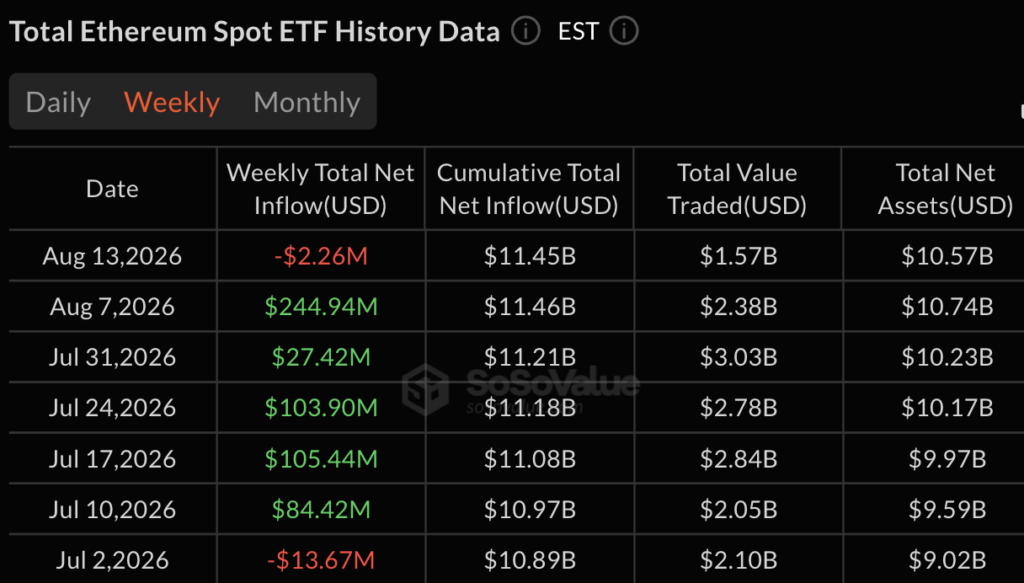
Exchange-traded funds, or ETF data, doesn’t appear very encouraging either. According to data from SoSoValue, ETH is on the verge of closing its first week in red after 5 consecutive weeks of net capital inflows.
Will ETH create a new 2026 low?
ETH’s current yearly low of $1,566 was recorded on June 26. Since then, the cryptocurrency has gained roughly 30 percent. However, exchange data from Monday showed that ETH is on its way to create another bottom.
In addition, ETH has been underperforming against Bitcoin, making investors reluctant about rotating capital from the largest cryptocurrency by market to the second-largest.
Persistent weak demand in the U.S. is further dampening any bullish force surrounding ETH.