


Wintermute said the crypto market is starting to look more like a late-stage bear market, as Bitcoin and Ethereum extended losses during a broader risk-asset pullback.
In its market update on Monday, the trading firm said the latest selloff follows several concurrent pressure points, including the fading AI trade, Nasdaq weakness, a stronger dollar, and higher-for-longer rate expectations.
Bitcoin fell 5.9 percent for the week, moved below $60,000, and touched the 200-week moving average. Ethereum fell 7.9 percent and continued to lag Bitcoin.
At the time of writing, Bitcoin traded near $58,330, down 3 percent over 24 hours, while Ethereum traded near $1,570, down 2 percent over the same period (according to The Coin Headlines market data).
Wintermute tied the move to stress in large-cap technology stocks. The Nasdaq fell 4.5 percent in its fifth straight losing session, while semiconductor stocks saw sharper losses. Meanwhile, the move looked more like a rotation away from large-cap tech than a broad flight from all risky assets.
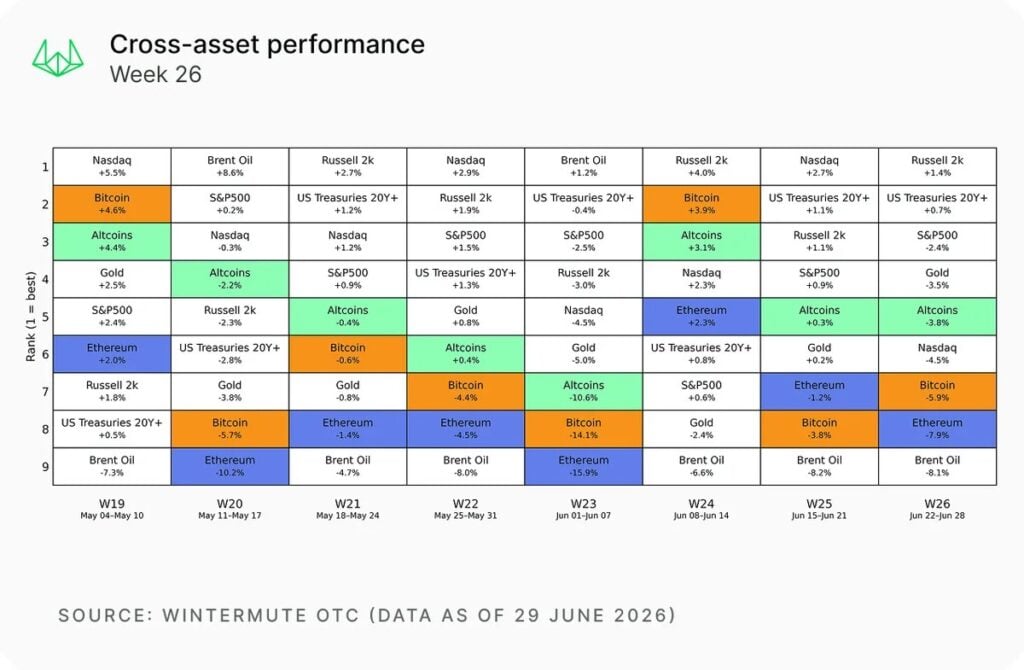
The AI trade had carried parts of the market for months, but Wintermute said investors are now asking whether AI spending plans and valuations can hold up. That matters for crypto because Bitcoin and Ethereum traded closely with Nasdaq weakness during the latest selloff.
Crypto capitulation starts, but bottom unconfirmed
Wintermute noted that market sentiment and on-chain data show signs of capitulation. Fear and Greed readings have stayed in extreme fear, while a growing share of coin supply now sits at a loss. These are common signs of stress near the later part of a bear cycle.
Still, the firm said the market has not yet confirmed a bottom. Wintermute said prior cycle lows came after deeper loss levels, and the current setup may still leave room for more weakness before a clear recovery forms.
“We feel like we are advanced but not there yet,” Wintermute noted in its market update.
The firm also pointed to weak liquidity channels. It said crypto needs stronger buying through ETFs, stablecoins, and digital asset treasury firms before the market can confirm a more durable base. Those flows have not turned yet.
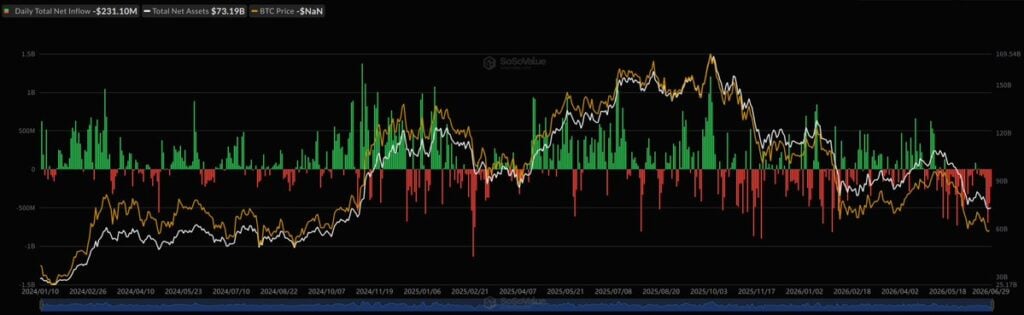
ETF data also added pressure. According to SoSoValue data, spot Bitcoin ETFs recorded $231 million in net outflows on June 29, while spot Ethereum ETFs saw $30.043 million leave on the same day. That followed Wintermute’s broader point that ETF demand has not yet returned in a strong way.
Bitcoin support faces a harder test
Bitcoin’s move below $60,000 put attention back on the 200-week moving average, a long-term level that has marked key stress zones in past cycles.
Bitcoin recently held near the $60,000 area as traders watched the $60,500 to $60,700 zone. Bitcoin has fallen about 21 percent from a late May high near $74,000 to around $58,300 on June 30.
The $59,614 level was a key pivot. A close below that area could expose the $58,075 zone. With Bitcoin now trading below that earlier range, market attention has moved to whether buyers can defend the wider $58,000 to $60,000 area.
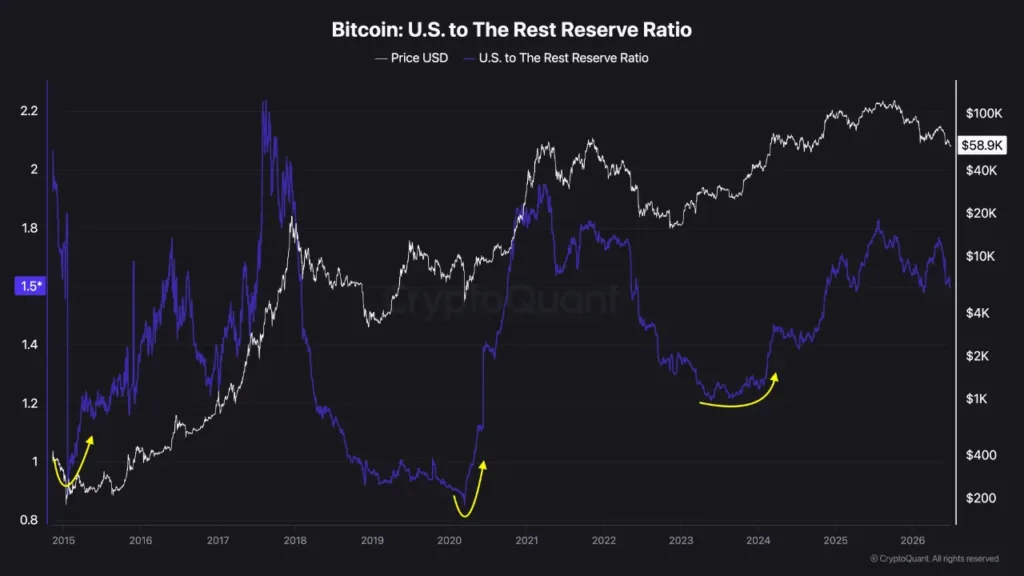
CryptoQuant analysts added more cautious data. Analyst crypto sunmoon said u.s. Bitcoin holdings have not yet shown the relative strength that has appeared before past bull market starts.
Darkfost also said about 84 percent of Binance-listed altcoins are trading below their 200-day moving averages, showing wider market stress beyond Bitcoin and Ethereum.
Strategy framework changes the treasury bid
Wintermute also focused on Strategy, the Bitcoin treasury company led by Michael Saylor. Strategy’s new Digital Credit Capital Framework changed how traders may view the long-running treasury bid for Bitcoin.
Previously, we covered Strategy’s new framework, which allows up to $1.25 billion in Bitcoin sales and sets a 12 percent dividend rate for STRC. The company also authorized $1 billion in preferred securities buybacks and $1 billion in MSTR stock buybacks.
Wintermute said this matters because many traders had treated Strategy’s Bitcoin stack as a permanent source of demand. The new framework does not mean Strategy is leaving Bitcoin, but it shows that treasury companies may sell some Bitcoin if they need to fund obligations, buybacks, or preferred dividends.
“The permanent bid is becoming a conditional one,” Wintermute noted.
The firm said Strategy’s update helped lower the risk of a disorderly market event tied to its capital structure. However, it also said the framework shows where the cycle stands. A Bitcoin treasury company now has a formal path to sell Bitcoin if needed.
Market waits for stronger buying pressure
Wintermute said the next stage depends on whether buying pressure improves. Sentiment already looks washed out, and Bitcoin is trading near a long-term support level. Those are early signs that a bear market may be advanced.
However, the missing part is stronger demand. ETF flows remain negative, treasury buying looks more selective, and stablecoin demand has not shown a clear turn. Wintermute also warned that if macro conditions improve, fresh liquidity may enter AI equities before crypto.
Seasonality may also slow the market. Wintermute said crypto has not often made major bottoms during the summer, when volume can stay thin. The firm said more pressure into September or October remains possible, depending on macro data and whether Bitcoin holds key levels.
The next catalysts include u.s. payroll data, Bitcoin’s defense of the 200-week moving average, and how STRC trades after Strategy’s framework update.


