

New York City Council Speaker Julie Menin opened an investigation into Polymarket, Kalshi, Coinbase and Gemini Titan over potentially deceptive or abusive marketing practices, escalating scrutiny of the fast-growing prediction-market industry.
According to an Aug. 12 Council announcement, Menin sent formal letters to the four platforms requesting information about advertising and promotional practices reaching New Yorkers, with particular concern around young people and consumers vulnerable to compulsive wagering.
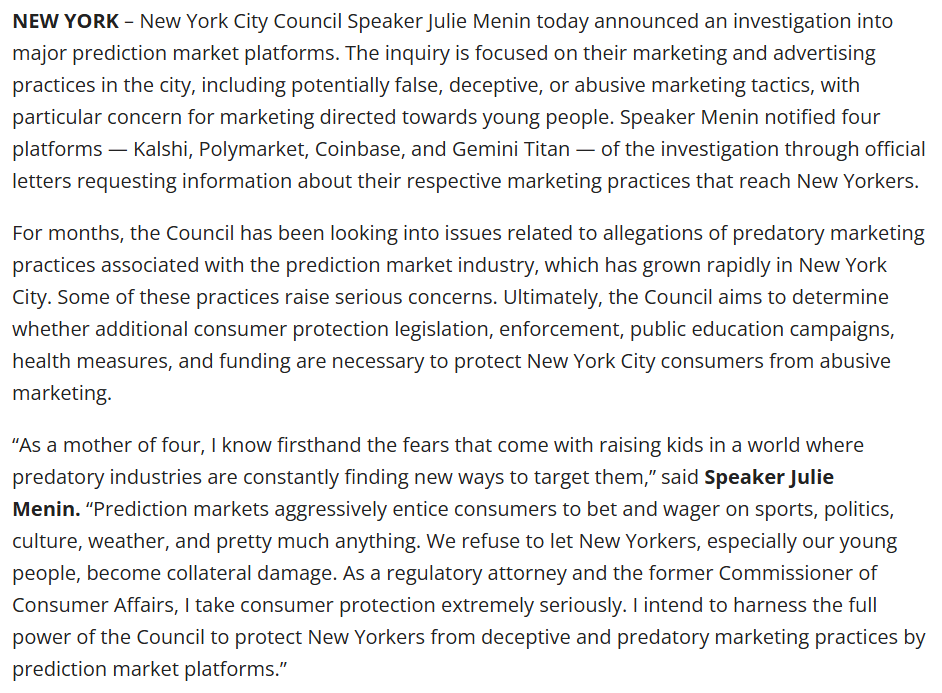
The Council also plans a hearing as it weighs whether stronger consumer-protection rules, enforcement measures or public-education efforts are needed.
Polymarket marketing practices draw scrutiny
The inquiry will examine allegations that Polymarket used or allowed social-media influencers to attract young adults to event contracts through misleading promotions.
The Council cited allegations involving undisclosed influencer marketing, videos showing trades that did not exist, portrayals of supposedly profitable wagers that would actually have produced losses, and content promoting insider trading. Those claims are allegations under investigation and have not been established as findings against the company.
Officials are also looking beyond Polymarket to determine whether similar practices are widespread across prediction-market platforms.
Council weighs tougher protections
The investigation comes as prediction markets expand into contracts tied to sports, politics, culture, weather and other real-world events.
Council officials said the rapid growth has created urgency because prediction markets are not currently constrained by some of the marketing restrictions and consumer protections that apply to casinos and online sports betting.
The next phase will center on information gathered from the four companies and a planned Council hearing, which could shape whether New York City pursues new legislation, enforcement or safeguards aimed at minors and consumers at risk of addictive behavior.
Prediction markets face widening legal pressure
Regulatory pressure on prediction markets has been building for years. In January 2022, the CFTC ordered Polymarket to pay $1.4 million and wind down noncompliant markets after finding it operated an unregistered event-based derivatives platform.
By November 2024, Polymarket was under U.S. criminal and civil investigation over whether Americans were improperly accessing the platform, with federal agents searching CEO Shayne Coplan’s home. However, those investigations were later dropped in July 2025.
Scrutiny widened in 2025 and 2026 as states challenged sports event contracts. Massachusetts secured an order blocking Kalshi from offering unlicensed sports wagers, while Nevada filed a civil action seeking to stop Polymarket from offering event contracts without a state gaming license.
Pressure intensified this summer, with France’s gambling regulator ordering internet providers to block access to Polymarket in July before New York sued Kalshi on July 31, accusing the platform of operating an illegal, unlicensed gambling business and seeking to halt its activities.