

BRICS countries are discussing ways to link their fast-payment systems and central bank digital currencies, as policymakers explore faster and cheaper channels for cross-border transactions, Reserve Bank of India Governor Sanjay Malhotra said on Tuesday.
Speaking at the FIBAC 2026 banking conference in Mumbai, Malhotra said options under consideration include connecting national instant-payment networks and improving interoperability between central bank digital currencies, or CBDCs. He stressed that discussions remain at an early stage and no final framework has been agreed upon.
The talks come as BRICS members examine how digital payment infrastructure could streamline international settlements and reduce the cost and time involved in moving money across borders.
BRICS explores payment system links as RBI pushes connectivity
Malhotra also said the RBI would continue efforts to expand the international use of the Indian rupee and encourage greater use of local currencies in cross-border trade and payments.
India has built one of the world’s largest instant-payment ecosystems around the Unified Payments Interface, or UPI, and has increasingly pursued links between its domestic payment infrastructure and overseas systems.
Connecting similar networks across BRICS economies could broaden those efforts, while CBDC interoperability could eventually provide another route for settling cross-border transactions directly through central bank-backed digital money.
However, any wider system would require coordination over technology standards, regulation, currency conversion and settlement arrangements across participating countries.
For now, Malhotra’s remarks signal that both fast-payment system connectivity and CBDC links are firmly on the BRICS agenda, although the discussions have yet to produce a formal implementation plan or timetable.
Dollar dominance faces a gradual BRICS challenge
A functioning BRICS payment network could reduce reliance on the U.S. dollar for trade settlement inside the bloc by allowing local currencies or CBDCs to move more directly across borders, cutting the need for dollar-based intermediaries.
If the bloc moves forward with those plans, however, the immediate impact on the dollar’s global dominance would likely remain limited, given the currency’s entrenched role in reserves, trade, cross-border payments and financial markets.
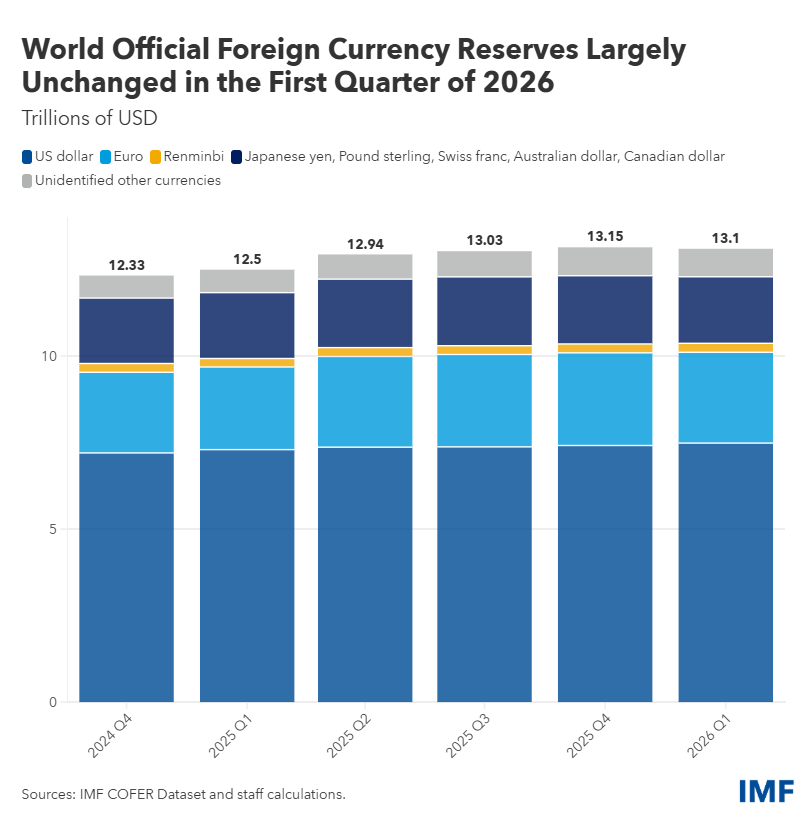
IMF data show the dollar accounted for 57.13 percent of global foreign-exchange reserves in the first quarter of 2026, up from 56.42 percent in the previous quarter, while China’s renminbi held just 1.99 percent .
The push has nevertheless drawn repeated warnings from U.S. President Donald Trump, who has threatened BRICS countries with tariffs over efforts he views as challenging the dollar.
His warnings have ranged from 100 percent tariffs to as high as 150 percent , while in July 2025 he threatened an additional 10 percent levy on countries aligning with what he called BRICS’ “anti-American” policies.
That gap underscores the scale of the challenge facing any broader BRICS effort to reduce dependence on the U.S. dollar, suggesting that payment-system links could gradually trim its role in trade without materially weakening its dominance in global finance anytime soon.