
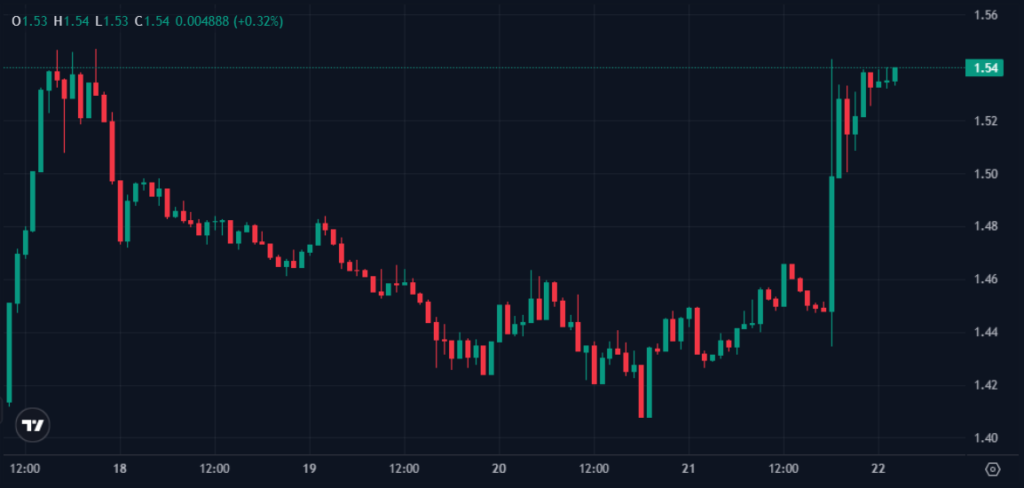
Pavel Durov announced through an X post that Telegram will roll out a native non-custodial Gram wallet inside every Telegram app this summer, promising instant zero-fee transactions for over 1 billion users. The announcement sent GRAM up approximately 10 percent, trading near $1.54. The new wallet is separate from the existing custodial Wallet in Telegram, which will continue to serve users seeking trading and investment features.
The non-custodial Gram wallet and its distinctions
The new wallet is non-custodial from the start, meaning users hold their own private keys. The existing @wallet bot, built by The Open Platform, defaults to custodial mode unless users deliberately switch to self-custody. The two will coexist for different audiences.
“Telegram Wallet serves as a simple gateway into crypto, whereas Wallet in Telegram is built for users seeking advanced trading, investment, and asset management capabilities,” said TOP founder Andrew Rogozov.
Key details remain unannounced: whether the new wallet replaces or coexists with @wallet, which assets it will support beyond Gram, and how key management will work at scale.
The significance and skepticism
Durov called it “the largest rollout of a non-custodial crypto wallet in human history.” MetaMask, the most widely used self-custody wallet, counts tens of millions of users. Nothing in crypto has ever launched with a billion-user base on day one. Skeptics persist.
Blockstream CEO Adam Back recently questioned GRAM’s inflation mechanics after Durov (in a Lex Fridman podcast) compared the token favorably with Bitcoin. Self-custody at Telegram’s scale is untested. Whether a billion users activate the wallet, rather than simply receiving it, will decide the rollout’s real impact.
A billion-user self-custody experiment
This new non-custodial Gram wallet is not just another app update, but a massive experiment in whether self-custody can actually work for everyone. While self-custody wallets like MetaMask are huge with tens of millions of users, we have never seen anything launch with a billion-person head start on day one.
For the blockchain audience, this is a big deal: a billion people are about to be responsible for their own private keys for the first time. It’s a dream for Web3 growth, but let’s be real, it’s probably going to be a support nightmare at first.
We are talking about mainstream users dealing with seed phrases, lost keys, and phishing scams all at once. It’s worth remembering Durov’s history here is a bit of a rollercoaster. Telegram originally raised $1.7 billion for TON back in 2018 before the Securities and Exchange Commission (SEC) stepped in, and they had to walk away. The community kept things going until Durov retook the reins in 2026 and rebranded it back to Gram.
This wallet is basically the next chapter in his plan to “Make TON Great Again.” Whether it actually works will likely define how the next billion people experience crypto.