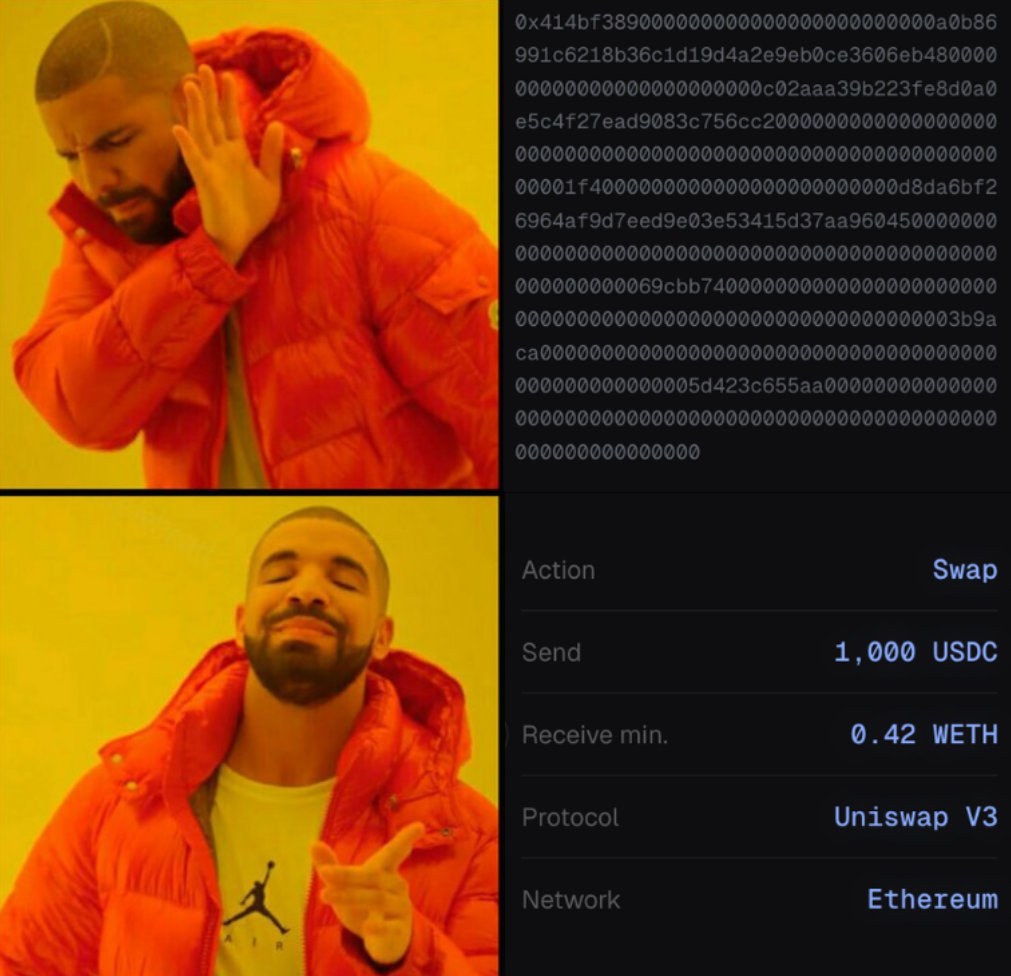

The Ethereum Foundation has announced that the open standard for “clear signing” is now operational, to end blind signing and make human-readable transactions the default across the ecosystem. You see, for years, signing a transaction often meant approving a string of unreadable hexadecimal code, a practice known as “blind signing” that has contributed to billions in losses from wallet scams and malicious approvals.
What ERC-7730 solves
Clear signing is introducing ERC-7730, an open standard that allows users’ wallets to display the proposed transaction in a readable format (plain language) when it is submitted, rather than just showing a complicated hash (technical data) they cannot understand. When a user sees the proposed transaction they are going to approve, they will actually know what asset they are approving, how much of it, and to whom, rather than an incomprehensible hash.

In addition to the efforts of many existing clear signing initiatives developed primarily by Ledger, including significant contributions from major wallet providers (Ledger, Trezor, MetaMask, WalletConnect), major security firms (Cyfrin, Fireblocks), infrastructure providers (Zama), tooling providers (Sourcify, Argot), and many other independent builders, the Ethereum Foundation has maintained its position as a neutral steward of the open standard.

Beyond ERC-7730, the framework includes:
- A neutral, mirrorable descriptor registry for sharing transaction descriptors
- An attestation framework (ERC-8176) so auditors can verify descriptor integrity
- Open developer tooling for wallets, protocols, and auditors
What is to come
Clear signing is ongoing work. Contributors will continue to expand coverage, improve tooling, and drive adoption across the ecosystem. The Ethereum Foundation’s Trillion Dollar Security initiative is backing the effort, recognizing that blind signing has been one of the most persistent security gaps in crypto so far.