

Norway announced a near ban on generative AI tools for elementary school pupils on Friday, limiting the technology’s role in classrooms as officials warn it could weaken basic learning.
Prime Minister Jonas Gahr Stoere said the government would introduce new standards from the school year beginning in late August, arguing that young children risk missing key stages of education if they rely too heavily on AI, according to Reuters.
“The most important thing in school is that our children learn to read, write and do mathematics,” Stoere told a press conference.
Under the plan, pupils from first through seventh grade, aged 6 to 13, should generally not use AI tools, while students in lower secondary school, aged 14 to 16, may adopt them cautiously under teacher supervision.
However, those in upper secondary education, aged 17 to 19, should be taught how to use AI properly as preparation for higher education and work.
The move follows Norway’s 2024 smartphone ban in schools and a push to restore classroom discipline. It also comes as the government seeks more books in classrooms and plans to bar children under 16 from social media.
Schools worldwide face the same AI dilemma
Norway’s near ban comes as artificial intelligence spreads across daily life and the workplace, forcing schools and universities to rethink how learning is measured.
From primary classrooms to universities, policymakers and researchers are confronting how to keep learning meaningful when AI tools can produce essays, solve problems and complete assignments in seconds.
A new study published in Science warned that generative AI is pushing universities toward urgent assessment reforms as traditional coursework becomes more exposed to AI-assisted misuse.
The study, conducted by researchers from Cornell University and the University of California, Berkeley, analyzed survey responses from more than 95,000 undergraduate students across 20 major U.S. public research universities.
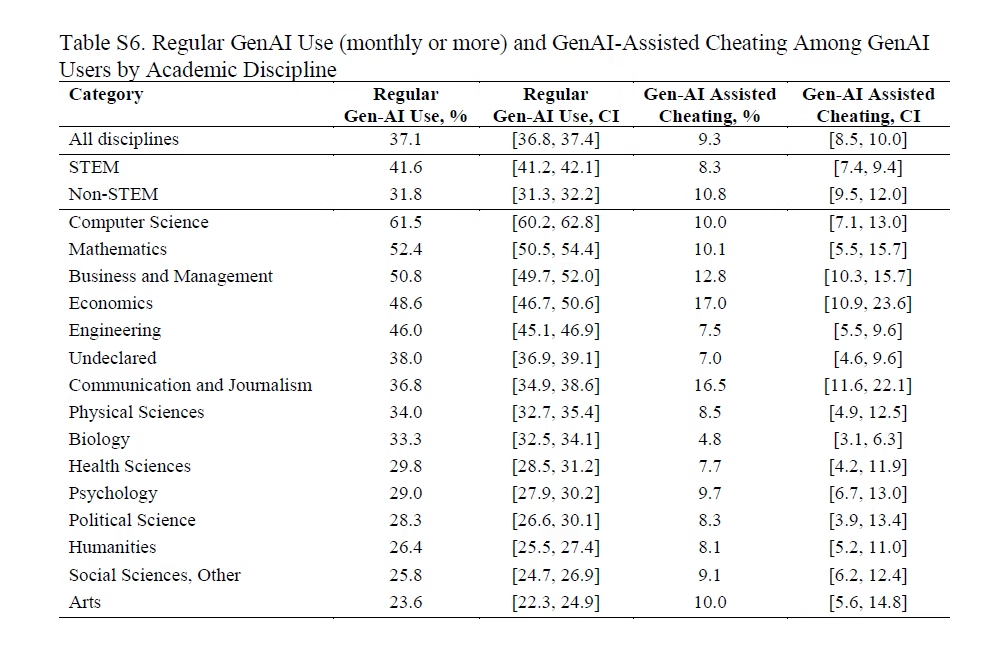
The researchers found that 37% of students used generative AI tools such as ChatGPT at least monthly for assignments, while an estimated 9% had used AI to cheat.
To measure hidden misuse, researchers avoided asking students directly whether they had cheated, instead comparing answers between groups given slightly different lists of statements about AI use.
Universities face pressure to change assessment
The study found cheating was more common among frequent AI users, reaching 26% among daily users compared with 7% among monthly users.
The study also found that AI adoption varied widely across higher education, with 62 percent of computer science students reporting regular use, compared with 24 percent of arts students. Male students reported regular use at 45 percent, versus 33 percent among female students.
Rather than calling for total bans, the authors said universities should redesign assessment around formats harder to automate, including oral exams, in-class writing, practical demonstrations and supervised testing.
They also pointed to process-based methods, such as drafts, reasoning steps, AI-use disclosure and defenses of final answers, suggesting the AI era may force education systems to measure not only what students submit, but how they think.