

CME Group announced it will launch Compute Futures on October 5, partnering with Silicon Data to create a new asset class for AI computing power. The contracts will track hourly rental Graphics Processing Unit (GPU) costs for Nvidia’s H100 and next-generation B200 chips, with each contract representing a month’s rent.
“Compute has become the currency of the AI age,” said Pete Keavey, Global Head of Energy and Environmental Products at CME Group. “Just as oil fueled the 20th century economy and evolved from spot trading into a global derivatives market, our futures contracts will now turn compute into a standardized, tradable commodity.”
How Compute Futures work
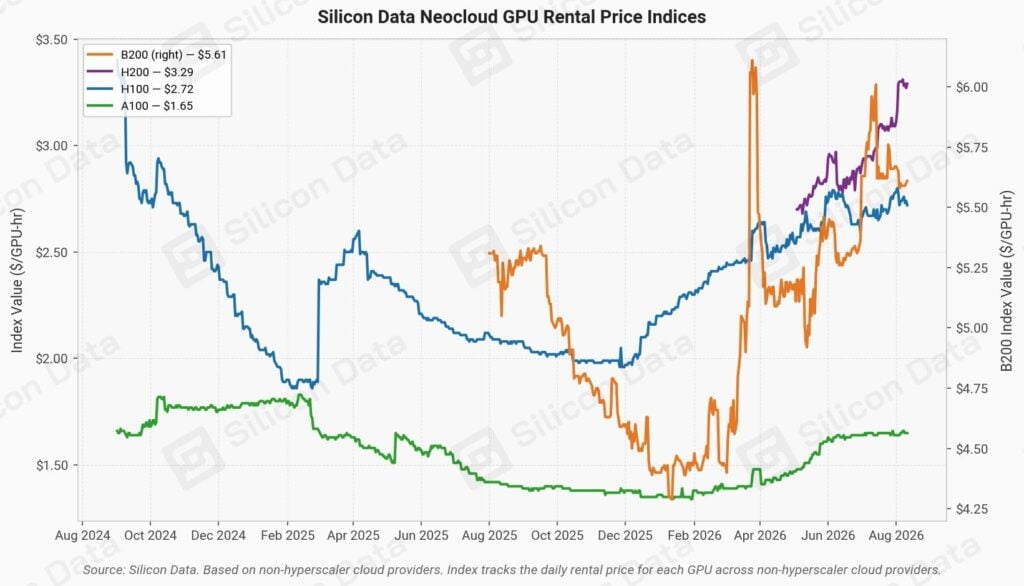
The two contracts (Silicon Data H100 Rental Index Futures and Silicon Data B200 Rental Index Futures) will track indexes published by Silicon Data that measure hourly rental GPU costs.
Silicon Data, backed by global trading firm DRW, is the industry leader in GPU market intelligence and benchmarking. The launch comes as explosive demand has driven sharp swings in compute prices, with volatility exposing a gap in the risk-management toolkit for companies building AI infrastructure.
“For years, two companies buying the exact same GPU capacity could pay wildly different prices with no way to know who got the better deal. Compute futures give the market something it’s never had: a public, tradable reference price for the resource every AI system runs on.” Said Carmen Li, CEO of Silicon Data.
Inspired by Jensen Huang’s recent essay, Silicon Data sees GPUs as solid financial assets that bring in steady cash from AI tasks. Looking at the latest numbers, older chips like the A100 actually stopped losing value in late 2025 because their rental income stayed so high.
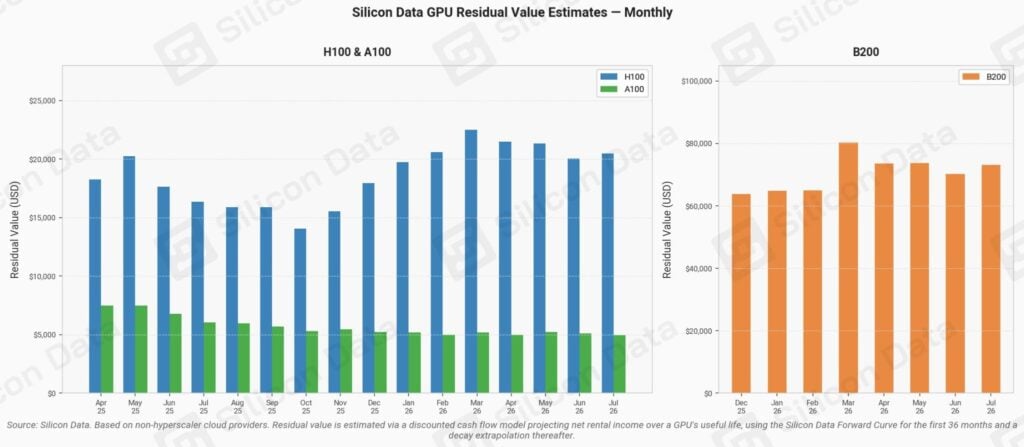
Meanwhile, newer H100 and B200 chips have actually become more valuable in 2026 as rental prices soared. It turns out these GPUs last a lot longer than the 2-3 years people expected: the six-year-old A100 is still going strong and being rented out constantly.
The AI infrastructure financial ecosystem
The launch adds another layer to the emerging financial ecosystem around AI infrastructure. Wall Street is finding new ways to finance and gain exposure to the enormous AI buildout; Nvidia is working with some of the world’s largest asset managers on an effort that could channel as much as $500 billion into AI infrastructure.
Compute Futures would allow investors to gain exposure to the price of the underlying computing capacity itself, rather than investing directly in data centers, chips, or the companies building them.
AI developers and data-center operators could use the contracts to hedge their costs or revenues. The new contracts will be listed and subject to the rules of the New York Mercantile Exchange (NYMEX).
The “New Oil” narrative and a $100 trillion vision
CME CEO Terry Duffy calling compute “the new oil of the 21st century” is not just a catchy slogan, but a sign of a massive shift in how the financial world is starting to treat AI infrastructure.
Back in June, Silicon Data founder Carmen Li went further, telling CNBC she believes the compute futures market “will be larger” than the global oil derivatives market, reasoning that energy demand tied to running AI will eventually surpass all other energy uses combined.
BlackRock CEO Larry Fink has echoed this sentiment, predicting that a new asset class will emerge around compute futures and dismissing AI bubble concerns by pointing to supply shortages that continue to outpace demand.
Tech might get cheaper over time, but these futures will tell us if the shortage is real. If prices stay high for years, it means we are in a real crunch; if they flatten out, it means we have finally solved the efficiency puzzle.