



The global decentralized finance (DeFi) liquidity continues to dry, as the Wrapped Bitcoin (WBTC) participation in the Ethereum DeFi ecosystem fell to a yearly low on Friday. The lack of WBTC-oriented liquidity in the largest DeFi ecosystem is reflected in dwindling protocol revenue.
WBTC participation in DeFi hits yearly low
According to latest on-chain data, the 7-day simple moving average (SMA) of WBTC active addresses has fallen all the way down to 2,134. This marks the lowest level of active addresses of the digital asset in 2026.
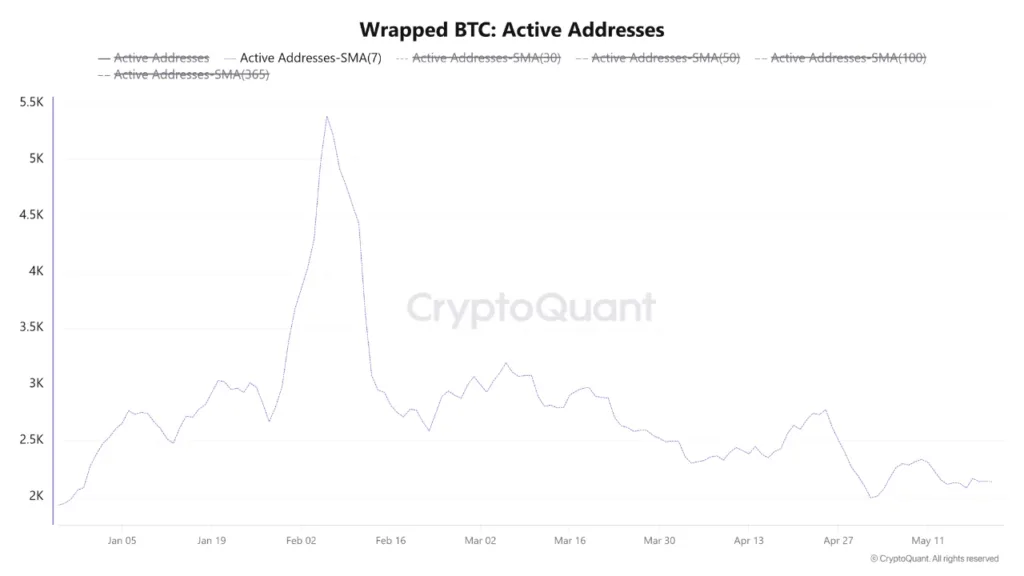
To explain, WBTC functions as the primary bridge for Bitcoin liquidity entering the Ethereum DeFi ecosystem. WBTC is an ERC-20 token on Ethereum, tracking BTC’s price on the Bitcoin network.
Such a big slump in the number of active WBTC addresses is indicative of slow capital movement from the Bitcoin network to Ethereum.
It means that investors are no longer actively sending WBTC to generate yields, provide liquidity on decentralized exchanges (DEX), or use it as collateral.
It is worth highlighting that this on-chain capital drought is not happening in isolation. The tumble actually mirrors the general structural weakness seen in centralized exchanges like Binance, Coinbase, and others.
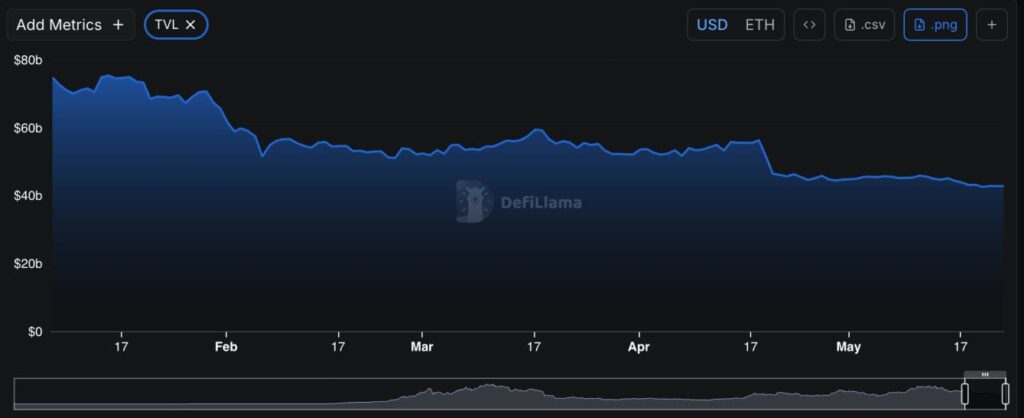
For example, recent exchange data shows strong BTC spot selling pressure through massive Binance inflows. These are coupled with severe negative stablecoin outflows, meaning the so-called ‘dry powder’ is leaving exchanges.
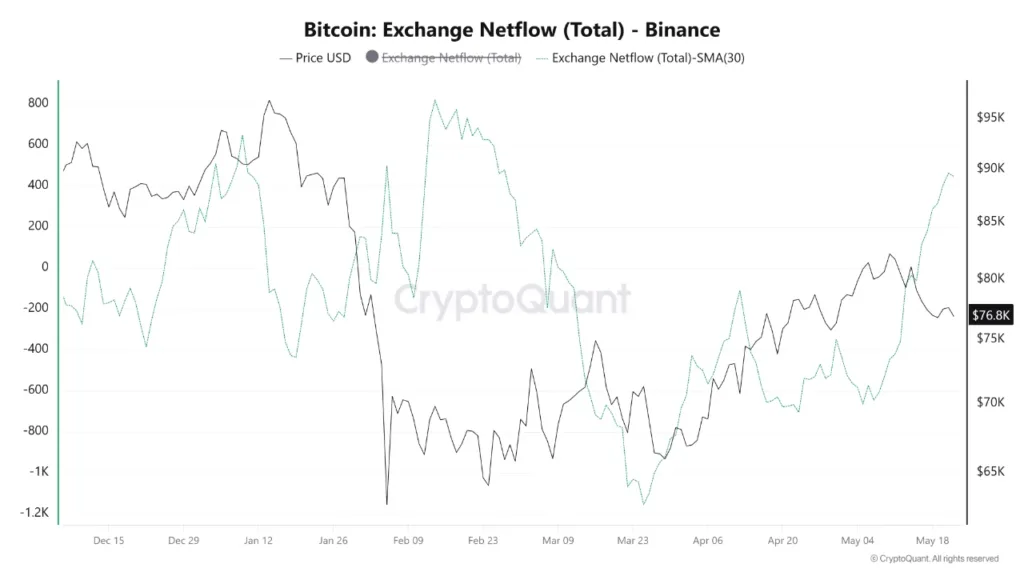
After connecting the dots between CeFi and DeFi, a clear pattern emerges – that capital is choosing to remain sidelined for the time being. This makes sense as the new U.S. Federal Reserve chairman, Kevin Warsh, is expected to hike benchmark interest rates.
Challenging year for DeFi
To say that the first 5 months of 2026 have been challenging for DeFi would be an understatement. The industry has already seen multiple protocol hacks, including the Ekubo Protocol hack that resulted in a loss of $1.4M in user funds.
The effect is evident in the so-called DeFi blue chips’ price action too, such as AAVE which is stuck at the 2024 level despite being a leading DeFi lending protocol. On May 14, JPMorgan said that weak DeFi activity is adversely affecting Ethereum and other altcoins.