

Myanmar’s parliament has approved a sweeping anti-scam law that allows sentences of up to life in prison for cryptocurrency fraud, sharply escalating penalties as authorities confront a cybercrime industry tied to trafficking, forced labor and large-scale online deception.
The Anti-Online Scam Bill cleared Myanmar’s two-chamber parliament during a session in the capital, Naypyidaw, after lawmakers reconciled differences between versions passed by the upper and lower houses, state-run media reported.
Under the draft published in May, anyone convicted of carrying out a crypto scam faces between 10 years and life in prison, along with a possible fine. The same sentencing range applies to people who operate online scam centers, recruit workers into fraudulent schemes or exploit and traffic people for scam-related labor.
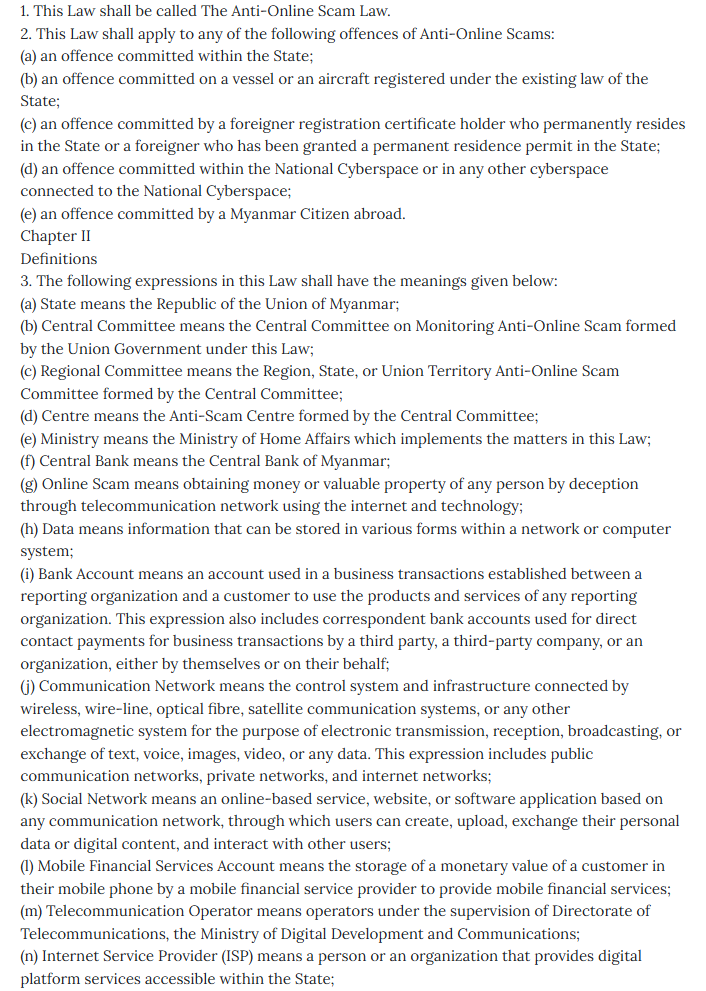
The final enacted text had not yet been published, leaving it unclear whether every penalty remained unchanged from the May draft.
Tougher penalties target abuse inside scam compounds
The legislation goes beyond financial fraud and takes aim at the violence surrounding scam compounds, where victims are often lured by fake job offers before being detained and forced to target people online.
The draft allows penalties ranging from 10 years in prison to life imprisonment or death for those who unlawfully detain, torture or violently coerce people working in scam operations. It also provides for the death penalty when such abuse causes a victim’s death.
Myanmar has emerged as a major center for online scam networks operating across Southeast Asia, with many compounds concentrated near border areas where armed groups hold influence and government control remains limited.
Those operations typically combine cryptocurrency investment fraud, romance scams and other digital schemes with human trafficking, debt bondage and forced labor.
The crackdown’s effectiveness now rests on implementation
The bill defines online scams broadly as schemes that use internet or telecommunications technology to obtain money or valuable property through deception. It also gives authorities powers to investigate offenses, freeze suspicious transactions, seize assets and cooperate with foreign governments.
Myanmar has recently publicized raids on scam compounds near the Thai border, detaining foreign nationals and seizing large numbers of phones and other equipment.
The law’s real test will be whether authorities dismantle the organizers, financiers and armed groups that sustain the compounds rather than prosecute the trafficked workers forced to staff them.
With scam networks repeatedly adapting to crackdowns, tougher sentences alone are unlikely to stop the industry without cross-border investigations, asset seizures and safeguards that treat coerced workers as victims rather than criminals.