

BNB coin has once again reached the floor price, which produced massive rallies back in 2021 and 2025. With the coin imitating the same trajectory, there is a high chance that the price of BNB could once again surge. In addition to this, the BSC chain cut the BSC block intervals to 450 ms and nearly doubled benchmark throughput to ~5,200 TPS.
BNB appears to be following a price structure similar to the ones that preceded its previous major rallies. During the 2021 market cycle, the token climbed to around $690 before undergoing a 70.67% correction, eventually finding a bottom and launching into another rally that carried it to nearly $780.
A comparable pattern emerged in the 2025 cycle, when BNB peaked at approximately $1,400 before declining by around 60%. With the token now trading near $573, it has returned to a historical support zone where previous corrections ended and new uptrends began. If this multi-cycle pattern continues to play out, the current price level could mark the foundation for BNB’s next significant move higher, although confirmation would require a sustained recovery above key resistance levels.
By cutting block times to 450 milliseconds and lifting throughput to roughly 5,200 TPS, BNB Chain is positioning itself to handle more users and applications with lower latency and improved scalability. The upgrades could attract additional DeFi, gaming, and payment activity, increasing demand for BNB as the network’s native gas token while also supporting its long-term deflationary model through higher transaction-driven token burns.
Meanwhile, BNB is currently trading inside a falling wedge, which is a bullish sign. Inside the falling wedge the coin has been making lower lows and lower highs.
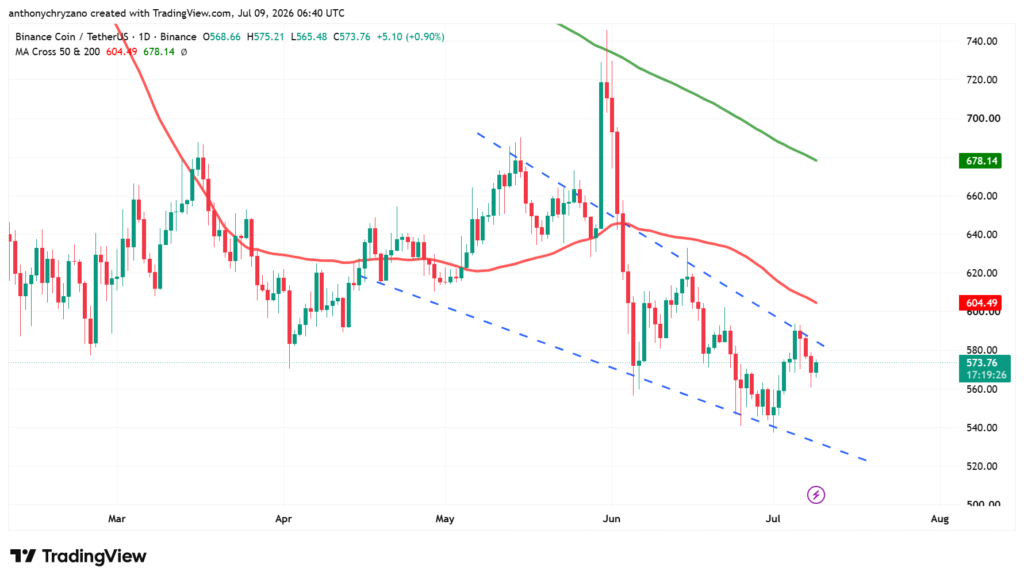
Now that the token has hit the upper trendline of the wedge, it is time that it fall again to the lower trendline. This behavior of rebounding off of the trendlines will continue until the apex of the falling wedge is formed. Once the apex is formed, the BNB prices will explode. Usually, the price surges by the height of the wedge at the beginning of the formation.