

Bitcoin (BTC) remains range-bound in the low $70,000 price area, entering a historic compression zone that is hinting toward a massive rally that could propel its price by at least 20 percent in the coming weeks.
Bitcoin volatility slides by 56 percent
On Monday, Bitcoin researcher Axel Adler Jr. said that BTC’s volatility has reached a historic low, keeping traders on their toes about the cryptocurrency’s next move.
Notably, BTC’s volatility metric has tumbled to 17.2 percent, representing a 56 percent decline from its previous quarter reading of 39 percent. The following chart confirms BTC’s volatility compression.
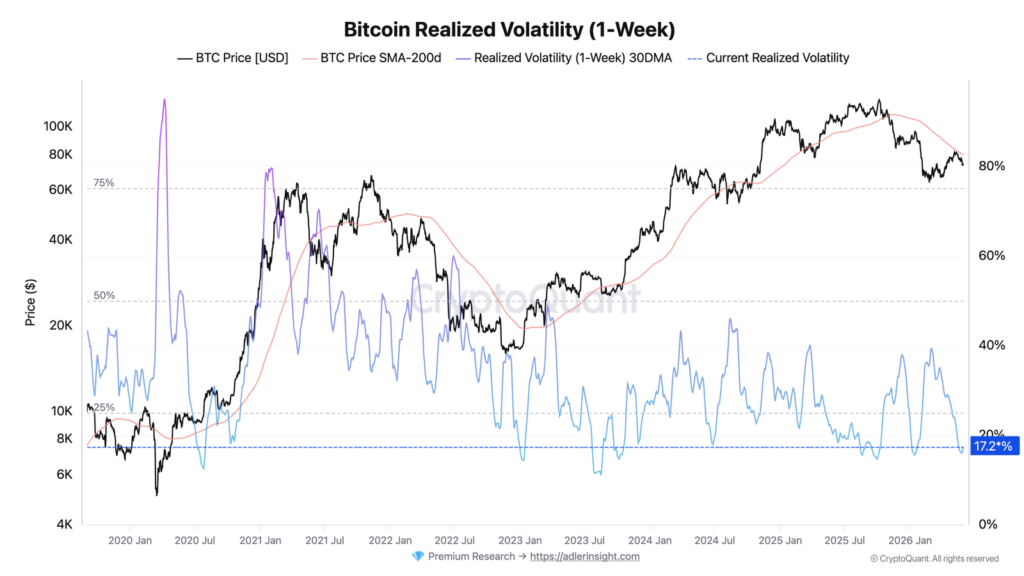
For the uninitiated, realized volatility measures how much an asset’s price has actually fluctuated over a specific period based on historical price data. Higher realized volatility indicates larger price swings, while lower realized volatility suggests the asset is trading in a relatively stable or compressed range.
Currently, BTC’s realized volatility is hovering well below its long-term median of 40 percent. According to Adler Jr., such movement in BTC’s realized volatility is usually followed by a violent movement in the digital asset’s price. However, the direction of the movement could be anybody’s guess.
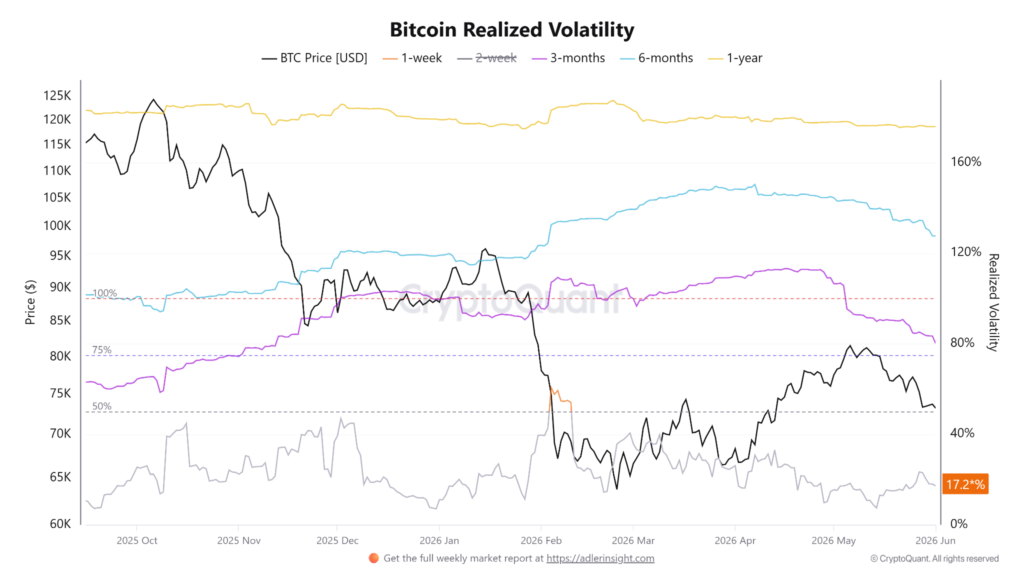
Looking at other volatility-based metrics, such as the three-month realized volatility, and the six-month realized volatility, they recorded declines of 29 percent, and 21 percent, respectively. This gives a faint idea about the magnitude of momentum that’s building underneath for BTC. A 20 percent move to the upside could propel BTC to around $84,000.
Bitcoin network growth rate remains negative
Meanwhile, the Bitcoin network growth rate continues to linger in the negative territory. To explain, this metric compares BTC’s market cap growth to realized cap. Its 365-day moving average recently fell to -0.0013, confirming that the digital asset’s market value isn’t quite able to keep up with its realized value.
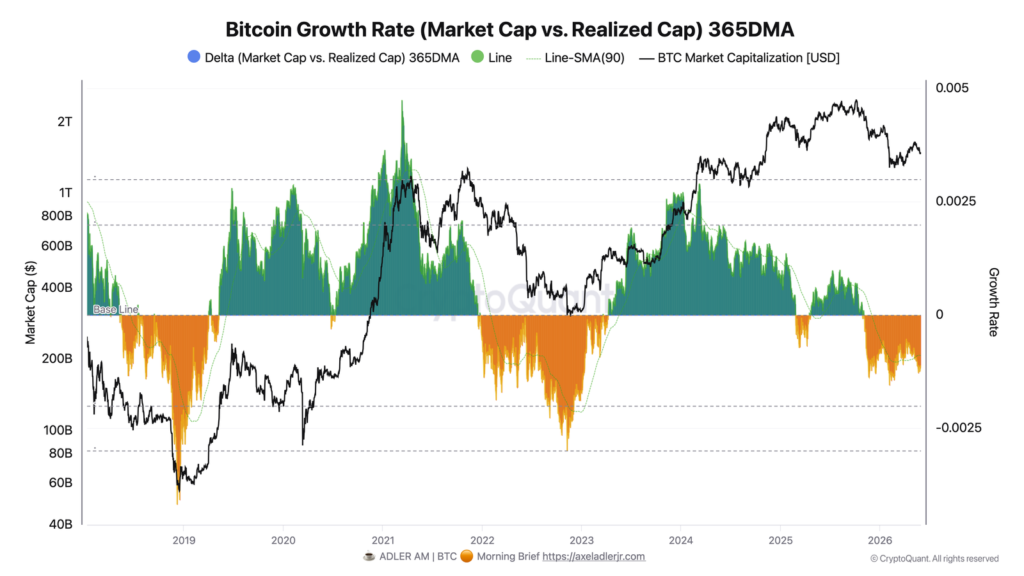
This is concerning, according to Adlier Jr. He added that it means BTC’s market is cooling down due to lukewarm demand. It ultimately points to the cautious stance of investors amid a market that lacks volatility.
Putting it all together, it can be said that the overall investor sentiment toward BTC is fragile. Exchange data shows that BTC inflows to Binance are already 50 percent above their 2026 lows.
Similarly, BTC is starting to lose its institutional appeal, as Strategy sold BTC worth $2.5 million earlier on Monday. However, there might be some respite for the bulls, as BTC flashed a historic bottom signal on May 26, hinting that it could soon enter a trend reversal.