

According to exchange data received on Monday, USDC reserves on crypto trading platform Binance have fallen to a fresh yearly low. This receding level of stablecoin on the exchange is igniting panic among investors, as they fear increasing chances of volatile price movements among digital assets.
USDC reserves continue to slide on Binance
As of Monday, USDC reserves on Binance have plunged to $4.6 billion – down enormously from around $7.7 billion on April 25. The decrease shows a reduction of about $3.1 billion – or 40.3 percent – in less than 3 months.
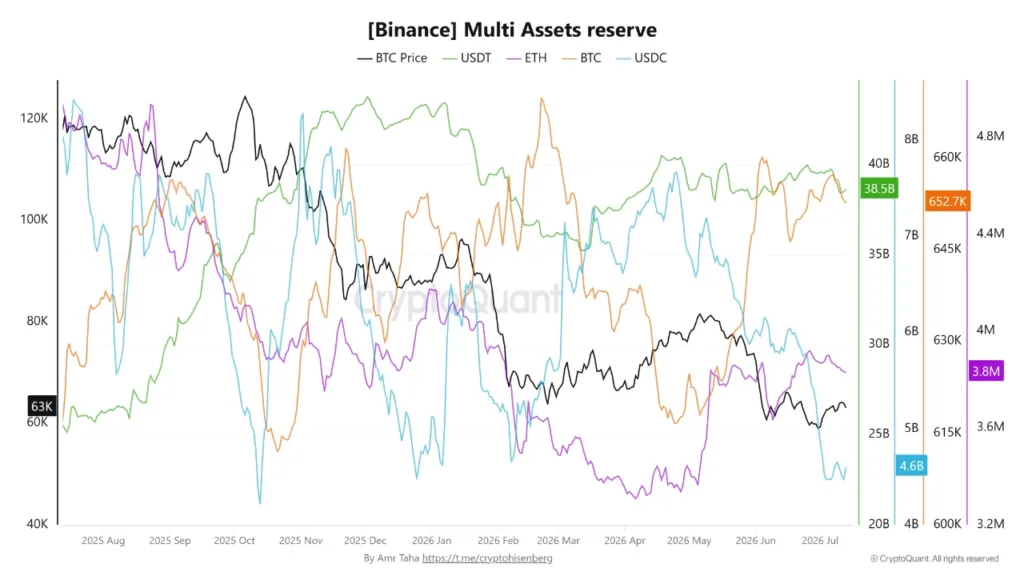
Monday’s USDC reading on Binance is below the lowest level recorded in 2026 on February 7, and extremely close to the $4.5 billion reading seen on December 25, 2025. Effectively, the latest USDC reserves crash has annulled all the increases seen during the first half of 2026.
The December 2025 level being the current floor is interesting. For example, December 2025 preceded the Q1 2026 rally that took BTC above $93,000. If the pattern repeats, this reserve level represents a potential institutional accumulation level.
In contrast, Binance’s USDT reserves remain relatively stable. Hovering around the $40 billion market since April 2025, USDT reserves are now around $38.5 billion – recording a nominal decrease of about $1.5 billion.
The ever-rising gap shows a change in Binance’s stablecoin reserve composition. USDT maintains a much stronger and relatively stable position, while USDC fell toward levels that were last seen in late 2025.
The ever-rising gap shows a shift in Binance’s stablecoin reserve composition. USDT maintains a much stronger and relatively stable position, while USDC fell toward levels that were last seen in late 2025.
That being said, USDC declining on Binance does not mean USDC is declining globally – Circle’s total USDC supply has been growing as institutional adoption outside Binance expands, particularly across Base and Solana.
The USDC vs USDT debate continues
While according to market cap, USDT clearly trumps USDC, it should be emphasized that despite being USD-pegged stablecoins, their user bases are quite different. For example, unlike USDT, USDC is fully regulated and hence the preferred stablecoin for institutional purposes.
Over the past few months, the crypto industry has seen multiple examples of this. On June 9, global payouts platform MassPay announced that it was leveraging Circle’s Payments Network to expand USDC payouts.
In the same vein, on May 7, crypto exchange Coinbase allied with AWS to facilitate AI agent micropayments using USDC. Earlier this year in April, Meta announced that it would be using the USDC stablecoin to foster payments for content creators.