




On Tuesday, cross-chain trading protocol THORChain (RUNE) announced that it has resumed network operations following a massive network exploit on May 15, which saw hackers steal $10.7 million in funds.
THORChain finally comes back live
In a recent X post, THORChain shared that users can now use the protocol to swap, trade, sign, and provide liquidity to digital assets.
On Sunday, the protocol had remarked that it had leveraged the KeyVerify protocol to confirm the safety of the majority of its digital asset vaults. THORChain also retired a few of its vaults as part of a migration to a new set of vaults.
In THORChain, vaults are multi-signature cryptocurrency wallets controlled collectively by network validators that hold user assets and enable cross-chain swaps between blockchains like Bitcoin and Ethereum.
The protocol dubbed the upgrade the “most significant milestone” in its recovery process. In addition, THORChain confirmed the successful verification of every node’s keyshare on Friday.
To recall, the root cause of the exploit was a vulnerability in THORChain’s GG20 threshold signature scheme. This scheme is typically used to safeguard protocol vaults by distributing key control across numerous node operators.
THORChain said that the flow in the protocol enabled the attacker to reconstruct a full private key through a “progressive key material leakage.” Subsequently, on May 20, THORChain rolled-out an emergency patch upgrade to protect the remaining vaults.
Later, on June 9, the protocol released a fix for the exploited vulnerability. Finally, another upgrade was introduced with additional stability improvements and multiple fixes geared toward the KeyVerify protocol.
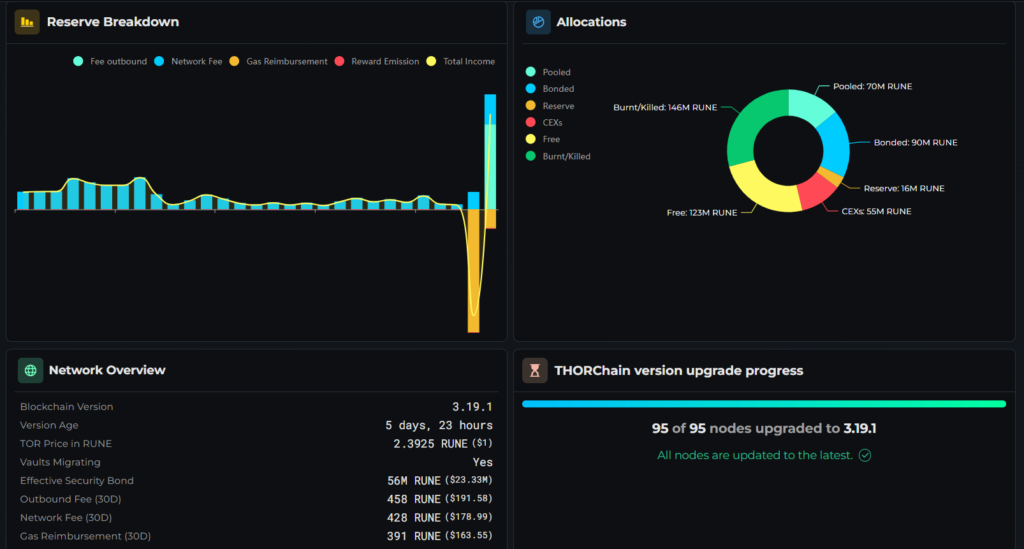
Although THORChain is a leading cross-chain protocol in the crypto industry, it has often found itself receiving criticism from blockchain sleuths like ZachXBT due to its high use by hackers trying to port stolen funds from one network to another.
What lies ahead for THORChain?
Now that the network is operational again, THORChain shared some details about what’s to come for the protocol. The project announced that cross-chain swaps for privacy-focused cryptocurrencies like Zcash and Monero (XMR) are coming soon.
Native XMR swaps are already working end to end in the test environment, and a launch on the mainnet is close. The protocol also said that support for Bittensor (TAO) token will be unveiled in about 6 weeks.


