

New data shows Robinhood Chain is killing it as the most profitable Ethereum Layer-2 (L2). It brought in $3.6 million in revenue this July, which is actually more than Base and Arbitrum made together.
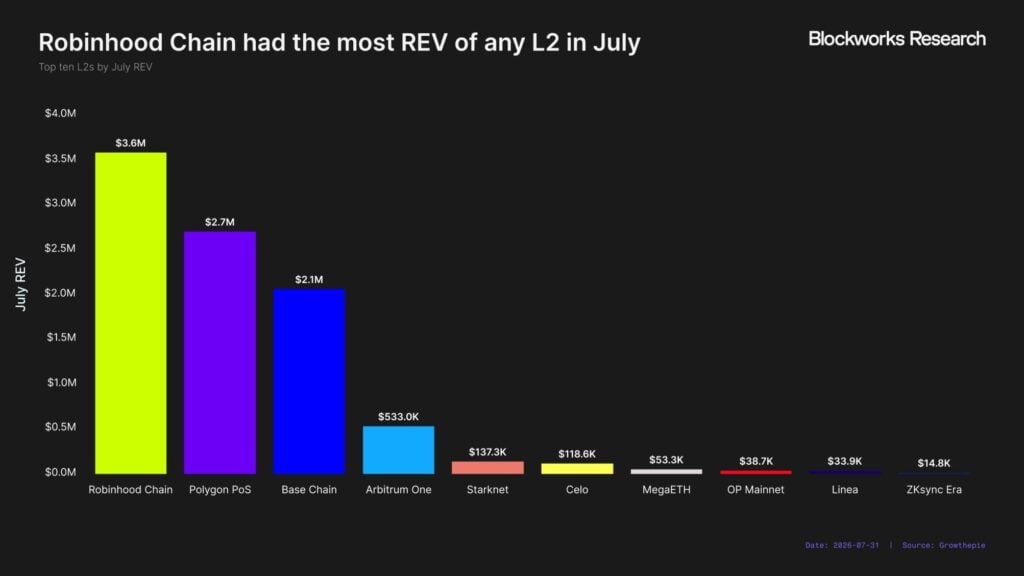
The chain accounted for 38 percent of all L2 chain revenue tracked by growthepie, outperforming established networks like Polygon ($2.7 million) and Base ($2.1 million).
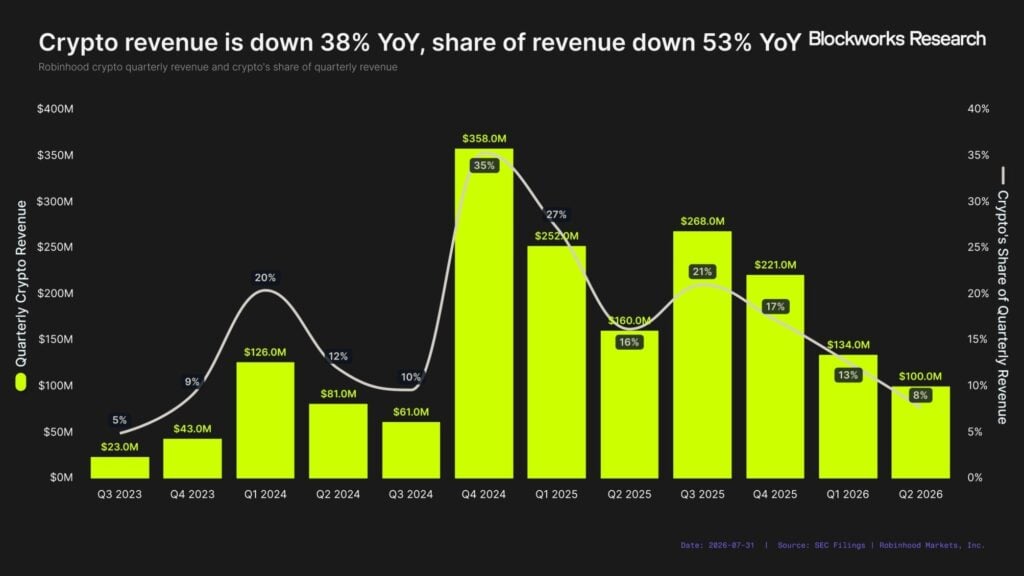
This win is huge since Robinhood’s overall crypto revenue actually dropped 38 percent year-over-year (YoY) to $100 million in the second quarter.
A crypto business in decline
Robinhood’s crypto business has been shrinking even as the broader company reaches record highs. In Q2 2026, Robinhood reported quarterly revenue of $1.31 billion, its highest ever, up 32 percent year-over-year. But here’s the kicker: crypto only made up 8 percent of that total, and that is the smallest slice of the pie we have seen since Q3 2023.
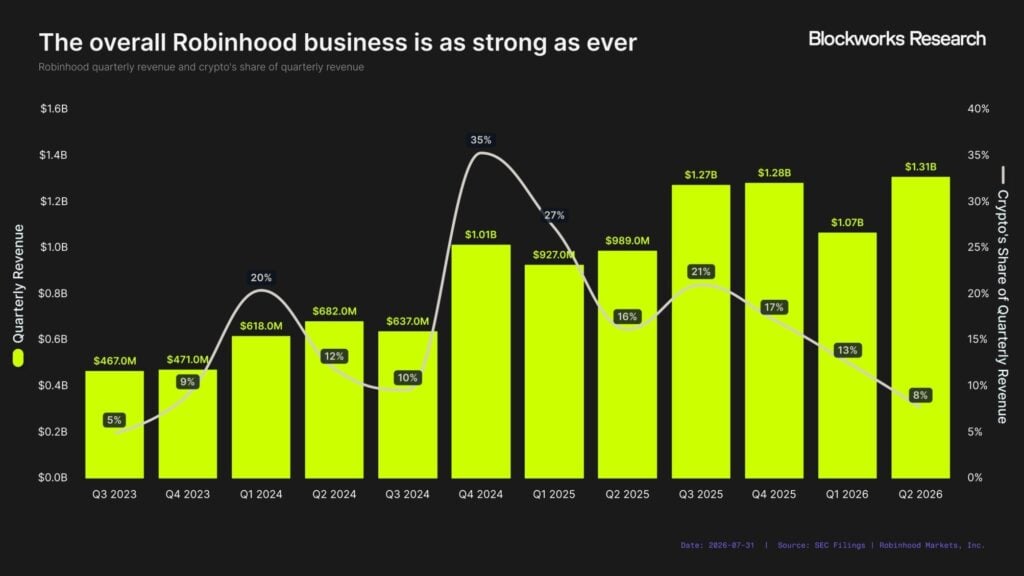
Event contracts, which launched only last year, generated more revenue in Q2 ($156 million) than crypto ($100 million). Retail crypto volume on the Robinhood app totaled just $18.2 billion, down 36 percent year-over-year and its lowest quarterly total since Q3 2024.
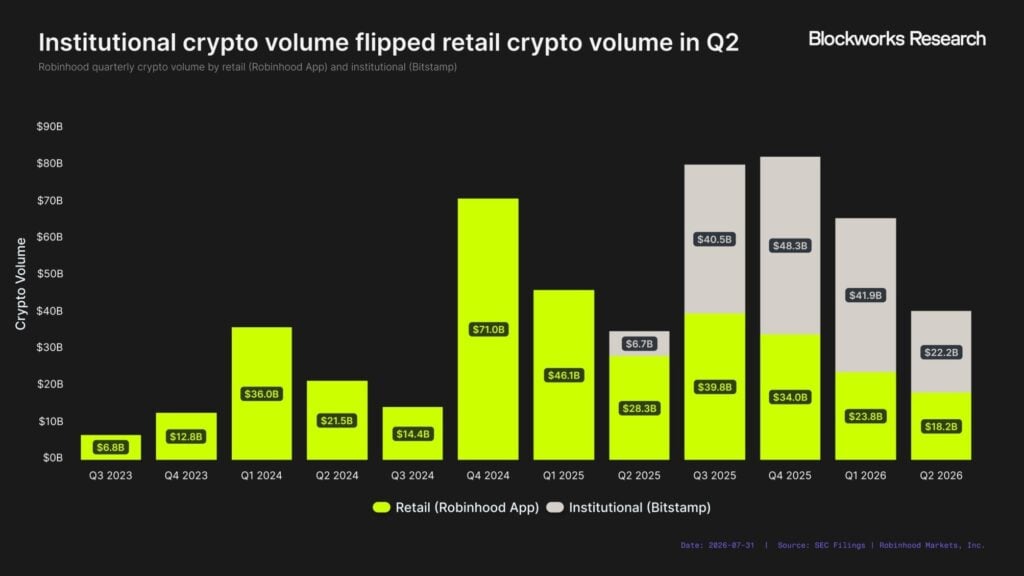
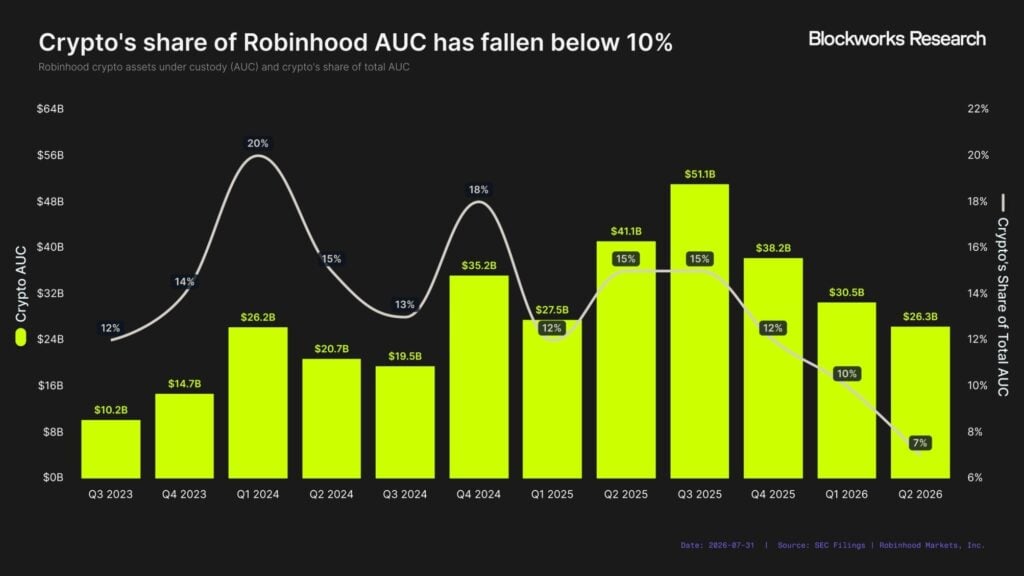
Institutional volume through Bitstamp surpassed retail volume for the first time ever. Crypto assets under custody (AUC) are essentially flat at $26.3 billion but now account for only 7 percent of Robinhood’s total AUC, its lowest share ever.
Memecoins drive Robinhood Chain’s early success
The early success of Robinhood Chain is pretty much all about memecoins. To put it in perspective, the chain saw a massive $6.93 billion in spot volume this July, and get this: $3.55 billion of that (which is 51 percent) was just from memecoins.
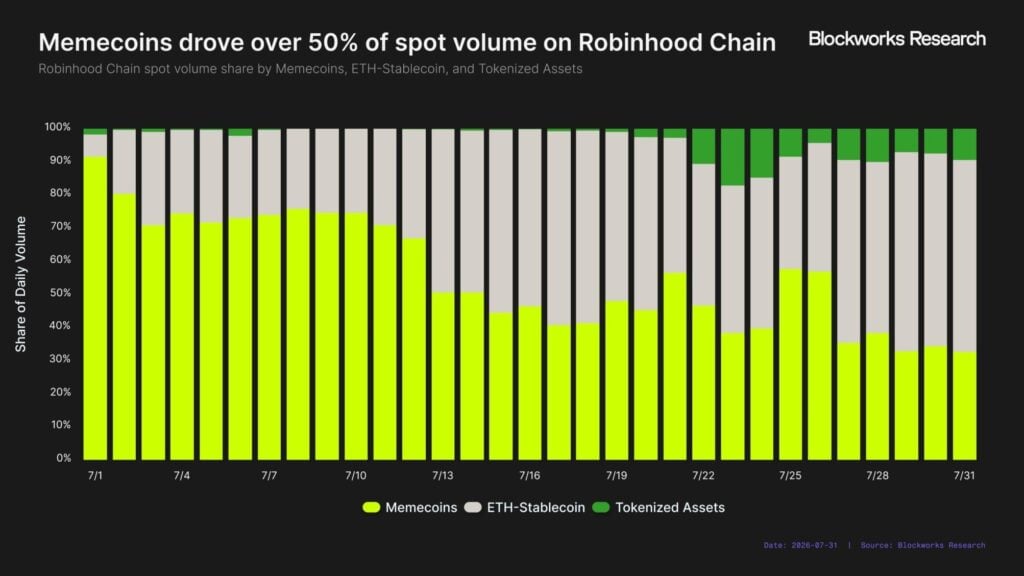
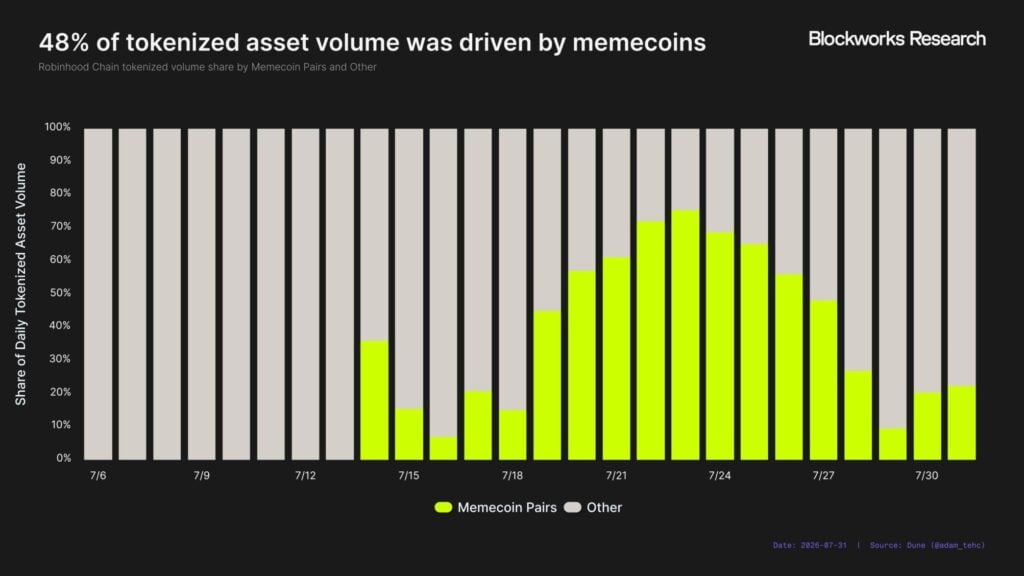
Real World Assets (RWAs), Robinhood Chain’s stated use case, accounted for only $313.2 million, or 5 percent of total volume. Furthermore, 48 percent of RWA volume occurred in liquidity pools pairing a memecoin with an RWA, meaning memecoins influenced even more activity than the headline numbers suggest.
While memecoins can be a powerful source of chain revenue, they have rarely proven to be a durable one, with activity historically rotating between networks. Robinhood appears comfortable with this dynamic, as founder Vlad Tenev has repeatedly expressed his support for memes.
Monetization opportunities: stablecoins and distribution
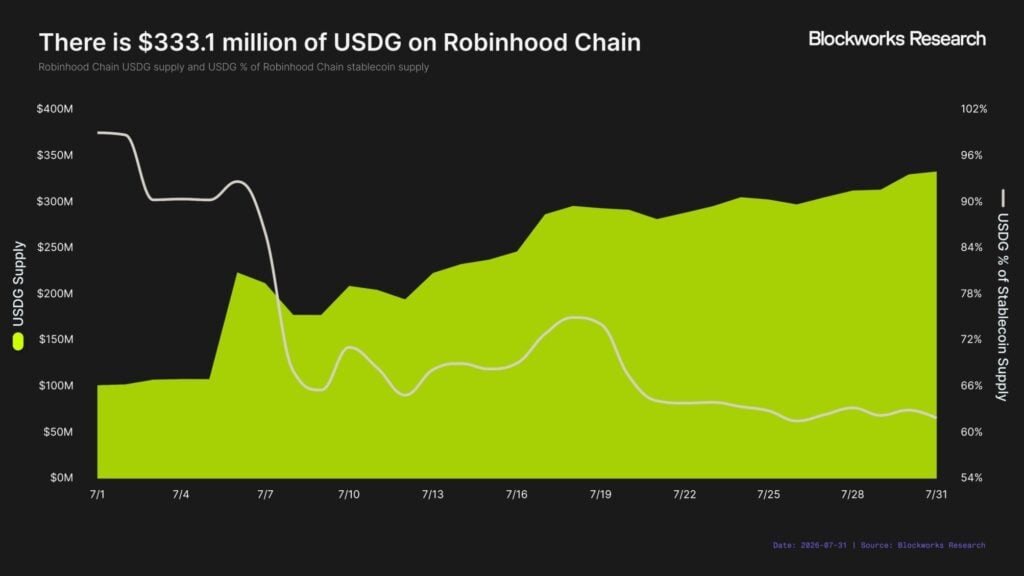
Robinhood’s clearest monetization opportunity lies above the infrastructure layer. USDG, which is the chain’s native stablecoin, already has a $333 million market cap and is pulling in about $10.5 million a year in interest for the company. If they can get that supply up to $1 billion, we are talking about $31.5 million in annual revenue.
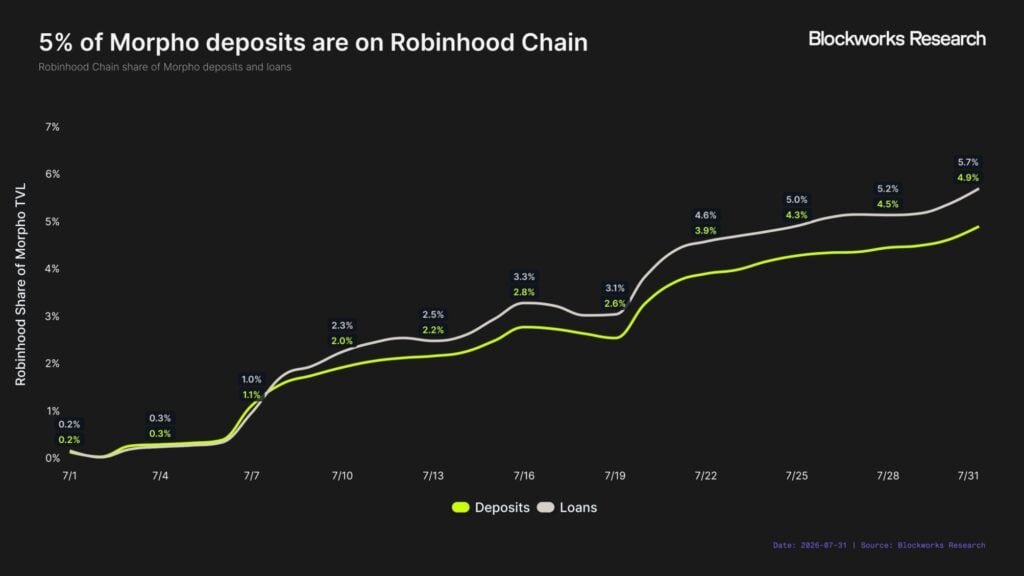
Application distribution is the other major opportunity. Morpho’s integration directly into the Robinhood app has made Robinhood Chain Morpho’s third-largest deployment by total value locked (TVL) after just one month.
In contrast, Lighter’s integration solely through Robinhood Wallet (the standalone self-custody wallet separate from the main app) accounted for just 0.2 percent of its total perps volume.
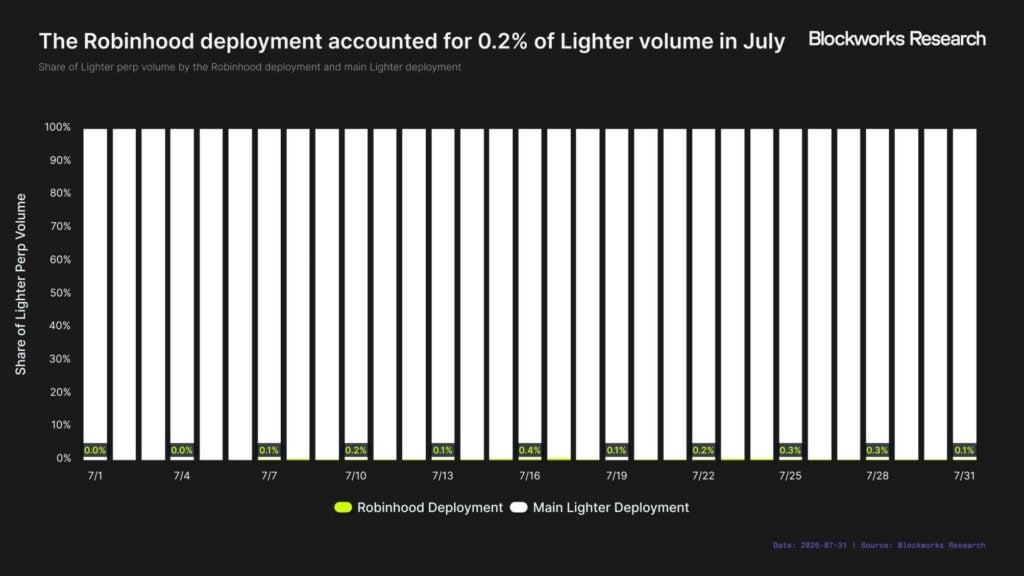
The distinction is stark: the real value of Robinhood Chain distribution lies in direct access to the main app’s users, not the Wallet.