
Kalshi announced a partnership with compliance technology firm Comply to help companies monitor employee trading on its prediction markets and perpetual futures. The move comes as Kalshi faces a $36 billion lawsuit from New York State alleging illegal gambling operations.
CEO Tarek Mansour defended the platform as operating under federal rules, comparing the company’s struggles to Uber and Airbnb, and arguing that the logic of New York’s lawsuit could also apply to Nasdaq.
The compliance partnership
Comply, which works with more than 5,000 primarily financial firms, will add Kalshi‘s event contract trade data to its regulatory software. The platform enables companies to view employees’ trades to ensure they comply with policies and do not use material nonpublic information to trade (insider trading).
The technology will also extend to Kalshi’s perpetual futures contracts. Jamila Mayfield, Comply’s chief regulatory service officer, said “most firms are still figuring out what a reasonably designed prediction market compliance program looks like,” and that Comply brings both the technology and expertise to build programs that hold up under scrutiny.
The legal battle
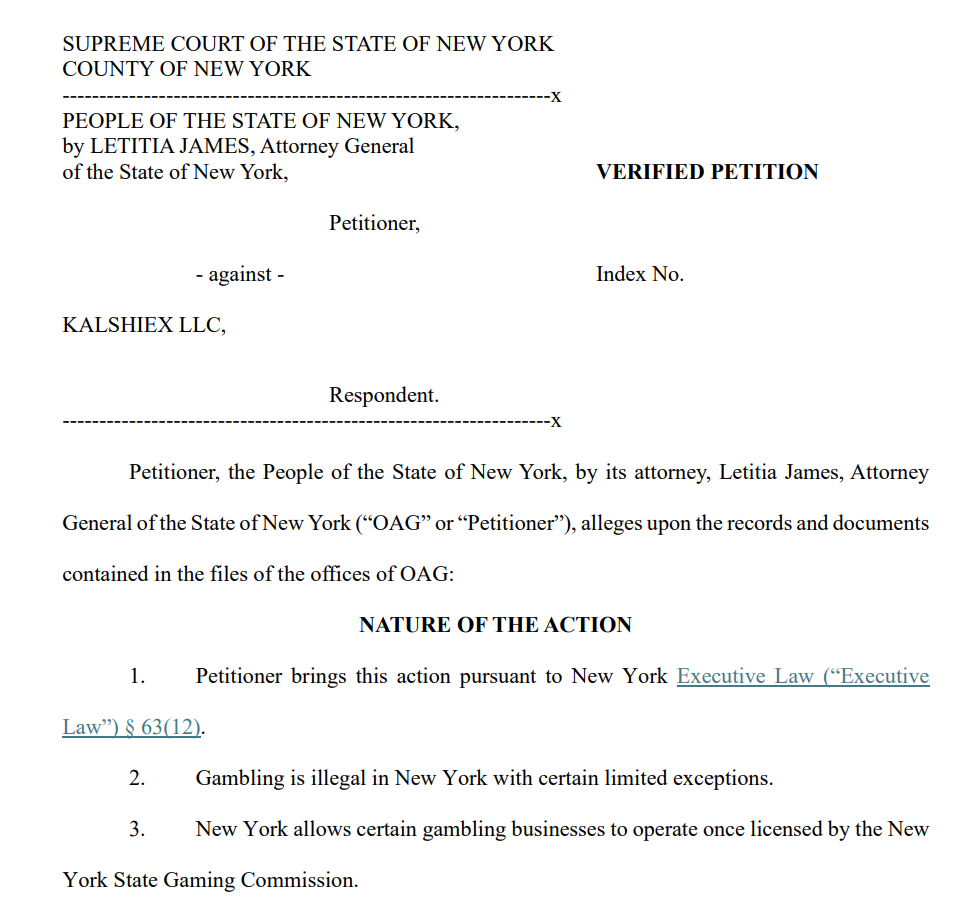
The partnership comes amid a heated legal battle with New York State, which filed a $36 billion lawsuit against Kalshi for allegedly operating illegal gambling in the state.
A New York federal judge denied the Commodity Futures Trading Commission (CFTC)’s emergency request to halt the state’s lawsuit, allowing the case to proceed. Mansour told in an interview that “you have an industry that is disruptive and they’re not happy about that,” and compared Kalshi’s struggles to those faced by Uber and Airbnb. The CEO also argued that the logic of New York’s lawsuit could also be applied to Nasdaq.
The case was removed to federal court after a New York County Supreme Court judge denied the state’s motion for a preliminary injunction.
The Kalshi-Trump teleprompter scandal: A first-of-its-kind insider trading case
In July 2026, Kalshi became deeply embroiled in another high-profile legal controversy when its surveillance systems flagged unusual betting patterns on “mention markets”: contracts wagering on specific words or phrases President Trump would use during speeches.
It turns out the account belonged to Gabriel Perez, a veteran White House teleprompter operator who obviously had a front-row seat to Trump’s prepared remarks before anyone else heard them.
Investigators say Perez allegedly placed more than a dozen bets over three months, pocketing nearly $100,000. But Kalshi’s surveillance team detected the suspicious activity, though, freezing about $90,000 of Perez’s profits and referring the case to the CFTC. Perez is now on unpaid leave, and White House Press Secretary Karoline Leavitt didn’t mince words, calling the whole situation “a disgrace.”
So far, this case marks the first known instance of suspected insider trading on a prediction market from inside the White House. The CFTC is reportedly in settlement talks with Perez, who would forfeit his earnings and be banned from future trading.
The whole scandal shows off Kalshi’s aggressive compliance tactics, which they are using to stay ahead of rivals like Polymarket. But at the same time, it’s a big reminder of just how tough it is to police insider trading when people can bet on real-time events in the halls of power.
But Kalshi’s history of lawsuits is not new. The prediction market company has been dealing with other jurisdictions over its operations, as well as suing others back.