



Americans may have generated as much as $34 billion in trading volume on offshore prediction markets over the past year, despite restrictions that are supposed to keep U.S. users off many of those platforms, according to a new study by Rutgers University statistician Harry Crane.
The study estimates that about 30% of offshore prediction-market activity originates in the U.S., using trading behavior rather than direct location data to measure activity on platforms where user geography is often hidden by wallet addresses, VPNs and limited public information.
Offshore markets keep pulling U.S. money
The report points to a fast-growing prediction-market industry where billions of dollars are moving across both regulated and offshore venues.
Over the trailing 12 months ending April 30, 2026, tracked offshore platforms including Polymarket, Opinion, Predict, Limitless and Myriad processed about $85.3 billion in volume, while regulated venues including Kalshi, Crypto.com, IBKR ForecastEx and Gemini handled roughly $74 billion.
Together, the platforms processed about $159 billion in tracked prediction-market volume, with more than half of that activity taking place on venues not authorized to serve U.S. users.
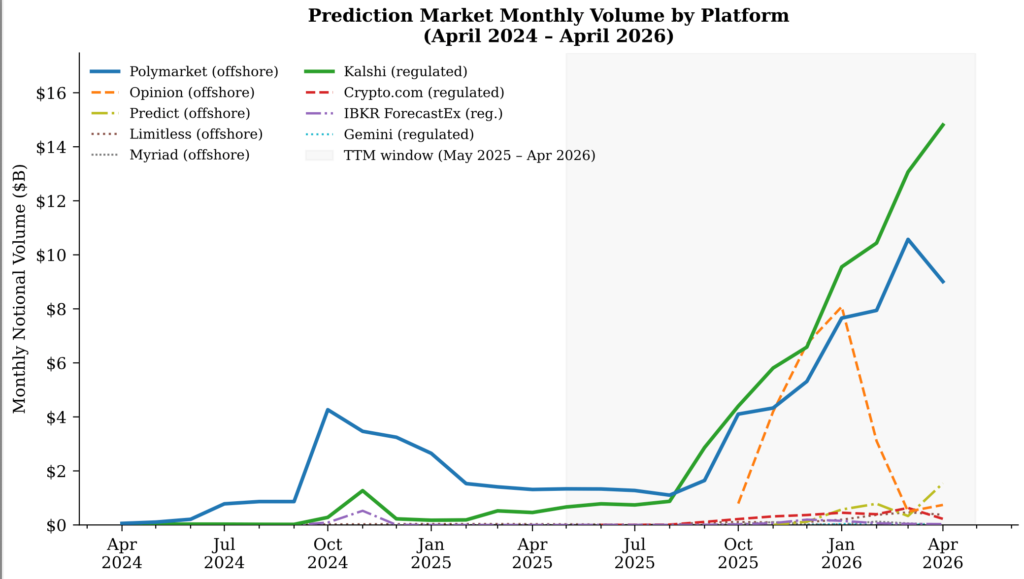
The study estimates that U.S. users accounted for $11 billion to $34 billion of offshore prediction-market volume over the period, showing that Americans may still be trading heavily on platforms outside U.S. oversight.
How the study tracked hidden U.S. activity
Since offshore prediction markets do not attach names or nationalities to blockchain trades, the study does not rely on direct user identification. Instead, it compares offshore activity with trading patterns from platforms known to have U.S.-only or non-U.S. user bases.
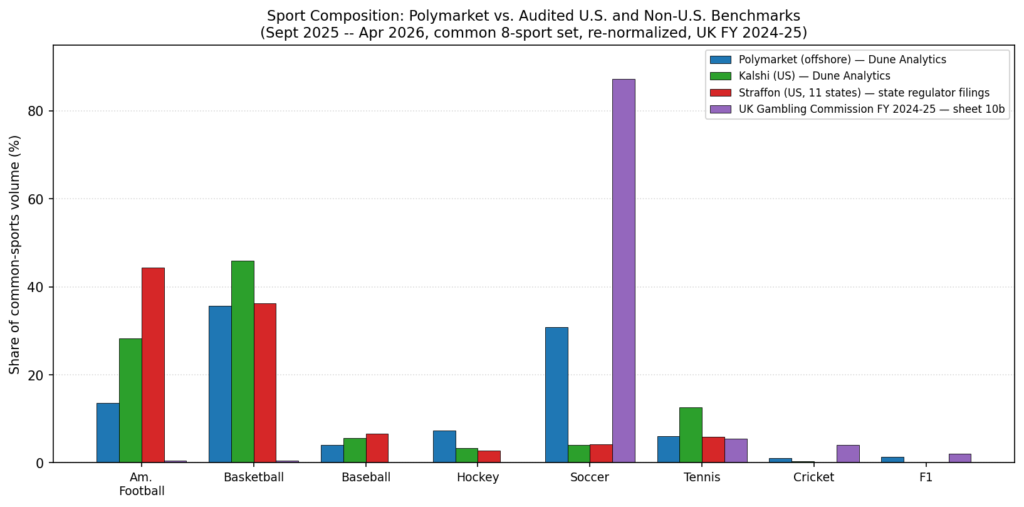
One major signal comes from sports behavior. U.S. bettors place only a small share of sports volume on soccer, while international bettors heavily favor it.
On Polymarket, soccer accounted for about a quarter of sports-related volume, putting the platform between the U.S. and international patterns and suggesting a mixed user base.
The second signal comes from time-of-day trading. Kalshi, a regulated U.S. platform, shows heavy activity during U.S. business and evening hours.
Polymarket’s activity is flatter across the day, but still contains enough U.S.-hour concentration for the study to estimate that a meaningful share of its volume comes from American users.
Polymarket sits at the center of the estimate
Polymarket, the largest offshore platform covered in the study, processed about $55.6 billion in notional volume over the 12-month period. Crane’s analysis estimates that U.S. users accounted for 19% to 48% of that activity, equal to about $10.6 billion to $26.7 billion.
A regulatory question gets bigger
The findings arrive as prediction markets move from niche betting tools into larger financial and consumer platforms.
Volumes have surged from about $25 million in 2020 to $65 billion in 2025, with regulated U.S. platforms growing quickly and offshore venues drawing heavy activity.
The study includes caveats, noting that U.S. attribution is indirect and that some platform data may be distorted by unusual trading incentives or possible wash trading.
Still, its central message is clear: offshore prediction markets may be capturing far more U.S. demand than public traffic data suggests, raising fresh questions over enforcement, market structure and where American users will trade as the sector expands.


