


Meta CEO Mark Zuckerberg has directed a team to build a prediction markets app called Arena. The app, which would operate independently from Facebook and Instagram, would initially use a video-game-style points system rather than real money, though real-money betting has not been ruled out. Shares of DraftKings and Flutter Entertainment fell in response.

Arena: Meta’s Polymarket competitor
Arena is one of several new apps Meta is testing. It would operate independently of Facebook, Instagram, WhatsApp, and Messenger, but Meta would leverage its massive user base (3.56 billion daily active users across its apps) to direct users to the platform.
The distinction between points and real money matters: a points-based product would sidestep Commodity Futures Trading Commission (CFTC) jurisdiction entirely and could launch quickly, while a real-money version would require regulatory approval and compliance infrastructure. Meta declined to comment on the report.
Market reaction and competitive threat
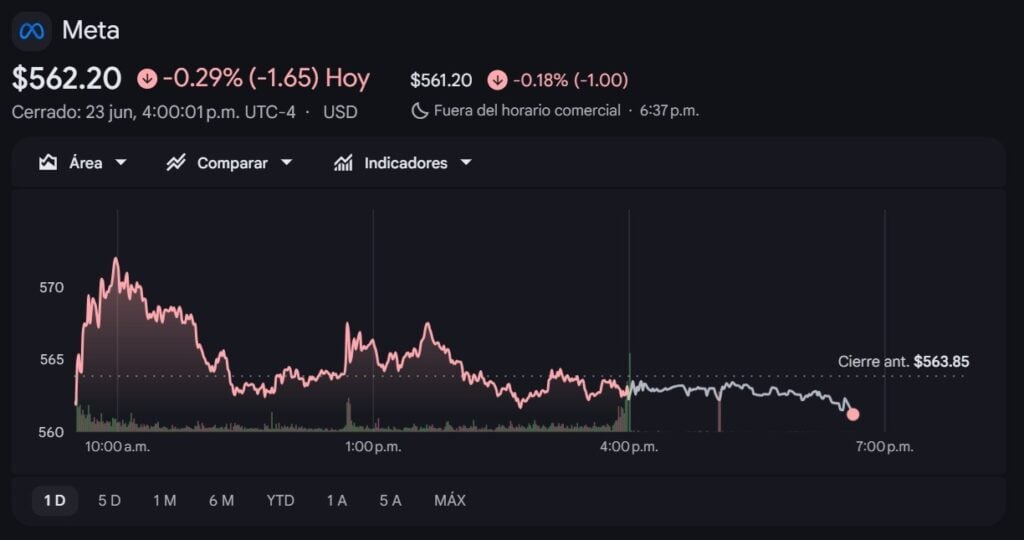
The news definitely rattled the market, with betting and prediction market companies seeing their shares dip. DraftKings and Flutter both dropped by around 2 percent, and even Robinhood took a hit. It looks like investors are worried about Meta’s massive reach. Speaking of Meta, their stock was down slightly at the closing bell, sitting at $562.20.
Polymarket and Kalshi have grown rapidly, with combined monthly trading volume quadrupling from under $5 billion to $24 billion between September 2025 and April 2026, according to Pew Research. But as big as that sounds, it’s still small potatoes compared to Meta’s user base. If Zuckerberg decides, Meta could direct its roughly 3 billion monthly active users toward a prediction market product, a scale no existing platform comes close to matching.
Regulatory and industry context
The timing here is pretty interesting. Back on June 10, the CFTC pitched some new rules that would basically ban bets on things like war, assassinations, and terrorism, but it might actually clear the way for more sports betting.
It hasn’t all been smooth sailing for these markets, though. They have dealt with some serious integrity issues, like a Google engineer who used internal data to profit on Polymarket, and a U.S. soldier who was charged for betting on Venezuelan political outcomes using insider info. Still, Bernstein thinks this space is going to explode, potentially hitting $1 trillion in annual trading by the end of the decade.


