

Polygon (POL) is trading dangerously close to its all-time low, even as stablecoin transfer volume on the network has surged by 450%. In addition to this, the agentic transfers on the network have surpassed Base and Solana combined.
POL loiters dangerously close to all-time lows
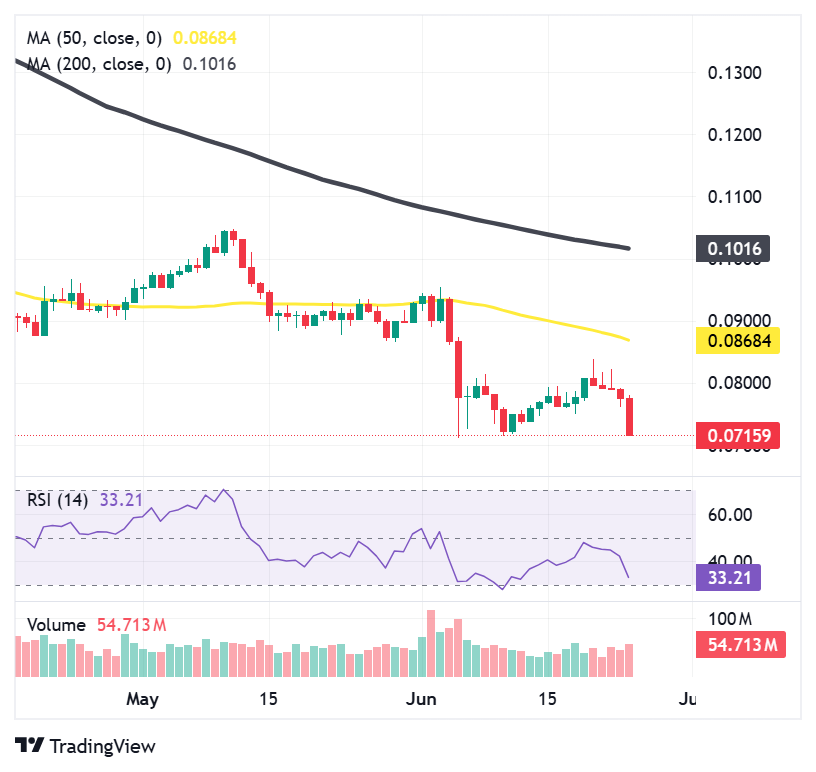
POL is wandering dangerously close to its all-time low of $0.071 after being rejected at the $0.080 resistance level. The chart below shows that once Polygon lost the 200-day moving average support level (yellow), there was nowhere for the price to recover except fall towards the $0.07 level. This is the second time in June that POL is once again visiting this level after the coin made its all-time low of $0.071 on June 5, 2026.
Although the price has been performing poorly, the Polygon network has been active and achieving some milestones in recent times. The stablecoin transfer volume on the network has surged by 449%, reaching nearly $28 billion since the beginning of this year.
When the stablecoin transfer activity blows up on the network, it shows that there is capital available for trading and DeFi activities. The surge indicates stronger liquidity conditions and growing user activity, factors that historically precede periods of heightened trading and DeFi participation.
Polygon processes more agentic transfers than Solana and Base combined
In addition to this, Polygon is also among the top chains with agentic transfers. With over 12 million transfers, the agentic transfers on Polygon are above Solana and Base.
Polygon reaches 5000+ TPS after upgrade
In addition to this, Polygon can now process 5,000+ transactions per second after the latest upgrade, which is twice as much as what it could process. This means that there wont be any latency even when there is high activity on the network. More throughput means less competition for block space, and this helps keep fees predictable and affordable for traders and DeFi users.
POL may go through a period of consolidation
In addition, projects looking for high-speed, low-cost infrastructure may choose Polygon over slower or more expensive chains. Institutions generally prefer networks that can support large transaction volumes without congestion.
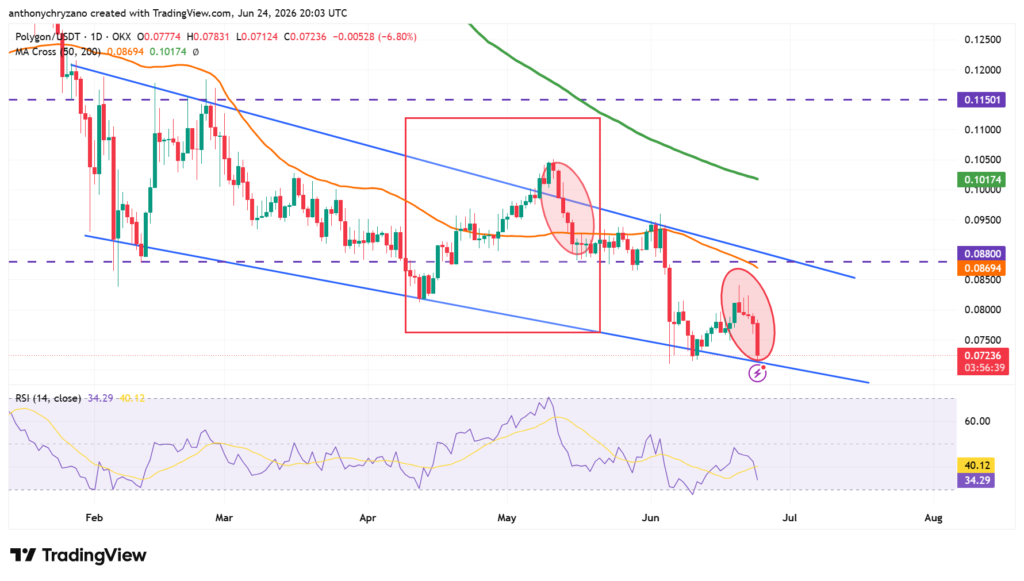
As shown in the above chart, POL is currently trading inside a falling wedge, making lower lows and lower highs. The highlighted portion in the chart and the recent price action share some common traits. For instance, POL hit the upper trendline of the fall, retraced, and then started moving sideways.
Even during the recent past, POL exhibited the same pattern but did not have the momentum to hit the upper trendline at $0.088, so it crashed after being rejected at $0.08. Given that POL imitates its price action in May, there could be a consolidation in the coming days near the all-time lows.