

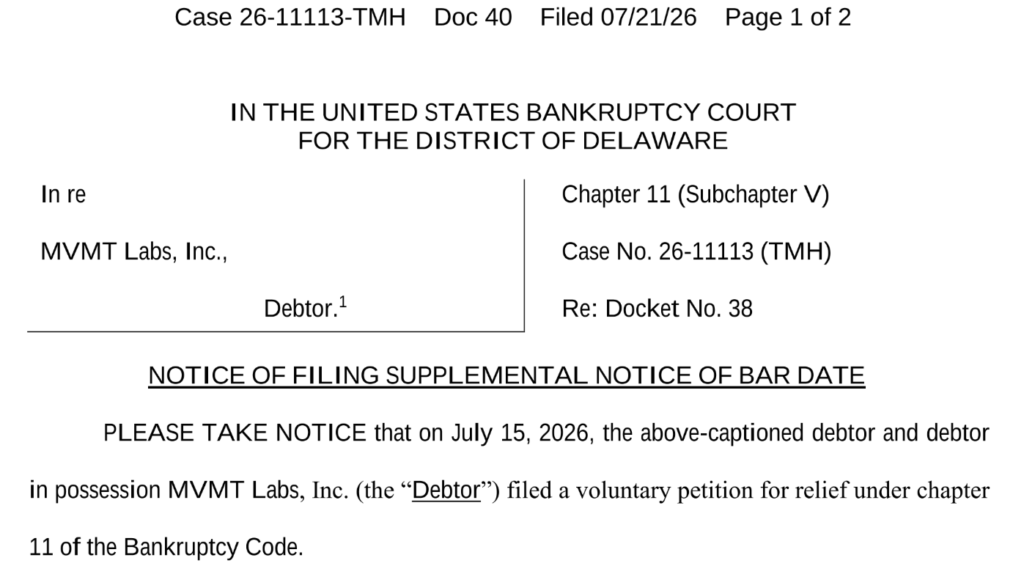
MVMT Labs, Inc. (Movement Labs) just filed for Chapter 11 bankruptcy. Their paperwork shows they have only $100,000 to $500,000 in assets, while they are buried under more than $1 million in debt. This whole mess follows a super rough year after that massive market-making scandal, in which 66 million MOVE tokens were dumped right after the launch, which basically sent the price off a cliff.
To make matters even more awkward, the person they owe the most money to is actually their fired co-founder, Rushi Manche, who is currently claiming $1.6 million.
The token scandal that started it all
The controversy centered on a market-making agreement signed with Rentech, a little-known intermediary that appeared in contracts connected to Chinese market maker Web3Port. The arrangement allowed 66 million MOVE tokens to be sold into the market one day after the token debuted, contributing to a sharp decline in price.
Movement executives later questioned whether they had been misled about Rentech’s affiliations, and the foundation’s general counsel flagged the issue to the company president, describing the deal as “not a mistake” and “something far more coordinated.”
Because of all that sketchy behavior, Binance actually banned the market-making account that was involved in the launch. By May 2025, Movement Labs and Rushi Manche had officially split ways, and the company tried to fix the damage by starting a token buyback program and bringing in an outside firm to dig into what actually happened.
The failed pivot
In June, Move Industries, a separate legal entity from MVMT Labs (the company that filed for bankruptcy), announced it would pivot away from competing with other Ethereum scaling networks and instead focus on cross-border payments, remittances, and stablecoin settlement.
The company said it had secured access to licensed payment infrastructure in the U.S., Canada, and the EU. However, the bankruptcy filing confirms the “pivot” was not a solution: liabilities are now ten times greater than assets, and the attempt to “rebuild investor confidence” was clearly a facade.
CEO Torab said through an X post that “Move Industries is not part of MVMT’s bankruptcy filing,” and that “Move Industries is operating normally.”
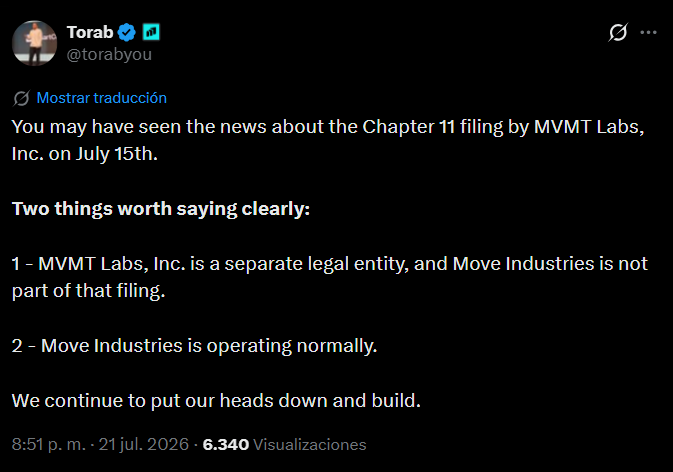
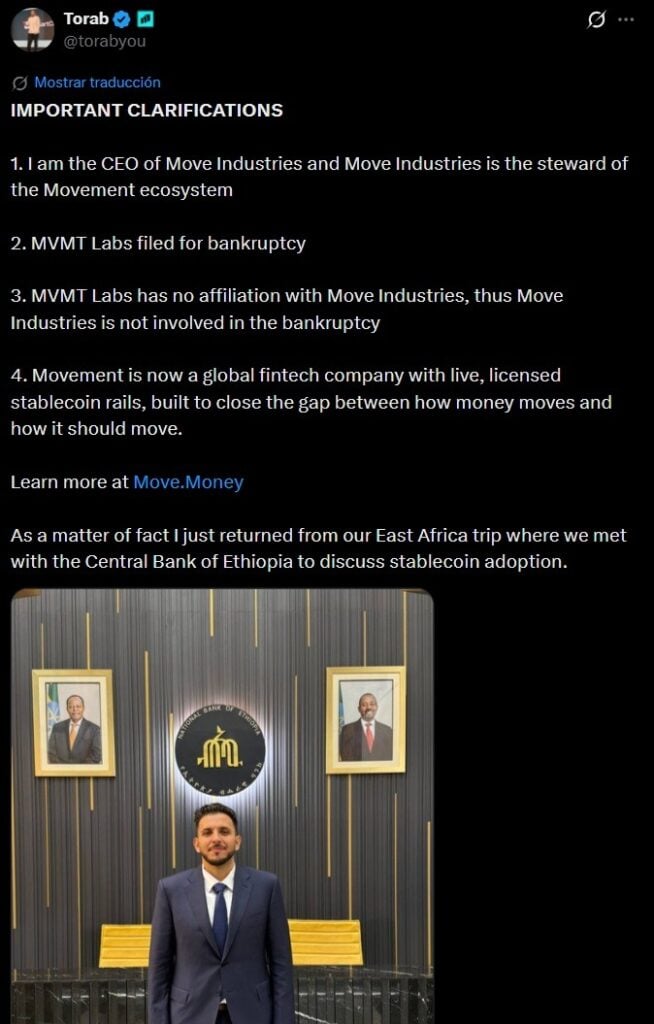
Later, Torab made a post again with some “important clarifications” on his behalf:
1. I am the CEO of Move Industries and Move Industries is the steward of the Movement ecosystem
2. MVMT Labs filed for bankruptcy
3. MVMT Labs has no affiliation with Move Industries, thus Move Industries is not involved in the bankruptcy
4. Movement is now a global fintech company with live, licensed stablecoin rails, built to close the gap between how money moves and how it should move.
The “strategic pivot”: A pattern in crypto failures
Movement Labs’ collapse fits a familiar pattern in crypto: when a project’s core technology fails to gain traction or trust is shattered by scandal, the team announces a “pivot” to a new sector.
In Movement’s case, it was a shift from Ethereum layer-2 (L2) scaling to cross-border payments, remittances, and stablecoin settlement for emerging markets. After the scandal went down, a new, separate company called Move Industries stepped in to lead the ecosystem development, promising they’d locked down licensed payment infrastructure. But the bankruptcy filing (with liabilities up to ten times greater than assets) reveals the pivot for what it was: an attempt to rebuild investor confidence that ultimately failed.
Movement (MOVE) token performance
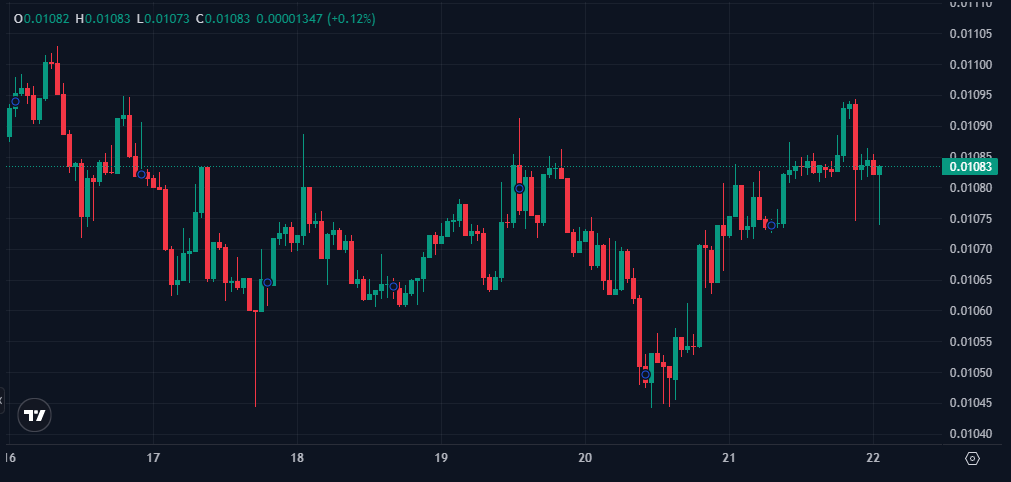
As for the MOVE token, it hasn’t really changed in the last 24 hours. Trading at $0,0108 at the time of writing, it is performing with a minimal gain of 0,2 percent. For now, showing that the recent bankruptcy filing didn’t affect the token price. Though we’ll see how this all develops.