

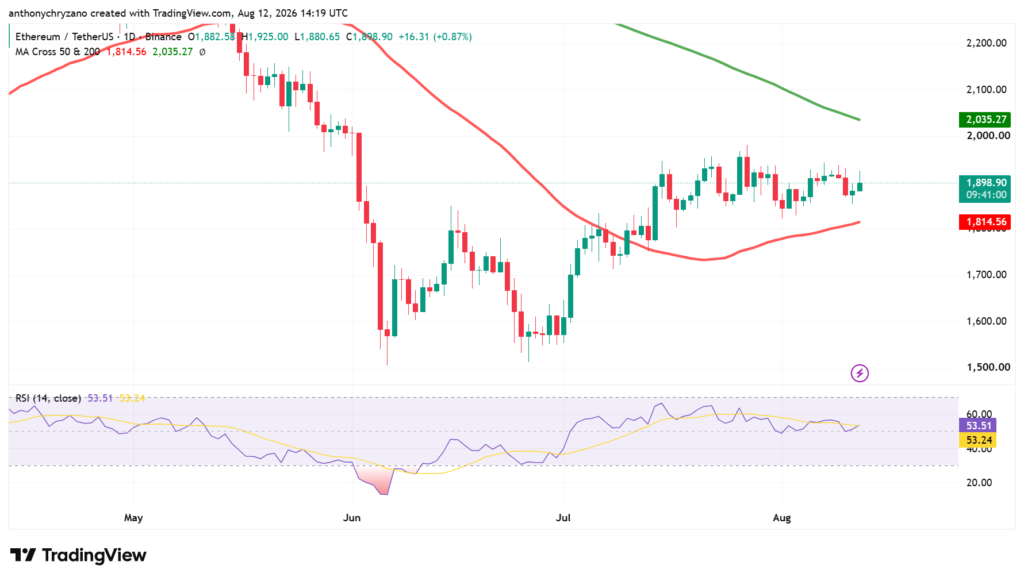
Ethereum’s next target could be $2,300, as two major indicators signal the coin is undervalued. As the landscape in the U.S. gets more favorable for risky assets with slow inflation, the likelihood of ETH hitting this level increases.
ETH crosses $1,900 resistance level
Ethereum made a huge statement as it crossed above the $1,900 psychological level. As the coin crossed this major obstacle, some of the important metrics signaled that the coin was undervalued and the market could correct the prices.
An analyst who goes by Joao Wedson spotted the MVRV Z-Score (Market Value Realized Value), which measures if the coin is overvalued or undervalued relative to its historical level, has turned negative. With a -0.14 value on its scale, the MAVRZ shows that ETH is mildly undervalued. And the best part about this indicator going negative is that it ‘appeared during periods of significant market stress and attractive long-term valuation.’
In addition to this, the Delta Growth Rate of the market cap is -0.07. This shows that the market valuation of ETH is not expanding as quickly as the underlying realized value of the network. But this does not say that ETH has reached its bottom; however, this is an indication that the market is still bullish.
Analyst expects ETH to hit $2,300 as inflation cools
Analyst Michael van de Poppe stated that based on the price movements, low volatility, and tight range, the breakout is going to be very volatile. As such, Poppe predicted that ETH could hit $2,300 as its next target.
U.S. CPI continues to fall since May
In addition to this, the U.S. economy is also becoming more favorable for risky assets like cryptocurrencies. According to the US CPI report, the annual inflation rate in the US decreased to 3.4% in July 2026, down from 3.5% in June, continuing the trend from May’s high of 4.2%.
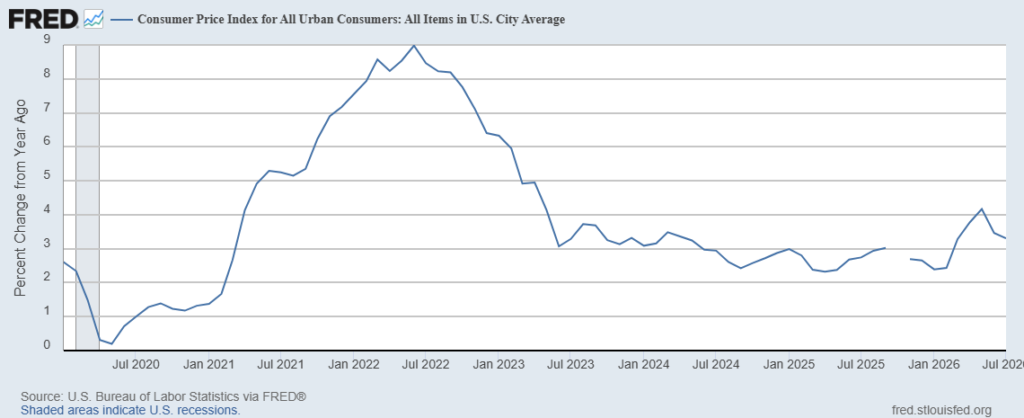
Slower CPI inflation is generally positive for risky assets such as cryptocurrencies, growth stocks, and technology stocks because it can reduce pressure on central banks to keep interest rates high.
When inflation slows, markets may expect the Federal Reserve to cut interest rates or become less hawkish. Lower rates reduce borrowing costs and can push investors away from safer, interest-bearing assets toward riskier investments in search of higher returns.
For crypto specifically, slower inflation can be bullish because lower expected interest rates can improve liquidity and increase investors’ willingness to hold assets such as Bitcoin and Ethereum. It can also weaken the dollar, which tends to provide another potential tailwind for dollar-denominated risk assets.