



On Thursday, on-chain intelligence platform CryptoQuant’s CEO, Ki Young Ju stated that there is a noticeable divergence that’s starting to appear between the Bitcoin (BTC) and altcoin markets. The crux of Ju’s argument was that the current crypto market is essentially about the coexistence of Bitcoin exchange-traded funds (ETFs) and weak altcoin capital flows.
Bitcoin has matured into an institutional asset
Ju remarked that the launch of crypto-based ETFs on traditional finance (TradFi) platforms was perceived as bullish. However, crypto exchanges trading stocks is bearish, since it means that crypto-native investors might pull back from buying altcoins.
The crypto executive’s comment indicates one major structural transformation happening in the crypto market – the buying base is changing.
To recall, the first U.S. spot Bitcoin ETFs were approved back in 2024 to much fanfare of the wider crypto audience. Rightly so, an increasing amount of institutional capital has been constantly flowing into the top digital asset through brokerage firms, and retirement accounts, instead of crypto exchanges like Binance, Coinbase, and others.
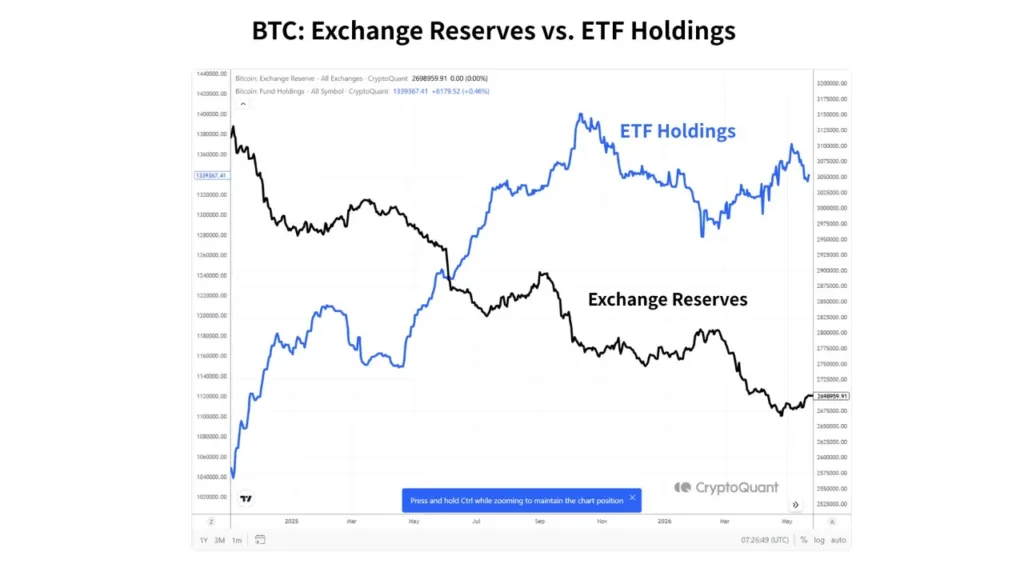
ETF holdings have continued to rise, with latest data from SoSoValue estimating that total net assets tied in BTC ETFs currently hover slightly above $96.45 billion, representing about 6.40 percent of the digital asset’s total market cap.
On the other hand, BTC reserves on cryptocurrency exchanges are drying up, confirming that the cryptocurrency is being absorbed into long-term institutional custody.
This means that BTC is no longer driven by internal crypto liquidity. Wall Street entities are becoming increasingly important in BTC price formation.
Altcoins are suffering from thin liquidity
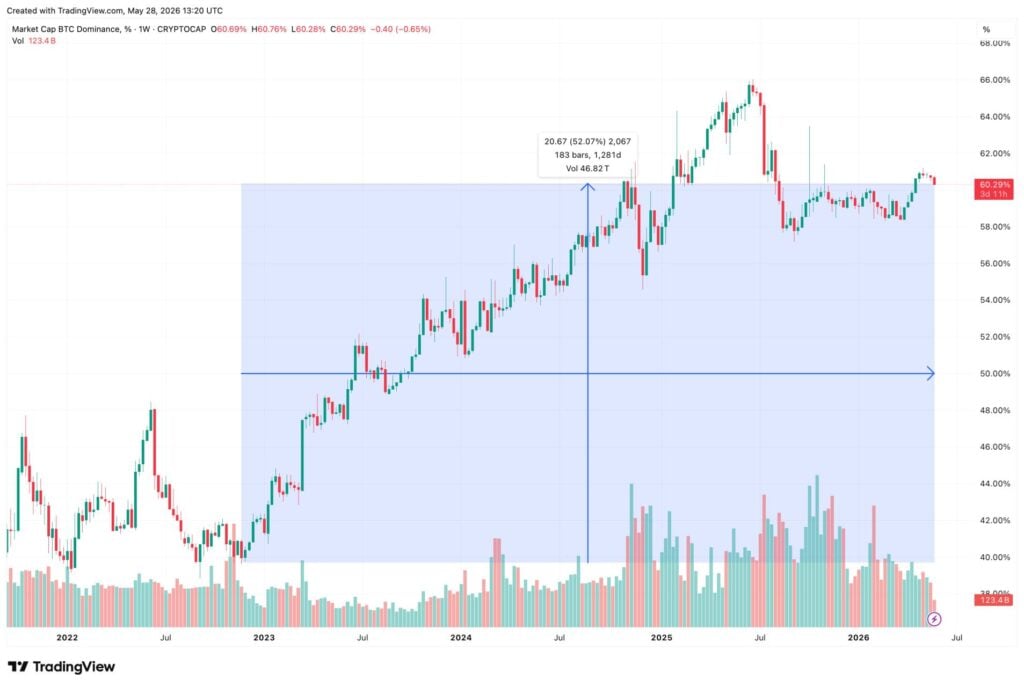
Meanwhile, altcoins are struggling. The following chart shows how BTC dominance has surged by more than 52 percent since November 2022, currently sitting around 60.30 percent. A higher, sustained BTC dominance metric indicates that liquidity is being pulled from altcoins.
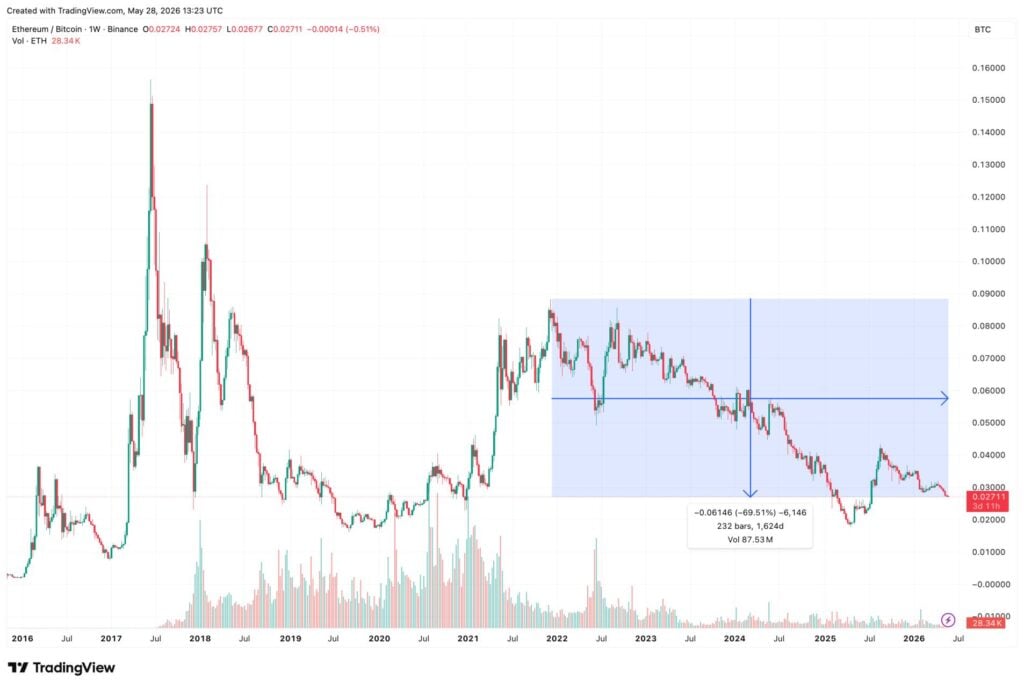
Further evidence to confirm the sluggish price behavior shown by altcoins is the struggling ETH/BTC ratio. The trading pair, usually viewed as a measurement of how altcoins are performing against BTC, remains suppressed.
The ETH/BTC trading ratio has crashed over than 69 percent from the November 2021 high, currently trading around 0.027. On-chain data also suggests weaker aggressive buying activity and lower speculative appetite among crypto-native traders.
Investor interest in altcoin-focused sub-verticals like DeFi has receded too. That said, not all analysts are pessimistic about the potential return of a so-called ‘altseason.’