

Singapore-based Crypto.com exchange has observed a spike in scammers targeting its userbse of over a 100 million. On Thursday, the platform said that phishing attacks have registered a notable surge in the last few days, industry-wide. Some X users who claimed to be Crypto.com users confirmed the development, suspecting that the exchange has probably been hit by a data leak incident which it hasn’t reported to its users.
Emails mimicking official communication channels of crypto companies are widely circulating among investor communities, exposing them to malicious links, the exchange said.
Suggesting a conscious distance from suspicious emails, the platform has asked its users to reach out to its customer service support team in case of any doubt or confusion.
It reminded its users to activate provided security features like 24-hour withdrawal locks, two-factor authentications, and anti-phishing codes to their respective accounts.
“Please know – Crypto.com will never call users with regards to security issues, and we never ask users to transfer any funds. Crypto.com will only initiate communications with you via the in-app chat or email via a Crypto.com email address with your Anti-Phishing Code included if you have set it up,” it said.
Comments under the post suggested that spam mails showing senders’ email address linked to Crypto.com have been flooding their inboxes for two months. Suspicions

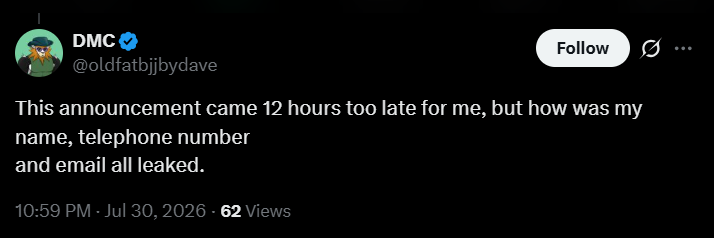
The Coin Headlines has reached out to Crypto.com seeking more clarity on user suspicions. The development comes just days after Crypto.com was named a payment partner by UAE’s Emirates airlines that has started to accept ticket bookings via crypto.
In phishing attacks, scammers try to trick users into disclosing their private keys, seed phrases, or wallet approvals by impersonating a trusted sources.
As per a recent Chainalysis report, phishing and social engineering scams led to the losses of around $282 million in the first half of 2026 with total crypto project compromises having lost $1.3 billion between January and June this year.
Earlier in May, American software engineer Jameson Lopp had also alerted crypto investors of phishing attempts via Google mails.