

Bitcoin’s (BTC) recent price action shows that the cryptocurrency may be on the brink of another major sell-off. The digital asset has plummeted 13.4 percent on a year-to-date (YTD) basis, validating the old Wall Street adage of “sell in May and go away.”
Technical indicators, capital flow tease a Bitcoin crash
The Bitcoin monthly chart is showing a so-called “flashing star” pattern. After peaking mid-month in May around $82,500, the top cryptocurrency by reported market cap faced heavy rejection and has pulled back to $75,650, near the month’s lows.
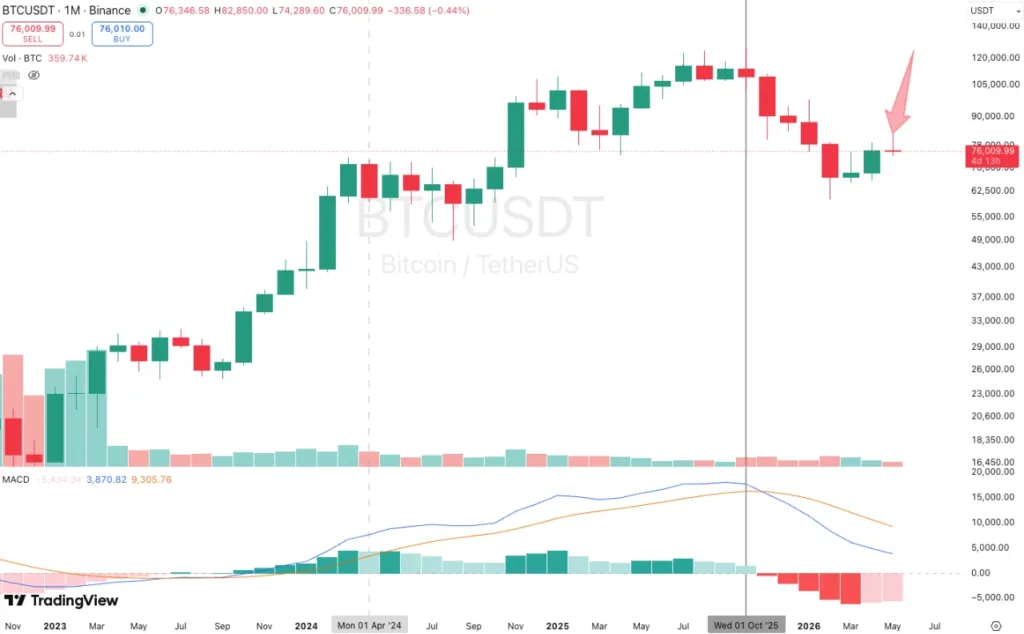
A flashing star is a bearish candlestick pattern that appears after an uptrend, where price pushes to a new high but then gets rejected and closes near the low of the candle with a long upper wick.
It signals that buyers lost control at higher levels and selling pressure is stepping in, warning of a potential short-term reversal or exhaustion. BTC’s rejection this month confirms that bulls failed to sustain higher prices, and supply is dominant at the highs.
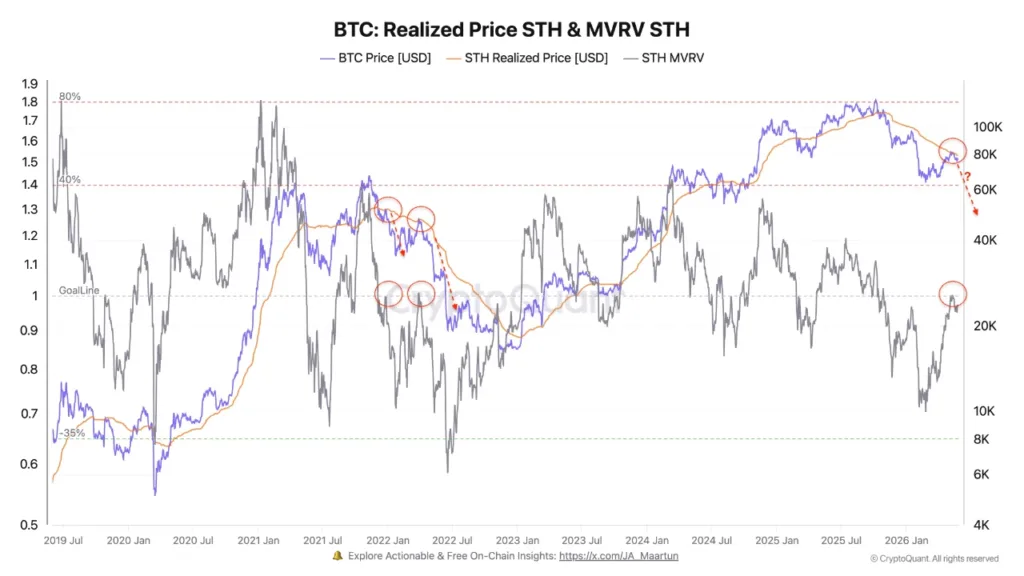
In addition, on May 8, the Bitcoin short-term holder cost basis (STH-CB) failed to reclaim the critical 1.0 profit-loss line. It essentially confirms that BTC’s latest bounce lacked any meaningful momentum.
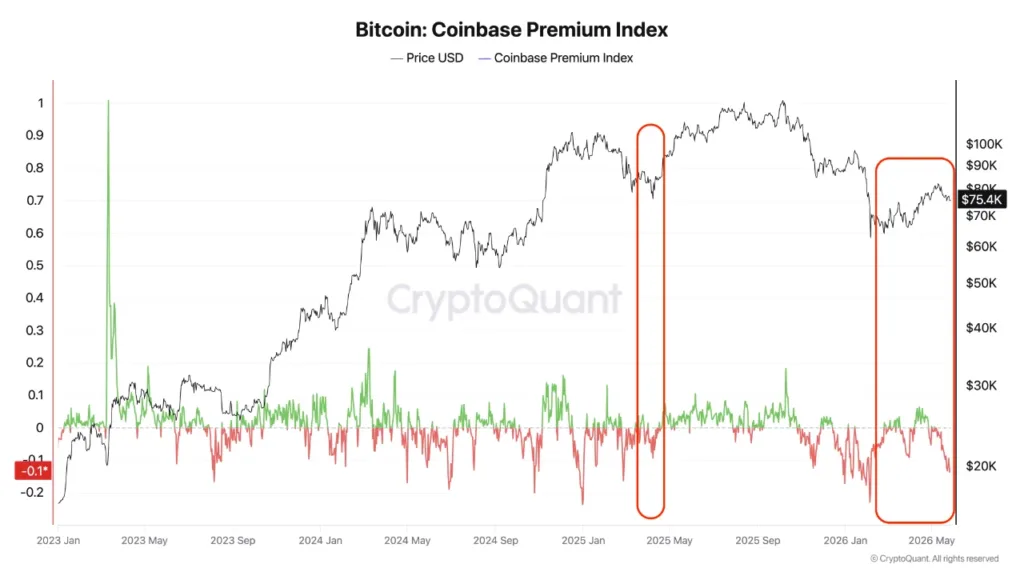
Further, both institutional and retail capital flow signals are showing a lack of global buying pressure across major regions. For instance, the Coinbase Premium has fallen to -0.136, indicating a lack of aggressive U.S. institutional buying.
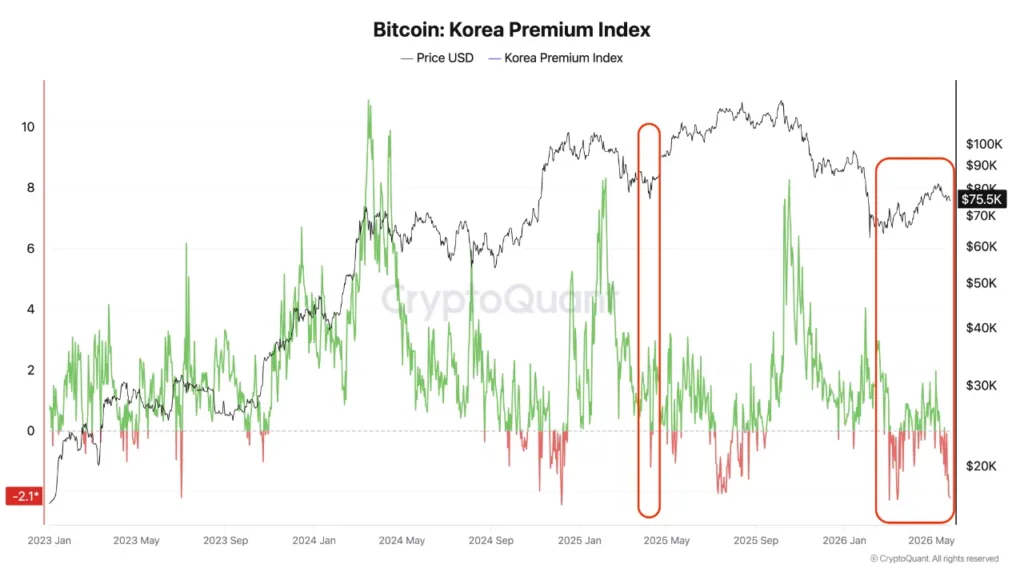
The Korean Premium, also called the “Kimchi Premium” is currently sitting around -2.1, signalling that Korean investors are fearful and choosing to stay on the sidelines. Simply put, both eastern and western capital drivers are stepping back temporarily.
BTC’s $1.3 billion dark pool sell print
Perhaps the most worrying signal surfaced on Tuesday, when a massive $1.3 billion sell order for the IBIT spot Bitcoin ETF showed up in a dark pool. When analyzed in combination with the Coinbase Premium, it conveys that institutions are quietly distributing their holdings off-exchanges to avoid crashing the market.
For the uninitiated, a dark pool is a private trading venue where large institutional investors can buy or sell assets without displaying their orders on public order books.
This makes it possible for them to execute big trades with reduced market impact, but it also means retail traders don’t see the flow until after the transactions are completed or indirectly reflected in price action.
To conclude, weak ETF inflows – coupled with dwindling investor confidence – could delay BTC’s any potential breakout in the short-term.