

The Anti-Corruption Data Collective published a report that digs into Polymarket trades through May 5 this year, looking for signs of insider trading. To spot these suspicious moves, researchers tracked what they call “long-shot” bets. These are bets when someone drops at least $2,500 within a single hour on an outcome with less than a 35 percent chance of winning. The investigation builds on broader industry concerns regarding onchain integrity.
Who are the ‘Orcas’
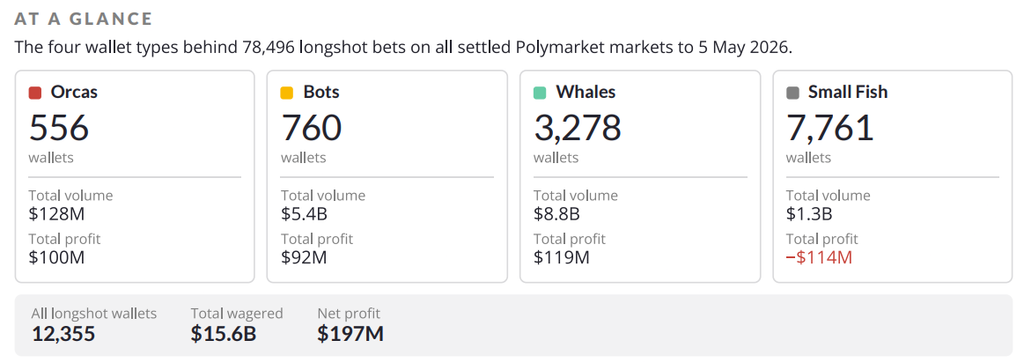
Within this group, researchers identified 556 wallets they dubbed “Orcas”: Traders who open accounts, place highly selective, successful long-shot bets in niche markets, and often cash out and disappear. Of these, 152 wallets focused specifically on military and defense markets, collectively earning $8 million with an average success rate of 97.2 percent.
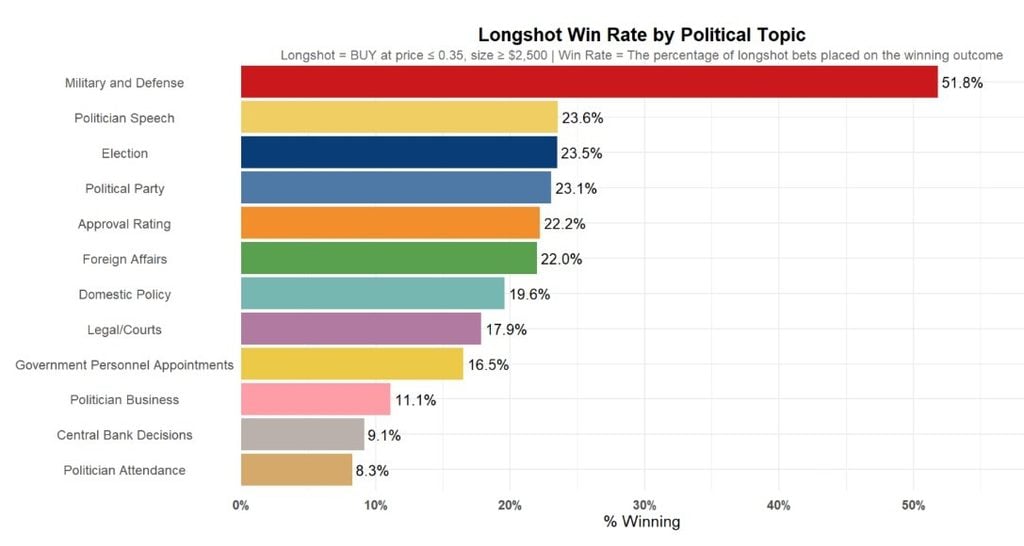
The ACDC’s methodology builds on earlier research published in April, which found that while only 14 percent of long-shot bets succeed across Polymarket, the success rate jumps to 51.8 percent in military markets.
The “Orca” category captures most previously reported egregious cases while surfacing dozens of previously unreported wallets.
Copycats amplify insider signals
Now, the real kicker isn’t just the insider trading; it’s how Orca trades act like a dinner bell for big-money “Whales” and automated trading bots. When these Orcas move, others follow, which basically turns an insider signal into a massive market wave.
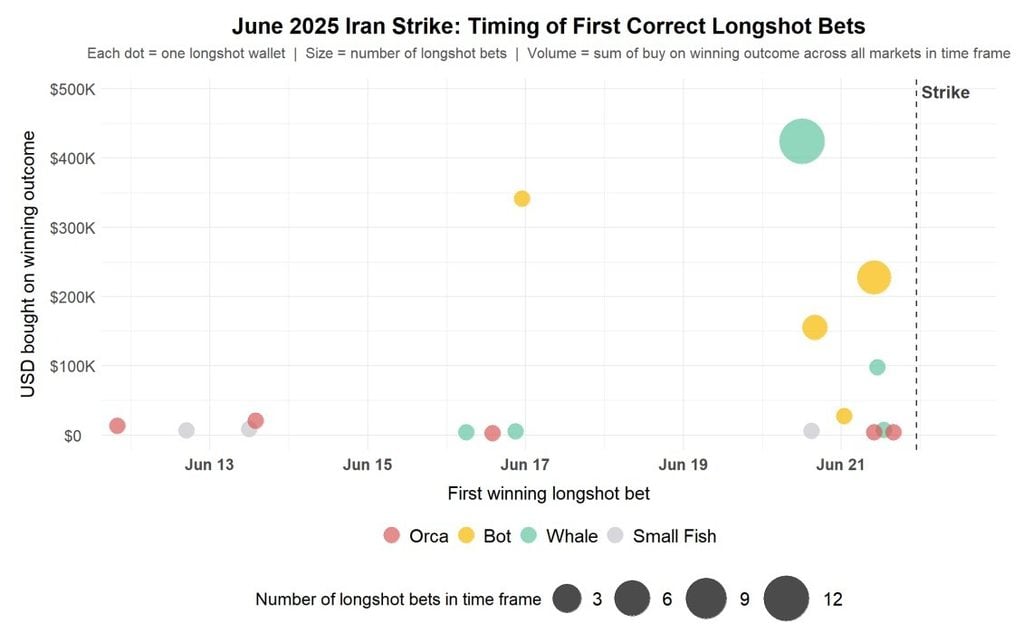
Take the U.S. military action in Iran back in June 2025. Just hours before the strikes actually happened, an Orca placed their bet. Right on cue, a Bot and a Whale jumped in with copycat wagers of $200,000 and $100,000.
Things got wild in February 2026. Orcas were placing bets a month before the strikes, probably just lucky rather than having privileged information, but that still set off a chain reaction. Around February 16, whales and bots started piling in, and the activity just exploded, with dozens of new players jumping in during the 48-hour countdown to the strike.
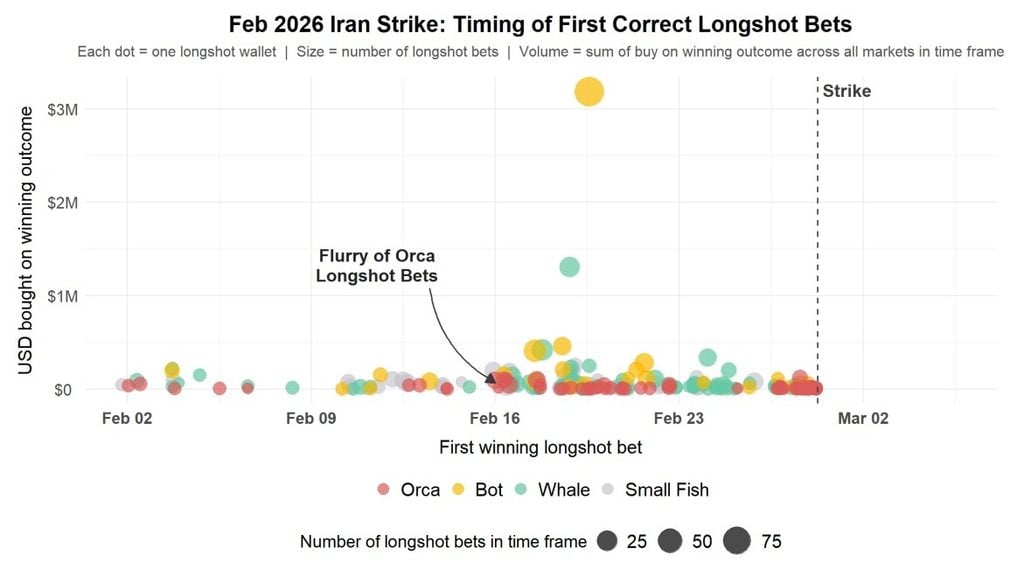
“Most people vastly underestimate how observable unusual betting activity actually is on Polymarket. It’s all right there on the internet. It would be naive to think foreign-intelligence agencies aren’t monitoring these markets,” said ACDC co-founder David Szakonyi.

Policy implications
The report argues that banning the highest-risk categories of political markets is the only effective solution, rather than relying on policing individual users. It also recommends requiring government-issued identification for all bettors and holding suspicious payouts pending investigation.
The CFTC’s regulatory dilemma: Ban or tolerate
The Commodity Futures Trading Commission faces a difficult choice. It has authority to ban contracts on events deemed not in the public interest, including those related to war and assassinations. However, the agency has historically taken a permissive approach to political prediction markets.
The ACDC report argues the CFTC should expand its definition of “contrary to the public interest” to include group-outcome political markets where insiders inherently hold advantages. But a ban could simply push activity to offshore platforms.