
The TPS (transactions per second) data displayed is real-time (30 days sustained), meaning that instead of presenting theoretical max transactions per second and marketing-related short-term figures or one-hour snapshots, it clearly shows the long-term usability of the network based on usage. It filters out and isolates sustained network activity rather than just one time traffic peaks in the blockchains and uses data provided by Chainspect to show the actual, long-term performance of each blockchain.
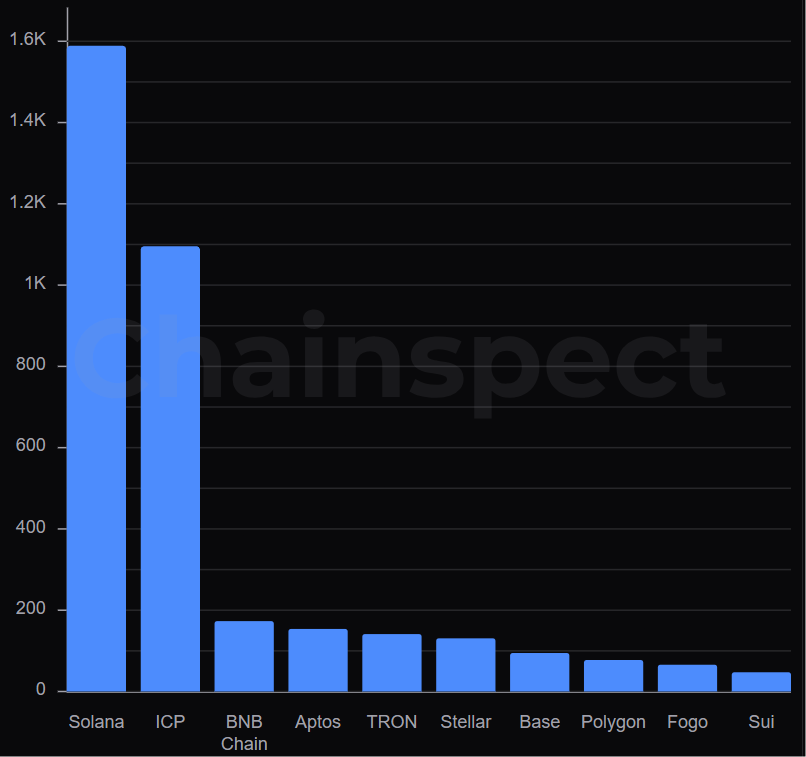
The list has ICP in second position, with Ethereum and BNB Chain coming lower down the rankings and above even higher-usage, discussed-throughput chains. Only this reason would make this list be worth reading past position one, as it proves that awareness and actually being used are not quite one in the same.
1. Solana
In the past month Solana has processed an average of 1,589 tx/s. That’s over 1,500 tx/s more than any other competitor. And when paralleling tx and taking a closer block time to the 409 milliseconds, it allows solana to absorb the traffic caused by the retail investors and the bots.
Solana’s potential maximum capacity: 65,000 tps In other words, the network is operating far from its potential maximum. This potential-actual usage gap seems to be the most obvious conclusion when examining the data.
2. ICP
Internet computer enters with 1,096 Transactions per Second. This blockchain holds the second spot, which is not bad when it comes to a list that would typically include a different candidate in that top position before a full round of speculation occurred. ICP scales transactions by segmenting network traffic across several independently acting subnets capable of processing many transactions in tandem and that architecture is the direct reason for the sustained volume.
Ethereum doesn’t crack the top 5. Then, ICP (a chain you’ll rarely see brought up in these conversations) ranks number 2 in usage metrics. This metric of real-world usage clearly does not correlate with popular attention given the topic.
3. BNB Chain
BNB Chain is holding the third position in the list with around 173.2 transactions per second and this is the figure that is below ICP but still ahead of the rest of the field.
The chain supports fast DeFi and trading activity and all of this is possible with 450-millisecond block times and 650-millisecond finality. The mentioned theoretical capacity of 6.349 TPS is depicting that the network is just making use of a small portion of its potential.
4. Aptos
The Aptos blockchain is holding the fourth spot with 153.9 transactions per second and is ahead of TRON. The metric here that grabs the attention is the block time. Aptos completes the block finalization in 39 milliseconds and it is the fastest among all the ones mentioned in the list and all of this is combined with instant finality. The theoretical ceiling of 12,933 transactions per second is still far off if considered with current usage. All of this means that the network has the capacity but it has not been utilized to that extent.
5. TRON
TRON closes the top five at 141.3 transactions per second despite the slowest specs on the list, a three-second block time and 57-second finality. None of that has kept TRON off the leaderboard. Stablecoin and payment volume alone are enough to hold its position. Speed on paper and speed in practice are two different measurements, and TRON is the clearest proof of that gap.
Just outside the top five, Stellar holds 130.8 tx/s, Base holds 94.7 tx/s, and Polygon holds 77.5 tx/s, all trailing TRON by a narrow enough margin that a strong month could reshuffle the order.
The true network activity is not the decided by just speed
Transaction data indicates sustained transactions may matter more than Theoretical TPS does, but the data clearly shows that ICP is a huge success, second after SOL, which has always been discussed as one of the top L1s. ICP often being ranked higher than many traditional “Layer 1s” was not something many would have thought of.
Aptos has the fastest block production but does not rank highest in sustained throughput, showing that low latency alone does not determine network activity. BNB Chain has plenty of unused capacity, while TRON shows that strong transaction demand can keep a network busy even with lower technical specifications. Overall, real usage matters more than headline performance.