

Ocean Pool (Bitcoin miner) said it’s turning on Bitcoin Improvement Proposal 110 (BIP-110), signaling that starting July 15, miners must opt out manually. Meanwhile, big players like Foundry USA and Antpool are saying no to the temporary soft fork, which intends to limit non-financial data on Bitcoin’s chain for a year. The proposal faces a key activation deadline on August 8.
The proposal: BIP-110’s one-year data restriction
BIP-110, authored by Dathon Ohm, would temporarily limit arbitrary data storage on Bitcoin’s blockchain. The whole idea here is to set a hard limit on transaction output data at 34 bytes and keep OP_RETURN usage down to just 83 bytes. It is aimed at those Ordinals inscriptions and BRC-20 tokens that some proponents in the community view as “spam”.
Supporters, led by Bitcoin Knots maintainer Luke Dashjr, argue these restrictions would reduce node operator burdens and preserve Bitcoin’s monetary function.
Major mining pools stand united against BIP-110
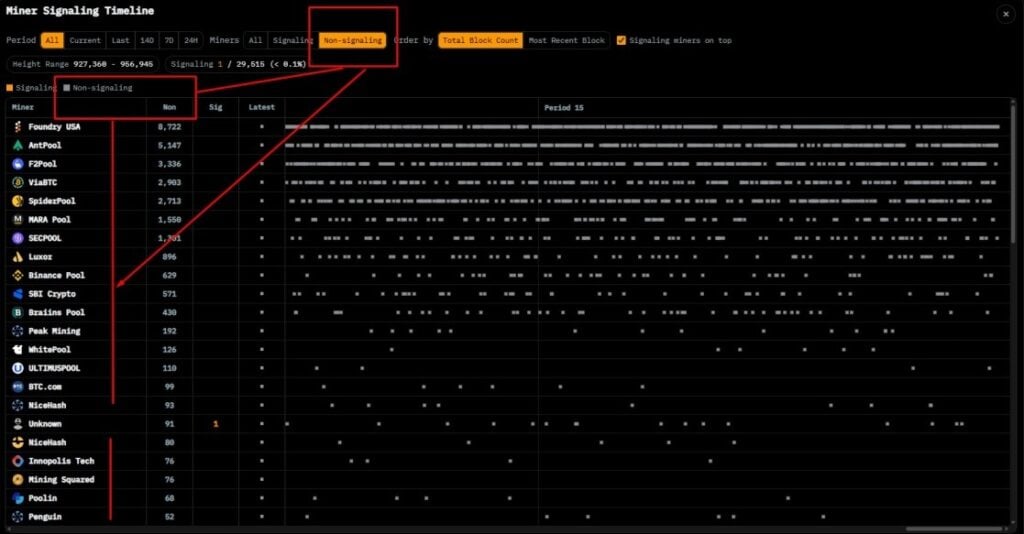
Data from mempool.space shows Foundry USA (25.5 percent hashrate) and Antpool (18.7 percent) have not signaled support for BIP-110. F2Pool co-founder Wang Chun explicitly rejected the proposal in February.
The 0.31 percent hashrate support reflects a clear industry consensus that the economic incentives from Ordinals-related transaction fees outweigh ideological concerns about block space usage.
On the other hand, Strategy’s founder Michael Saylor said in a recent X post: “After a decade of blockspace fears and non-monetary-use panics, Bitcoin still has no spam problem. Fees are 1 sat/vB: anyone can move any amount globally with immediate processing for ~$0.30. The free market has always solved Bitcoin’s blockspace challenges.”
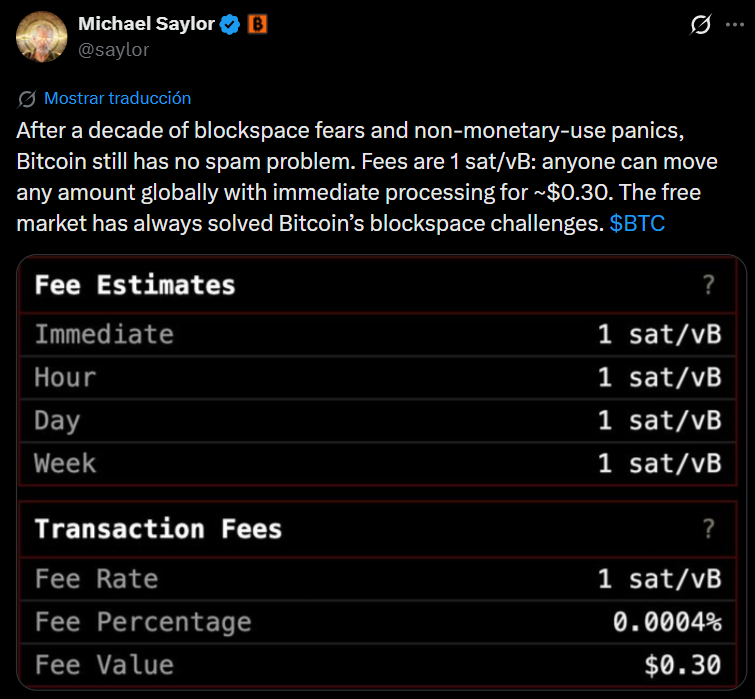
Saylor got some serious heat for that. To a lot of people, he’s just a guy who hasn’t actually run a node himself and seen everything grind to a halt when that 2023 spam hit.
Also, here’s a pretty big deal: MicroStrategy already showed off plans for Bitcoin-based decentralized IDs using Ordinals, and even built a tool with its service called “Orange For Outlook,” which puts digital signatures into emails so recipients can check the identity of the sender.
So, in any case, he is up to putting more “junk” (as the community calls it) in the Bitcoin network.
The path forward: August 8 deadline
The proposal requires 55% miner signaling to activate early (a deviation from Bitcoin’s regular consensus model of over 90 percent), with forced signaling beginning August 8 at block 961,632.
Critics, including Blockstream CEO Adam Back, warn the proposal could lead to a chain split and undermine Bitcoin’s neutrality as a permissionless data layer.
BIP-110 includes a one-year automatic expiration clause, limiting potential damage if activated. The next few weeks are going to show if this whole governance fight just blows over or actually turns into a messy fork.