

HarrisX and the Coalition for Tokenized Markets (CTM) released a survey of 2,008 U.S. registered voters showing that 50 percent of Americans are interested in tokenized investments when framed as a modernization of traditional finance (TradFi) rather than a speculative crypto product.
Interest rises sharply once practical benefits are explained (faster settlement, 24/7 access, lower fees), reaching 85 percent among current crypto owners. Utility wins; technology does not.
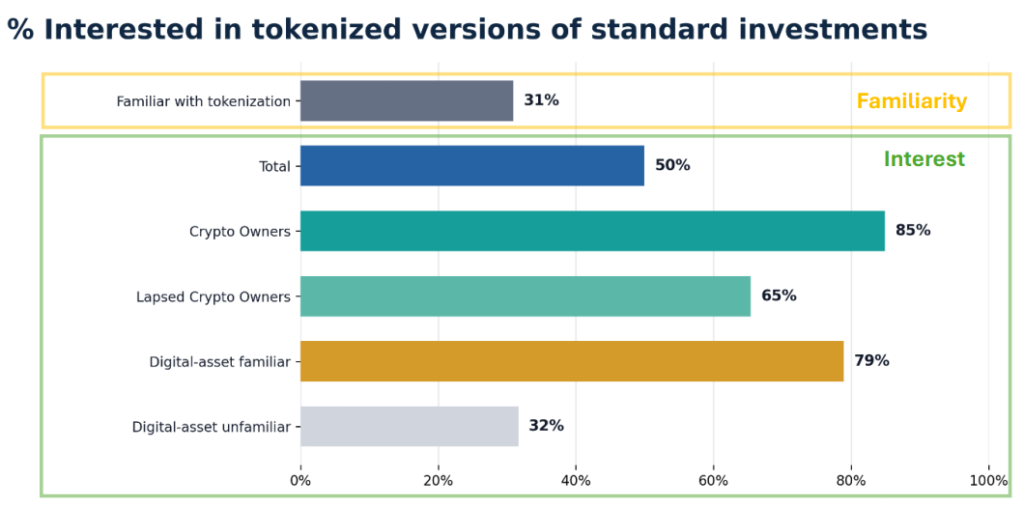
What Americans want from tokenization
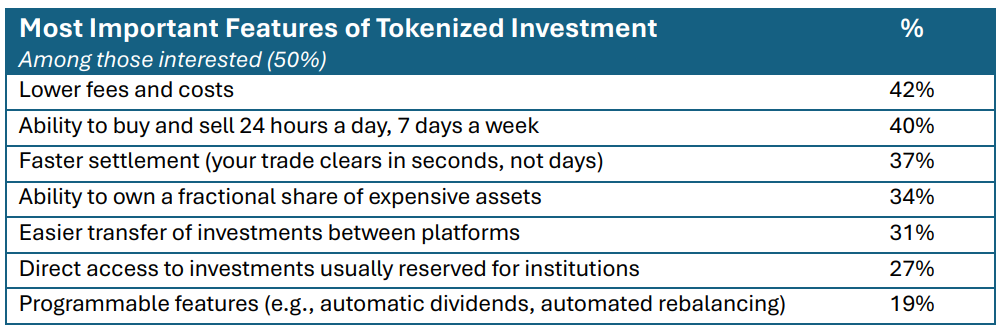
According to the 2026 Report on Tokenization Adoption, people care way more about practical perks than the shiny tech behind them. They are much more interested in things like faster settlements, 24/7 access, lower fees, and easier transfers; actually, mentioning “blockchain technology” itself was the least effective way to get their attention.
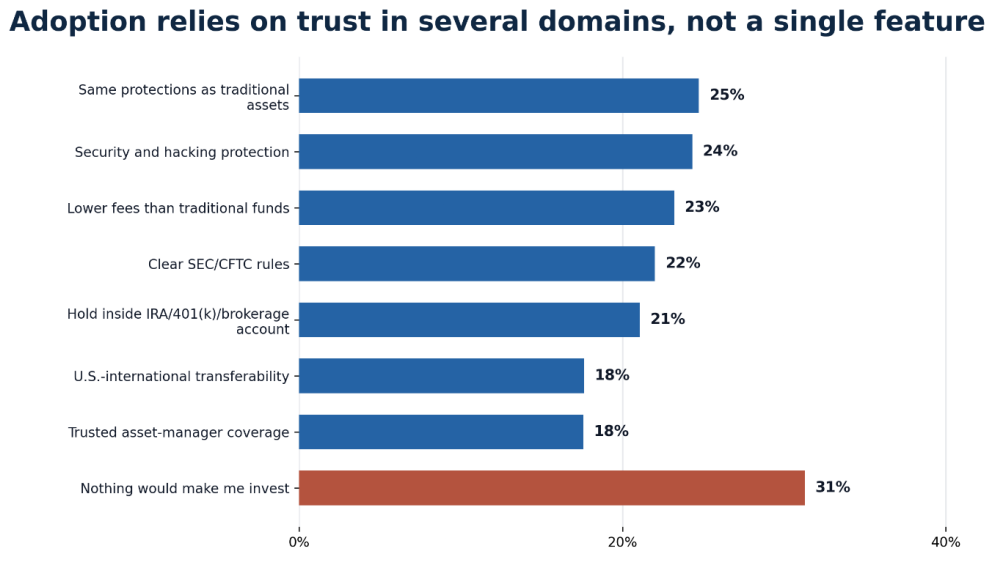
Adoption depends on a bundle of protections: familiar investor safeguards, security, low fees, clear Securities and Exchange Commission (SEC)/Commodity Futures Trading Commission (CFTC) rules, and the ability to hold tokenized products in existing accounts.
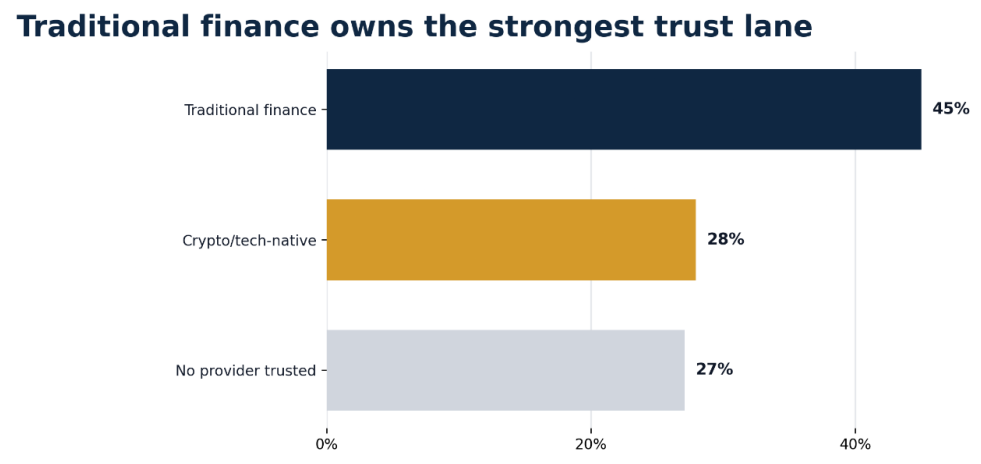
Trust favors traditional finance: 45 percent would trust traditional financial institutions to offer tokenized assets, versus 28 percent for crypto (and tech) native firms.
Americans want coordinated cross-border rules: 78 percent say it’s important for the U.S. and Europe to work together so tokenized investments can move freely.
The CLARITY Act factor
The survey also found that digital assets are becoming an electoral issue as Congress considers the CLARITY Act. Once voters learn what the bill would do, 74 percent support it, including 79 percent of Republicans, 75 percent of Democrats, and 71 percent of independents.
Nearly half of voters (44 percent) would consider crossing party lines for a candidate who supports responsible digital-asset regulation. Among likely midterm voters, 48 percent say a candidate’s position on crypto regulation will be important to their vote, rising to 74 percent among cryptocurrency owners.
The U.S. tokenization market: Infrastructure is the catalyst
To date, the U.S. tokenization market is moving from pilot to production. The distributed value of real-world assets (RWA) has recently hit around $37.8 billion, and tokenized Treasuries on their own account for over $16 billion.
The Depository Trust & Clearing Corporation (DTCC) got the green light from the SEC for its tokenization pilot, and it is looking at a full launch in October 2026. This will cover everything from Russell 1000 stocks and exchange-traded funds (ETFs) to Treasuries.
Plus, both the New York Stock Exchange (NYSE) and Nasdaq got SEC approval earlier in 2026 to start trading tokenized securities, with the NYSE even planning to offer 24/7 settlement.
Clearer rules are helping things pick up speed. Even the SEC’s own strategic plan mentions that blockchain is capable of “fundamentally changing the United States’ financial infrastructure.” Is worth to mention taht the CLARITY Act has already gotten the thumbs up from committees on both sides of the aisle. Even if there’s still some work to do.
Looking at the industry, a Broadridge survey showed that 84 percent of firms now see tokenization as a big strategic priority. Citigroup even estimates the market for tokenized securities could hit $5.5 trillion by 2030. Everything is falling into place, and the market is definitely ready.