

The U.S. Space Force announced it had awarded SpaceX a $1.6 billion contract for 18 Falcon 9 launches under the National Security Space Launch (NSSL) Phase 3 Lane 1 program.
The launches, scheduled through the end of 2027 from Vandenberg Space Force Base, will deploy satellites for the Space Based Sensing and Targeting portfolio, a collection of programs for missile detection, space data networks, and airborne target tracking. The award is the first since the Space Force raised the Lane 1 ceiling to $17 billion.
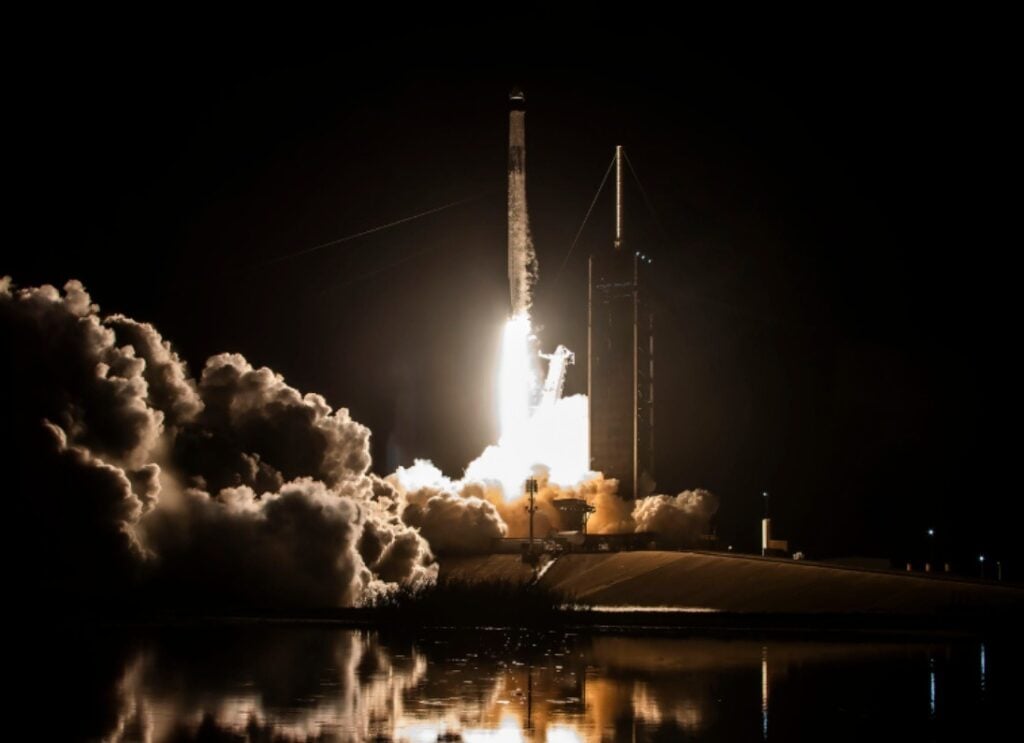
What the Space Force contract covers
The Space Based Sensing and Targeting portfolio oversees three major programs:
- The Space Development Agency’s Tracking Layer (infrared satellites for missile detection)
- The Space Data Network Backbone (an optically linked communications network being built by SpaceX)
- The Space-Based Airborne Moving Target Indicator program (another SpaceX-led constellation for tracking aircraft)
SpaceX has already received separate contracts worth $2.29 billion for the Space Data Network Backbone and $4.16 billion for the Airborne Moving Target Indicator system. The launch award is the largest publicly disclosed order under NSSL Phase 3 Lane 1.
Strategic implications
The contract demonstrates SpaceX’s dominance in national security launches. Seven companies currently hold positions on the Lane 1 contract, but SpaceX is the only one with the combination of launch frequency, operational Falcon 9 rockets, and West Coast infrastructure needed for a campaign of this scale.
The schedule itself is quite notable: completing 18 launches by the end of 2027 requires a sustained campaign averaging roughly one mission a month from Vandenberg.
Col. Eric Zarybnisky, the Space Force’s acting portfolio acquisition executive, said the service completed the procurement in roughly two months, including just one month for industry to prepare proposals.
The contract also reinforces SpaceX’s role in both deploying and building key elements of the military’s next-generation satellite architecture.
The Golden Dome connection: SpaceX’s strategic role in U.S. missile defense
This $1.6 billion deal is just one part of a much bigger plan. SpaceX has already locked down at least $7 billion in Pentagon contracts this year as the Trump administration starts building its Golden Dome missile defense shield.
Elon Musk’s crew is a huge player in this project, which is all about beefing up ground-based interceptors, sensors, and command setups while adding satellites up in space to spot, follow, and maybe even stop threats in the air.
The Space Force has already awarded SpaceX $2.29 billion for the Space Data Network Backbone (a satellite-based communications system connecting military forces globally) and $4.16 billion for the Space-Based Airborne Moving Target Indicator (SB-AMTI) program to track airborne targets from space.
Combined with the new $1.6 billion launch contract, SpaceX is positioned as the primary architect of America’s next-generation space-based defense infrastructure. The company’s role spans both the satellites themselves and the rockets that launch them, a vertical integration that no other defense contractor can match.