



Zcash plunged 30 percent after founder Zooko Wilcox confirmed a critical “Orchard counterfeiting vulnerability” that could have allowed unlimited minting of fake ZEC, which remained active from May 2022 until it was patched on June 2nd using Claude Opus 4.8. The network currently offers no clear way to verify whether the bug was ever exploited.
The Orchard bug: A four-year counterfeiting risk
Here’s the nightmare scenario every blockchain developer fears: a bug in the code that lets anyone mint unlimited tokens. Zcash’s Orchard protocol (which handles shielded transactions) had exactly that. According to Wilcox, the vulnerability existed from May 2022 (when Orchard launched) until June 2nd, 2026. That’s over four years of potential exposure.
The Orchard bug was discovered and patched using Claude Opus 4.8, an artificial intelligence (AI) model from Anthropic. Wilcox confirmed the patch on X, writing that the vulnerability was “capable of minting unlimited counterfeit ZEC.” The announcement sent shockwaves through the privacy coin community, with ZEC dropping from roughly $630 to around $418, a 30 percent freefall.
How Was the Bug Discovered?
The discovery story is unusual. Multiple reports allege that Claude Opus 4.8 (not a human auditor) uncovered the critical vulnerability. If true, it would mark one of the first times an AI model independently identified a high-severity zero-knowledge proof (ZKP) vulnerability in production code. Wilcox confirmed the patch was deployed on June 2nd, but details about who found the bug and how remain scarce. So far, the lack of transparency has fueled market panic.
To this point, traders are asking: did white hats find it before malicious actors? Or was the bug already exploited in secret? The Zcash network, designed for privacy, ironically offers no clear way to audit historical shielded transactions for counterfeit activity. That uncertainty is crushing the price.
Panic meets unknowable risk
ZEC’s 30 percent drop is not just about the bug, but about the unknown. In most blockchain hacks, you can trace stolen funds on the public ledger. With Zcash’s Orchard shielded pool, transactions are private by design. That means even if someone minted millions of fake ZEC over four years, there’s no straightforward way to detect it. The market is pricing in that worst-case scenario. White hats reportedly patched the vulnerability, but “patched” doesn’t mean “no one exploited it.”
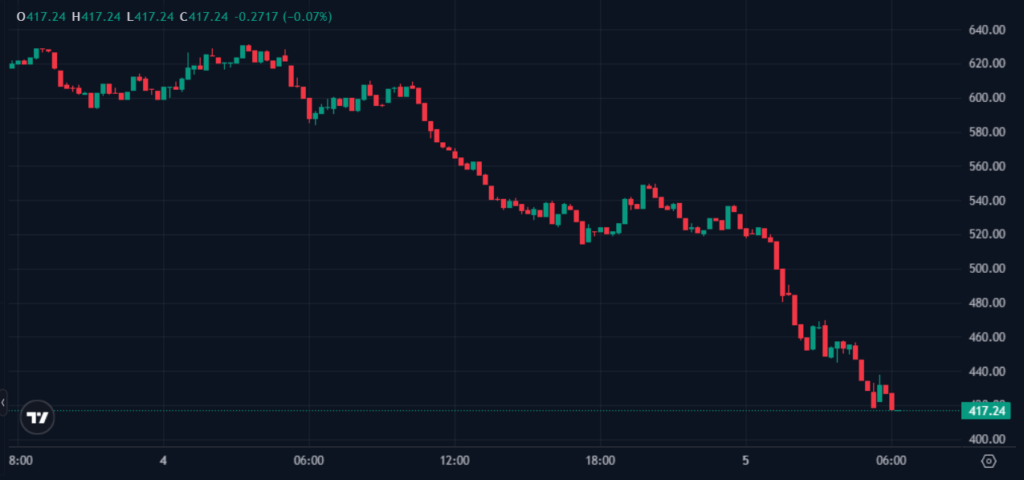
Until the Zcash team provides a cryptographic proof that no counterfeit coins were created (or a credible audit of the shielded pool), the fear will linger. Some traders are betting that the bug was never exploited; others are dumping first and asking questions later.
Next steps: Verification, audits, and rebuilding trust
Zcash founder Zooko Wilcox and the Electric Coin Company are in a bit of a jam right now. Trust is at an all-time low, and they need to act fast. Here is what they are planning to do next:
- Get some outside experts to double-check the fix and the whole system
- See if there is a way to prove no fake coins were made without snooping on people’s private info
- Share the full story on how this happened, who caught it, and why it took years to find
If they don’t do this, it’s going to be hard for anyone to believe Zcash is actually a safe and private currency. People are already talking about starting over with a new version of the chain (a fork) if it turns out someone really did exploit the bug.


