
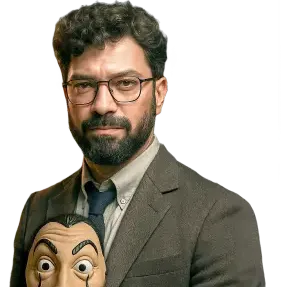

Tokenization and stablecoins are changing how businesses in Dubai treat assets, investments and even payments. For Luis Santos, co-founder and managing director of First Class Property Management, crypto is yet another channel of transaction.
The trust that it will work, comes from the robust regulatory landscape in the UAE. First Class Property Management operates more than 600 licensed holiday homes across Dubai, Abu Dhabi and Ras Al Khaimah and Santos has been accepting cryptocurrency payments from guests for months, a position that puts his company ahead of the competition.
The Coin Headlines caught up with Luis to understand what makes this payment structure tick, where does tokenization and fractional ownership fit into his business plans, and what lies ahead for Dubai’s RWA market.
You’re already accepting crypto payments from guests across 600+ holiday homes, which puts you ahead of most operators in this market. What actually happens behind the scenes: do you convert to dirhams immediately, hold positions in stablecoins, or carry some exposure?
We treat crypto as a way to get paid, not something we bet on. A guest’s payment comes in as a stablecoin — a coin pegged to the US dollar — so its value doesn’t move, and since the dirham is also tied to the dollar, holding it carries no real currency risk. We hold it briefly, convert it to normal cash, and run the business as usual. It all flows through platforms licensed by Dubai’s crypto regulator (VARA), so the crypto sits with a regulated company rather than on our books, and every guest passes the same identity checks no matter how they pay.
Who’s actually asking for this: guests who already hold crypto and want frictionless checkout, or property owners who’d rather be paid in digital assets than dirhams? Has that demand shifted since Dubai’s tokenisation push picked up pace, or has it stayed flat regardless of the headlines?
So far, it’s guests, not owners — travellers who already hold crypto and would rather pay with it than use a card or a wire transfer. We’re happy to pay owners in crypto too; none have simply asked for it yet. And it’s early: the tokenisation headlines have people talking, but they haven’t changed how guests actually book.
Dubai Land Department’s first tokenised offering on Prypco Mint sold out in a day, drew 224 investors across 44 nationalities, and most were entering Dubai real estate for the first time. As the operator managing the physical asset rather than the developer selling it, does that model translate to holiday homes, fractional ownership of short-term rental units?
It’s a different product. What the Land Department did was let people buy digital shares of a property’s value — you own a slice and gain if it appreciates. A holiday home is a running business, not just an asset, so you’d be selling a share of the rental income instead, and that income only exists if the place is well run. It’s harder to package, and it lives or dies on the operator behind it.
Prypco Mint is now expanding to let developers list directly. If that pathway opened up to operators, would First Class consider tokenising ownership stakes in some of the properties you manage? What would have to be true, regulatory or otherwise, before that became a real option rather than a thought experiment?
We wouldn’t do it ourselves — we’re not going to buy buildings or sell investments. But if a developer or owner group built that kind of structure, we’d be the natural operator inside it. For it to work, three things have to be true: the rules must be clear and legal, whoever runs the property keeps control of how it’s run (investors get the income, not a vote on daily decisions), and investors need a real way to resell their shares.
Running 600+ licensed holiday homes is already a complex logistics and compliance operation. Layering crypto settlement, and potentially tokenised ownership, on top introduces volatility and new counterparty exposure. How do you think about that risk at your scale, and where’s the line on what First Class is willing to take on?
Our business is running properties well, not trading crypto. So, we don’t hold anything whose price can swing, we convert quickly, and we let regulated companies handle the risky parts, like storing it. The rule is simple: nothing crypto-related is allowed to threaten our profits or our operating licenses. Those licenses are the whole business, and we won’t gamble them for a payment method.
Most of the coverage on property and digital assets converging comes from developers describing pilots. You’re already transacting in crypto today. Looking out two to three years, where does that convergence actually land for an operator like First Class: in payments, in fractional ownership structures, or somewhere nobody’s talking about yet?
Paying with crypto may become normal but unremarkable — just another option. The bigger change is selling investors a share of a property’s rental income, and that puts operators like us at the centre, because the income only exists if the place is run well, something a developer who just sold the building can’t deliver. The other practical shift is paying overseas owners in stablecoin — faster and cheaper than a bank wire. The real value is in who runs the property and the behind-the-scenes plumbing, not in the headline of buying a piece of a building.


