



Polygon is firing on all cylinders, as its agentic transactions hit 12.6 million, and with block times dropping to 1.5 seconds, the Polygon network is targeting hitting 5,000 transactions per second. Despite these huge on-chain figures, the prices are still on a downward trend.
Polygon processes 12 million agentic transactions in 90 days
Polygon (POL) has shown impressive figures in agentic transfers. During the last 90 days, the network has processed 12.6 million agentic transfers, outperforming Base (8.9M) and Solana (1.7M) by a significant margin.
Agentic transfers have surged to 23.2 million, and the curve continues to steepen. The pace is extraordinary, suggesting that AI-powered on-chain commerce is moving from experimentation to real-world adoption much faster than many expected, stated Everstake, a non-custodial staking infrastructure provider.
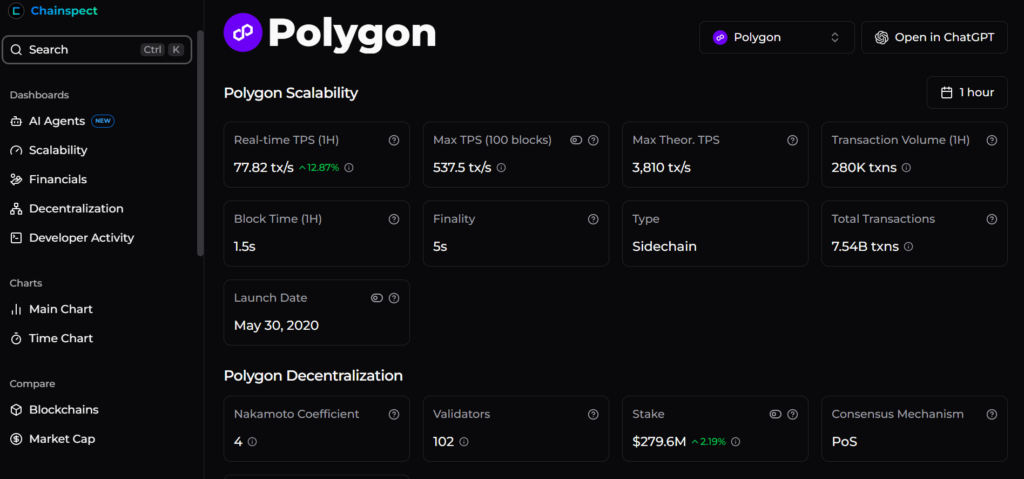
Meanwhile, the coin also hit faster block time creation, reaching 1.5 seconds, and as such, it is being upgraded to hit 5,000 transactions per second.
Polygon’s on-chain metrics are far apart from prices
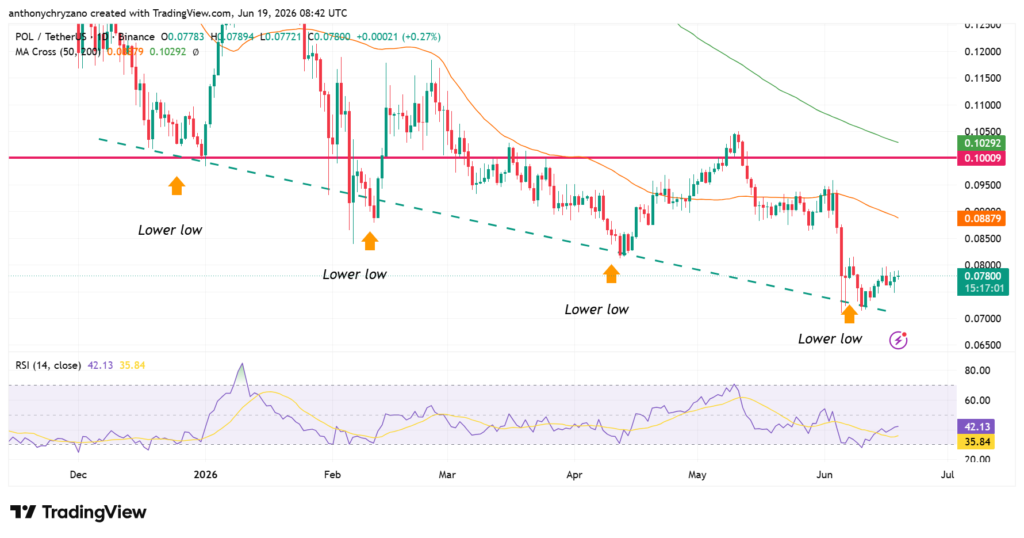
However, the strong on-chain activity witnessed across the Polygon ecosystem has yet to translate into sustained price appreciation for POL. Despite signs of growing network usage and engagement, the token has continued to trend downward, forming a series of lower highs and lower lows since December 2025. This disconnect between fundamentals and price action has left many investors questioning when the market will begin to recognize the network’s underlying growth.
Traders sell-off POL at $0.18
Earlier in 2026, POL managed to rally above the $0.18 level, providing a brief glimpse of bullish momentum. However, the move was short-lived. After recording a price appreciation of more than 50% from its previous lows, traders and early investors began locking in profits. The surge in selling pressure at elevated levels prevented the token from establishing a sustained uptrend and ultimately triggered a reversal. As buyers lost momentum, sellers regained control of the market, pushing the asset back into a prolonged correction phase.
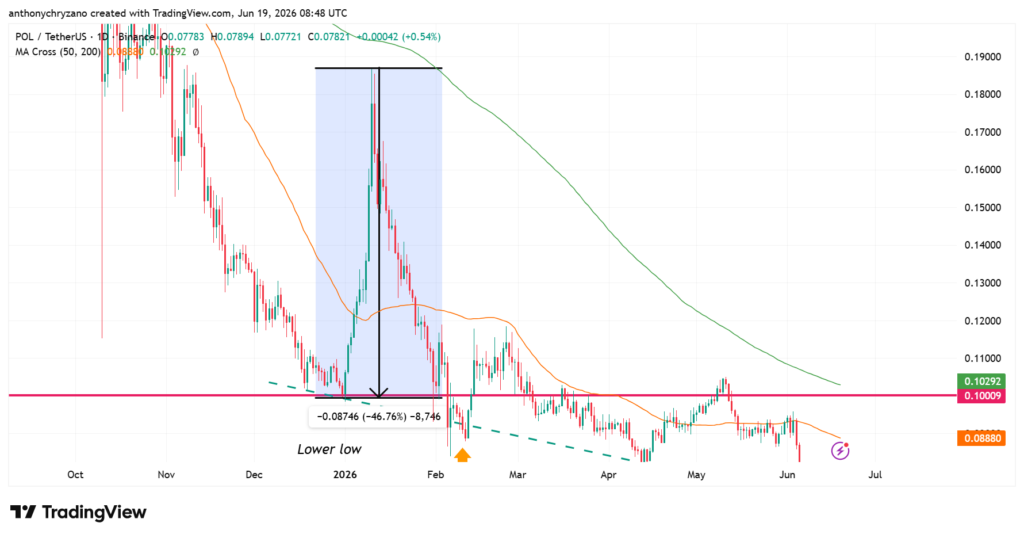
Profit-taking following strong rallies is a common occurrence in cryptocurrency markets, particularly when broader market sentiment remains uncertain. Investors who accumulated POL at lower levels likely viewed the move above $0.18 as an opportunity to secure gains rather than continue holding through potential volatility.
The resulting sell-off created downward pressure that outweighed the positive developments taking place on the network.
Since then, POL has struggled to regain bullish momentum and is currently trading near $0.07. The decline highlights the fact that strong fundamentals alone do not always lead to immediate price gains. Market sentiment, liquidity conditions, and trader behavior often play a significant role in determining short-term price action.
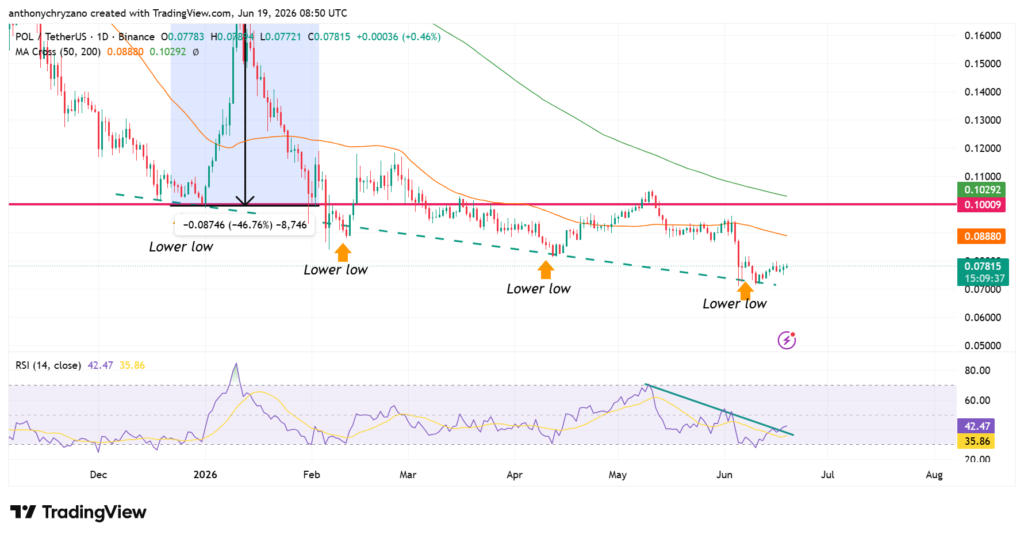
While Polygon continues to demonstrate healthy ecosystem activity, investors appear to be waiting for stronger catalysts before re-entering the market with conviction. However, technical indicators suggest that the prolonged downtrend may be losing momentum.
The Relative Strength Index (RSI) has recently broken its structure of lower highs, a pattern that had been intact throughout the decline. This development is often viewed as an early sign that bearish momentum is weakening and that a potential bottom could be forming.


