



After months of dormancy, SUSHI, the native token of decentralized exchange (DEX) SushiSwap, is finally starting to show signs of life. Between Monday and Thursday, daily trading volume on the DEX surged from a baseline of around $5 million to $39 million – suggesting that trading activity is returning to the DeFi protocol.
SUSHI sees resurging on-chain activity
According to on-chain data obtained on Friday, the average active addresses holding SUSHI tokens climbed from approximately 150 to a 6-month high of 491. The following chart shows the rise in the number of SUSHI active addresses, which has been making consistent higher lows since the beginning of June.
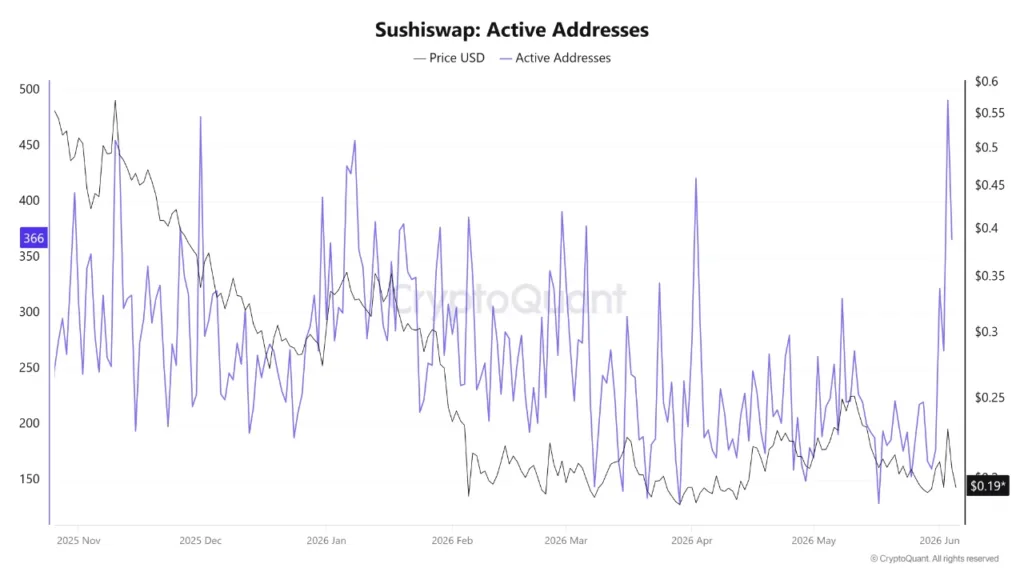
Interestingly, the price side of things is still a little less than ideal, as the token was recently rejected at $0.246, and slid back to around $0.206. The move would be classified as a typical failed breakout by traders.
However, the on-chain data presents a significantly different outlook. During the same period of price peak and volume activity, crypto exchange Binance saw 2 of the largest single-day SUSHI outflows.
On June 3, 2.77 million SUSHI tokens were pulled out of the exchange, while on June 4, 2.61 million tokens left the trading avenue. Such behavior is the opposite of what is typically seen during speculative rallies.
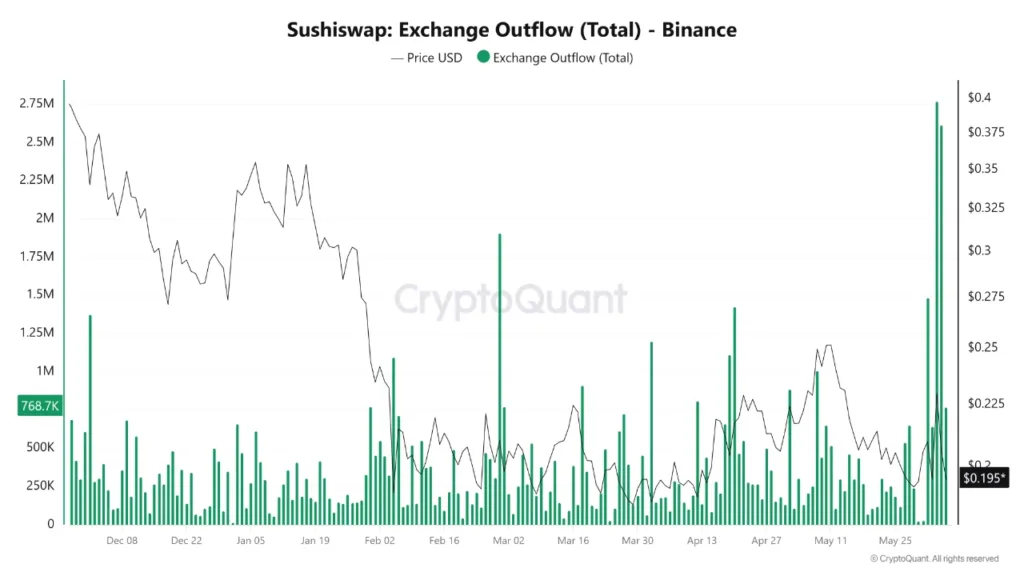
Usually, when retail investors drive a rally, exchange inflows tend to increase as holders move their token holdings on to exchanges to sell into strength. However, in SUSHI’s case, net inflows turned sharply negative exactly when the token’s market activity hit a peak.
It confirms that larger SUSHI holders were likely absorbing the supply and withdrawing tokens from Binance instead of leaving them on the exchange for immediate selling.
Is DeFi going to make a comeback?
Followers of the DeFi space have long been wishing for a comeback of a DeFi-led market rally, akin to the famous “DeFi summer” of 2020 which saw leading protocol tokens like AAVE, COMP, BNT, CRV, and others make parabolic gains within a few months.
However, the DeFi space since then has stagnated, evident from continually dwindling total value locked (TVL) across protocols, constant smart-contract exploits, and a general sense of disinterest in the space as memecoins and tokenized real-world assets (RWAs) took over.
That said, there are faint signs that the DeFi narrative may be making a comeback.
On May 11, Galaxy Digital and Sharplink launched a $125 million DeFi fund. Similarly, AI is helping DeFi protocols become more resilient, as exploit losses in 2025 fell more than 72 percent compared to the 2022 peak.


